Dallas Fix Foundation Costs: What Affects Pricing?
You’re standing in your bathroom at 6 AM, staring at that same stubborn layer of fat around your midsection that’s been your unwelcome companion for… well, longer than you’d care to admit. You’ve done the crunches. You’ve tried every “miracle” supplement advertised on late-night TV. Heck, you’ve even attempted that trendy workout where you basically torture yourself for 45 minutes while someone yells motivational phrases at you.
But there it is. Still there.
So you’ve started thinking about something you never imagined you’d consider – body contouring. Specifically, you’ve heard whispers about something called the Dallas Fix Foundation procedure. Maybe a friend mentioned it, or you saw a before-and-after photo that made you do a double-take. Either way, you’re curious… but also terrified to even look up the cost.
Here’s the thing – and I’m going to be completely honest with you because that’s what friends do – the pricing conversation around body contouring procedures can feel like trying to solve a Rubik’s cube blindfolded. One clinic quotes you one number, another gives you something completely different, and suddenly you’re wondering if they’re even talking about the same procedure.
It’s frustrating, right? You just want a straight answer. What’s this going to cost me, and why does everyone seem to speak in mysterious ranges instead of actual numbers?
Well, here’s what I’ve learned after years of helping people navigate these decisions (and trust me, I’ve seen every possible scenario): Dallas Fix Foundation pricing isn’t some random number pulled out of thin air. There’s actually a method to what might seem like madness. The cost depends on a whole bunch of factors – some obvious, some not so obvious – and understanding these factors? That’s your secret weapon for making a smart decision.
Think of it like buying a car. You wouldn’t walk into a dealership expecting every vehicle to cost the same, would you? A compact sedan and a luxury SUV serve different purposes, have different features, and naturally come with different price tags. Dallas Fix Foundation procedures work similarly – except instead of horsepower and leather seats, we’re talking about treatment areas, technique complexity, and your specific body goals.
But here’s where it gets interesting (and where most people get lost in the weeds): the factors that influence pricing go way beyond just the size of the area you want treated. Sure, that matters – treating a small area is obviously different from a full-body transformation. But there’s so much more to consider.
Your current health status plays a role. The specific techniques your surgeon recommends – which depend on your unique anatomy and goals – can shift the numbers significantly. Even the geographic location of your clinic matters more than you might think. Actually, that reminds me of a conversation I had with a client last month who was shocked to discover that the same procedure could vary by thousands of dollars just by crossing state lines.
Then there’s the experience factor – both yours and your surgeon’s. A surgeon who’s performed hundreds of these procedures, who’s refined their technique, who’s built a reputation for exceptional results… well, that expertise comes with a different price point than someone fresh out of training. It’s like the difference between hiring a master carpenter and someone who just picked up a hammer last week.
Look, I get it. You want to know what you’re looking at financially before you even step into a consultation room. You don’t want to fall in love with the possibility of finally achieving the body you’ve always wanted, only to discover it’s completely outside your budget. That’s not just practical – it’s emotionally protective, and there’s wisdom in that approach.
So let’s demystify this whole thing together. We’re going to break down exactly what influences Dallas Fix Foundation costs, why those influences matter, and – perhaps most importantly – how to evaluate whether you’re getting fair value for your investment. Because this isn’t just about spending money; it’s about investing in yourself, your confidence, and your quality of life.
Ready to finally get some real answers? Let’s dig in.
What Exactly Is a “Fix” Foundation Anyway?
Think of foundation repair like… well, like trying to fix a wobbly table. You’ve got a few options, right? You could shove a napkin under the short leg (quick fix, but temporary). You could replace the whole table (expensive but permanent). Or – and this is where things get interesting – you could actually repair the leg itself.
That’s essentially what foundation “fixes” are all about. When contractors talk about “fixing” your foundation, they’re usually referring to targeted repairs rather than complete replacement. It’s the difference between patching a hole in your favorite jeans versus buying an entirely new pair.
But here’s where it gets a bit confusing… the term “fix” can mean different things to different contractors. Some use it to describe simple crack sealing. Others might mean full-scale stabilization work. It’s honestly one of those industry terms that’s frustratingly vague – like when your mechanic says your car “needs work.”
The Foundation Repair Spectrum (It’s Not Just Black and White)
Foundation problems exist on what I like to call a spectrum of seriousness. On one end, you’ve got minor settling cracks – the kind that make you go “hmm, that’s new” but don’t keep you up at night. On the other end? Major structural shifts that have your doors refusing to close and your floors looking like a funhouse.
Most Dallas foundations fall somewhere in the middle of this spectrum, dealing with what we call “differential settling.” That’s just a fancy way of saying your house is sinking unevenly – kind of like how a birthday cake sometimes tilts when one side bakes faster than the other.
The clay soil here in Dallas… well, let’s just say it has commitment issues. When it’s wet, it expands like a sponge. When it’s dry, it shrinks faster than your favorite sweater in hot water. Your foundation is basically along for this wild ride, whether it wants to be or not.
Understanding the Foundation Doctor’s Toolkit
Just like your family doctor has different treatments for different ailments, foundation specialists have various “fixes” depending on what’s wrong. And honestly? The variety can be overwhelming.
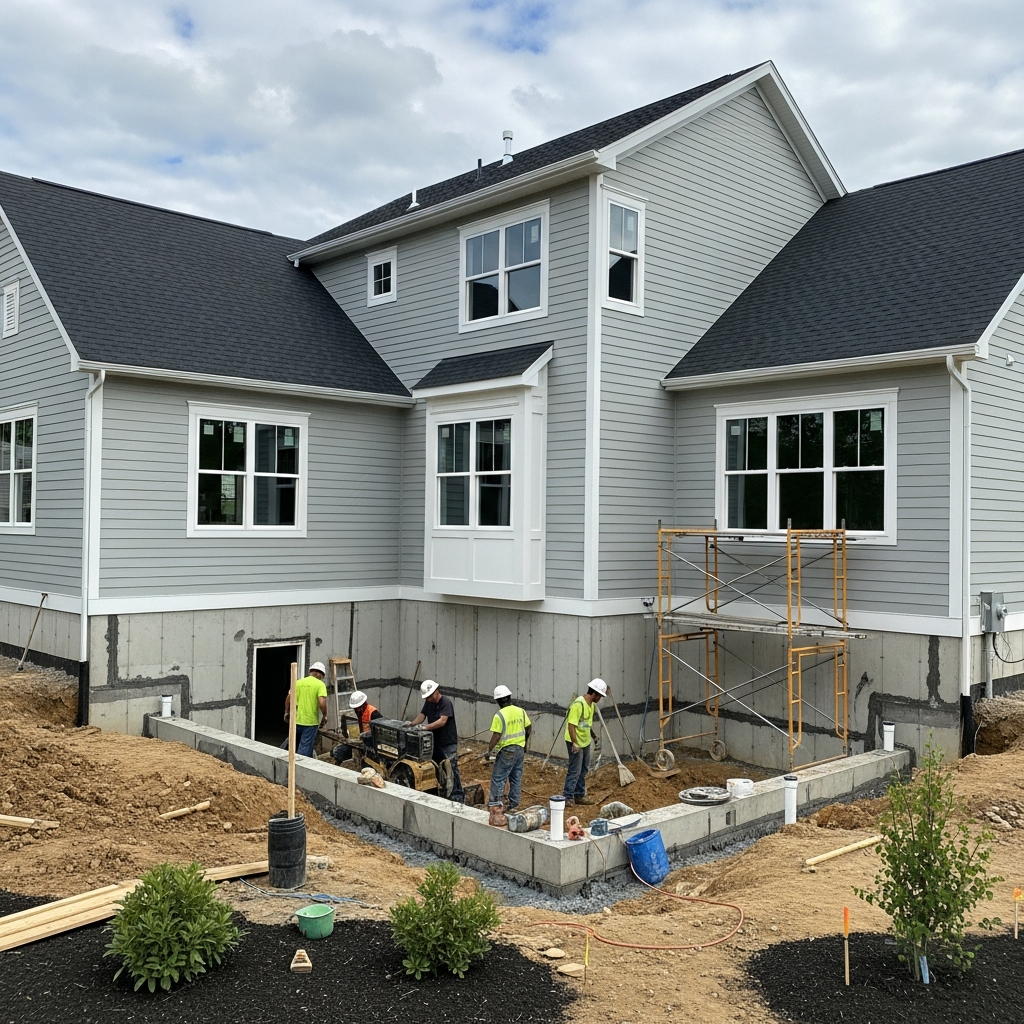
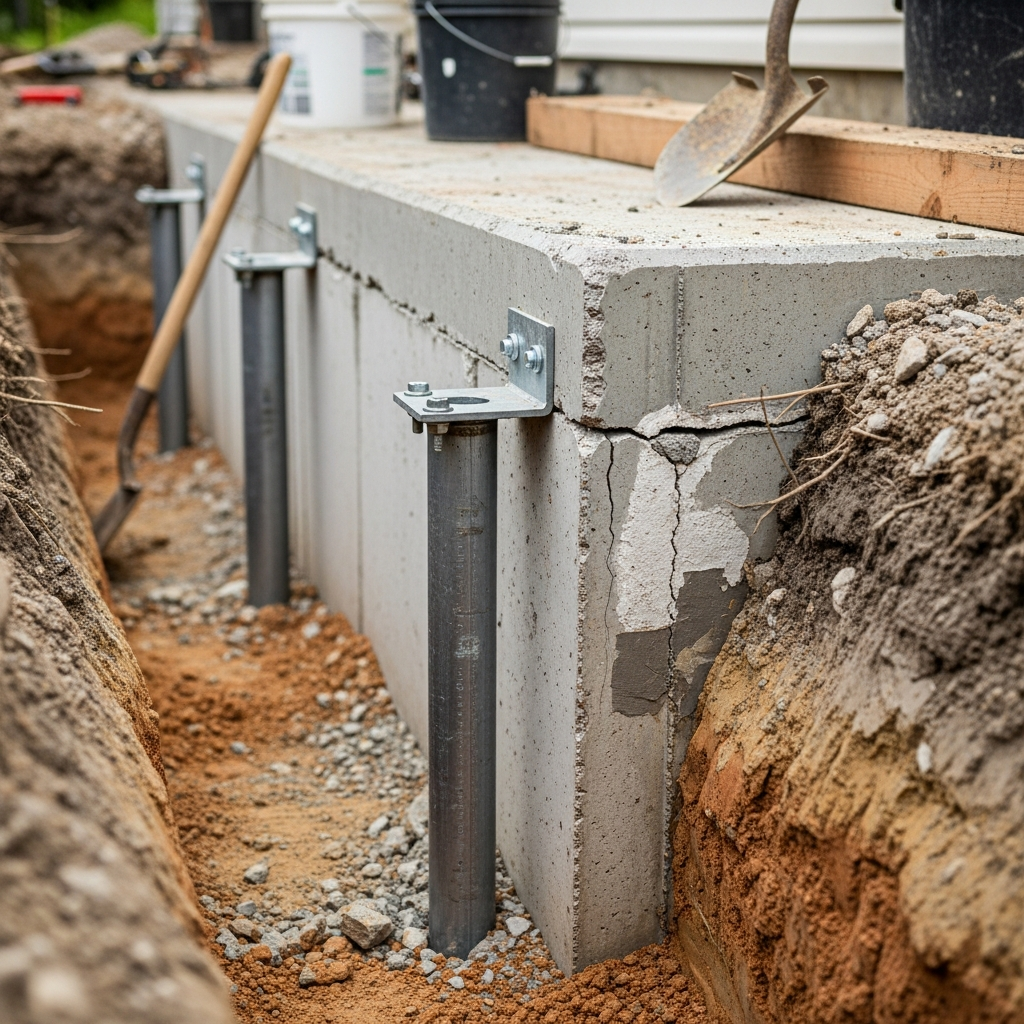
Pier and beam repair is probably the most common fix around here. Think of it as giving your house new legs to stand on – literally installing concrete or steel supports (piers) underneath to stabilize things. It’s like adding crutches, but permanent ones that actually solve the problem.
Then there’s slab repair, which is trickier because you’re dealing with a foundation that’s basically one big concrete pancake sitting on the ground. When part of that pancake starts sinking or cracking, the fixes get more… creative. Sometimes it involves injecting materials underneath to lift things back up (called slab jacking). Other times it means breaking through the concrete to install supports.
Crack repair sounds simple enough, but it’s not always just slapping some caulk in there and calling it good. Some cracks are symptoms of bigger problems – like having a persistent cough that might mean you need to see a doctor, not just pop another throat lozenge.
The Dallas Difference (Why Location Matters More Than You’d Think)
Here’s something that might surprise you – foundation repair costs in Dallas can vary dramatically even within the same neighborhood. And I’m not just talking about different contractors charging different rates (though that’s definitely part of it).
The soil conditions can change significantly just from one block to the next. One house might be sitting on relatively stable ground, while their neighbor three doors down is dealing with expansive clay that’s basically doing gymnastics every time the weather changes.
Access matters too. If your foundation issue is under a beautiful deck that took you three weekends to build… well, that deck might need to come apart for repairs to happen. It’s like trying to fix a leak under your kitchen sink when the cabinet is packed with 47 different cleaning supplies – sometimes you’ve got to move things around first.
The age of your home plays a role too – not just in terms of what’s wrong, but in terms of what repair methods will work best. Older homes often have different foundation styles that require specialized approaches. It’s not that one way is better or worse, just… different.
When “Estimates” Get Complicated
This is where things get genuinely frustrating for homeowners. You call three contractors, and you might get three completely different diagnoses – and three wildly different price ranges.
Part of that’s because foundation problems often aren’t visible from the surface. It’s like trying to diagnose what’s wrong with a car just by looking at the outside – sometimes you need to pop the hood (or in this case, do some exploratory work) to really understand what’s happening.
Getting Multiple Quotes Without Looking Like You’re Shopping for a Used Car
Here’s the thing about getting quotes – you want at least three, but you don’t want to seem like you’re just hunting for the cheapest option. When you call clinics, be upfront about your timeline. Say something like, “I’m planning to have this procedure done in the next six months, and I’m gathering information to make the best decision.” This shows you’re serious, not just price shopping.
Ask each clinic for a detailed breakdown. Don’t just accept “it’ll be around $8,000.” You want to know what’s included – the surgeon’s fee, facility costs, anesthesia, follow-up visits, any potential touch-ups. Some places bundle everything together, others nickel and dime you later. I’ve seen people get surprised by a $500 “facility fee” that wasn’t mentioned upfront.
Questions That Separate the Pros from the… Well, Not-So-Pros
When you’re sitting in that consultation (and yes, you should always do an in-person consultation), ask about their complication rate. A good surgeon won’t get defensive – they’ll give you actual numbers. Ask how many Dallas Fix procedures they’ve done in the past year. If they pause too long or get vague… that’s your answer right there.
Also, and this is crucial – ask about their revision policy. Sometimes things don’t heal exactly as planned, or you might want a small adjustment. Some surgeons include one revision within the first year, others charge full price for any changes. Trust me, you want to know this before you’re lying on the operating table.
The Insurance Dance (Spoiler: It’s Complicated)
Most insurance companies treat cosmetic procedures like they treat lottery tickets – they want nothing to do with them. But here’s where it gets interesting… if you can document that your abdominal issues are causing medical problems (back pain, skin irritation, difficulty exercising), you might have a case for partial coverage.
Your best bet? Get documentation from your primary care doctor about any physical discomfort or limitations you’re experiencing. Some patients have successfully gotten insurance to cover the muscle repair portion of a tummy tuck, even if the skin removal part remains out-of-pocket.
Don’t get your hopes up too high, though. Even when insurance does help, you’re usually looking at covering maybe 30-40% of the total cost. Still, that could mean saving a few thousand dollars.
Financing Options That Won’t Haunt Your Credit Score
Medical financing has come a long way from the sketchy “interest-free for 12 months” deals that used to dominate the space. CareCredit is still popular, but now you’ve got options like Prosper Healthcare Lending and Alphaeon Credit that often offer better terms for larger procedures.
Here’s what most people don’t realize – your credit score affects your financing terms more than you might think. If you’re planning this procedure for next year, spend the next few months paying down credit cards and not opening new accounts. A difference of 50 points on your credit score could mean the difference between 0% financing and paying 15% interest.
Some clinics also offer in-house payment plans. These can be great because they’re more flexible, but read the fine print carefully. I’ve seen patients get stuck with balloon payments they weren’t expecting.
Timing Your Procedure for Maximum Value
This might sound calculating, but timing matters for your wallet. Many plastic surgery practices run specials during slower periods – typically January through March and sometimes late fall. You’re not going to find “Black Friday deals” on surgery, but you might save 10-15% by being flexible with your timing.
Also consider the time of year for your recovery. Planning surgery for December when you’ve got holiday parties and family gatherings? That’s going to stress you out and potentially affect your healing. Spring procedures give you time to heal before summer, while fall surgeries let you recover during sweater season.
The Hidden Costs Nobody Warns You About
Let’s talk about what doesn’t show up in that initial quote. You’ll need special compression garments – budget about $150-300 for these. Time off work obviously costs money, but also think about help around the house. You won’t be lifting anything over 10 pounds for several weeks.
Some patients end up needing lymphatic massage to reduce swelling – that’s typically $100-150 per session, and you might want 3-5 sessions. Pain medication usually isn’t too expensive, but those fancy scar creams everyone swears by? They add up quickly.
The point isn’t to scare you with hidden costs, but to budget realistically. Add about 15-20% to whatever quote you get for these “extras.”
When Reality Hits Different Than Your Expectations
Look, nobody wants to talk about this part – but here we are. You’ve researched Dallas Fix Foundation procedures until your eyes bled, compared prices, maybe even had a consultation… and then life throws you a curveball. Or three.
The biggest shock? Hidden costs that aren’t really hidden – they’re just tucked away in conversations you weren’t ready to have yet. Like when your provider mentions you’ll need compression garments (there goes another $200), or that follow-up appointments aren’t included in your initial quote. It’s not that anyone’s trying to trick you… it’s just that medical procedures have more moving parts than assembling IKEA furniture. And we all know how that usually goes.
The Insurance Reality Check
Let’s rip this band-aid off quickly – most cosmetic Fix Foundation procedures aren’t covered by insurance. I know, I know. You probably already knew this, but there’s something about seeing those numbers without insurance softening the blow that hits differently.
What actually helps? Getting crystal clear about what’s cosmetic versus what might have medical necessity. Some Fix Foundation work – especially if you’re dealing with functional issues – might qualify for partial coverage. Don’t assume anything. Make those calls, ask those awkward questions, get everything in writing. Your future self (and your wallet) will thank you.
The Comparison Trap That Nobody Warns You About
Here’s where things get messy in a very human way. You’ll start looking at prices across Dallas, and suddenly you’re in a rabbit hole deeper than Alice ever imagined. One clinic quotes $8,000, another says $12,000, and a third throws out $6,500. What gives?
The hard truth? You’re often comparing apples to… well, not oranges exactly, but maybe different varieties of apples. One price includes everything – anesthesia, facility fees, post-op care. Another is just the surgeon’s fee. It’s like comparing the cost of a car when one dealer includes everything and another just quotes you for the engine.
Solution: Create a simple spreadsheet (stay with me here). List every clinic and break down their quotes into components. Ask specifically: “What does this price include, and what are the additional costs I should expect?” Some places will give you a comprehensive breakdown upfront – those are usually your winners.
The Timing Trap
You know what nobody tells you? That the “perfect” time to schedule your procedure might cost you more. Planning around holidays, summer vacation, or that wedding in six months? You’re competing with everyone else who had the same brilliant idea.
Dallas clinics get busy during certain seasons – spring and early fall are particularly crazy because people want to be healed up for summer or the holidays. Higher demand equals higher prices, plus you might get squeezed into less ideal time slots.
Actually, winter procedures often come with better pricing and more scheduling flexibility. Sure, you’ll be bundled up during recovery, but your bank account might appreciate the timing more than your social calendar initially will.
When Your Body Doesn’t Follow the Textbook
This is the conversation nobody wants to have beforehand, but complications happen. Not often, but they do. And when they do? That “fixed” price becomes… less fixed.
The best defense here isn’t hoping for the best – it’s having honest conversations upfront. Ask about revision policies. What happens if healing doesn’t go as planned? Some clinics include minor revisions, others charge separately. Know before you need to know.
Making Peace with the Investment
Here’s something that might sound weird coming from someone writing about medical costs – sometimes the biggest challenge isn’t the money itself. It’s the guilt about spending money on yourself, especially for something “cosmetic.”
You don’t need permission to invest in something that makes you feel better about yourself. You also don’t need to justify it to your sister, your neighbor, or that voice in your head that sounds suspiciously like your mother.
But you do need to be honest about your finances. If you’re putting this on credit cards or dipping into emergency funds, pump the brakes. The stress of financial strain can actually impact your healing and your results.
Consider payment plans, medical financing, or simply waiting until you can comfortably afford it. Your body will still be there in six months or a year – and you’ll approach the whole experience from a much calmer place.
Setting Realistic Timeline Expectations
Here’s the thing about Dallas Fix procedures – they’re not an overnight transformation, and honestly? That’s actually a good thing. I know you’re probably eager to see results (who wouldn’t be?), but your body needs time to heal properly and settle into its new contours.
Most patients start noticing initial changes around the 2-3 week mark, though you’ll still be dealing with some swelling at this point. Think of it like… well, like renovating a house. You can see the potential early on, but the real magic happens once everything settles and the dust clears.
The full results typically reveal themselves around the 3-6 month mark. I know that sounds like forever when you’re excited about your investment, but remember – your body is literally reshaping itself. That takes time. Some lucky patients see their final results a bit earlier, while others might need to wait closer to that 6-month mark. It really depends on factors like your age, skin elasticity, and how well you follow post-op instructions.
What to Expect During Recovery
Let’s talk about what those first few weeks actually look like – because setting proper expectations is crucial for your peace of mind.
The first week? You’re going to feel like you got hit by a truck. Sorry, but that’s just reality. There will be swelling, bruising, and probably some discomfort that pain medication can help manage. You’ll need to take time off work – typically 1-2 weeks, depending on your job and which procedures you had done.
Around week two, you’ll start feeling more human again. The worst of the swelling begins to subside, though you’ll still look a bit… well, puffy. This is completely normal, even though it might freak you out a little. (Actually, that reminds me – take progress photos! What seems like “not much change” day-to-day becomes dramatic when you compare week one to week eight.)
By month three, you’re usually feeling pretty great about your results, though some minor swelling might still be hanging around. Your clothes fit better, you’re feeling more confident, and people start asking if you’ve been working out or eating differently.
Planning Your Consultation Strategy
Before you even think about scheduling surgery, you’ll want to book consultations with 2-3 qualified surgeons. I know it’s tempting to go with the first person you meet – especially if you really like them – but this is a significant investment in yourself. You deserve to explore your options.
During these consultations, don’t just focus on price. Ask about their experience with Dallas Fix procedures specifically, look at before-and-after photos of patients with similar body types, and pay attention to how the staff treats you. Are they rushing you through, or taking time to answer your questions thoroughly?
Most consultations run between $100-200, though some surgeons apply this fee toward your surgery cost if you book with them. Factor this into your budget planning – those consultation fees can add up, but they’re worth every penny for the peace of mind they provide.
Financing Your Investment
Let’s be real about the financial aspect – most people can’t just write a check for $15,000-25,000 without some planning. And that’s perfectly okay! There are several financing options available that can make this more manageable.
Many practices offer in-house payment plans or work with medical financing companies like CareCredit or Alphaeon. These often provide promotional periods with 0% interest if you can pay within 12-24 months. Just… be honest with yourself about what monthly payment you can actually handle. The last thing you want is financial stress overshadowing your results.
Some patients save up for a year or two before scheduling their procedure. Others use a combination of savings and financing. There’s no “right” way to do this – just the way that works for your specific situation.
Moving Forward Confidently
Once you’ve done your research, met with surgeons, and figured out your financing, the actual scheduling process is usually pretty straightforward. Most practices book 4-8 weeks out, though this can vary depending on the surgeon’s popularity and the time of year.
Use this waiting period wisely. Get your body in the best shape possible, quit smoking if you haven’t already, and start preparing your recovery space at home. Stock up on comfortable clothes, prepare some easy meals, and arrange for help during those first few days.
Remember – this is your decision, your timeline, and your investment. Don’t let anyone pressure you into moving faster than feels comfortable.
Here’s the thing about foundation repair costs – they’re never just about the numbers on an estimate. Behind every crack in your foundation is a homeowner who’s probably lost a few nights of sleep wondering if their house is… well, falling down around them. (Spoiler alert: it’s probably not, but I get why you’re worried.)
Finding Peace of Mind in the Process
You’ve learned that everything from your soil type to the time of year affects what you’ll pay. Clay soil that shifts like a moody teenager? That’s going to cost more than stable sandy soil. A pier and beam foundation that needs extensive work? Different price tag than a simple slab repair. But here’s what really matters – you don’t have to figure this out alone.
The foundation repair world can feel overwhelming, especially when you’re getting quotes that vary by thousands of dollars. One contractor says you need everything fixed yesterday, another says it’s no big deal… and you’re left wondering who to trust. That’s completely normal, by the way. Most homeowners feel exactly the same way.
Your Home Deserves Expert Care
Think of foundation issues like that weird noise your car makes – you know something’s not quite right, but you need someone who actually knows what they’re looking at to tell you if it’s a $50 fix or a major problem. The same goes for your foundation. Those hairline cracks might be nothing, or they might be your house’s way of saying “hey, pay attention to me.”
What I’ve seen time and again is that homeowners who address foundation concerns early – even if it turns out to be minor – sleep better at night. There’s something to be said for having a professional look at your situation and give you the real story, not a sales pitch designed to scare you into unnecessary work.
You’re Not Alone in This
The truth is, foundation problems happen to good houses and good people. Dallas soil is challenging – it expands, contracts, and basically does whatever it wants regardless of how well you maintain your property. You didn’t cause this, and you shouldn’t feel guilty about needing help.
Whether you’re dealing with obvious signs like doors that won’t close properly, or you’re just noticing some new cracks that have you concerned, the best investment you can make is in getting accurate information. Not a high-pressure sales presentation, but an honest assessment from someone who actually knows what they’re looking at.
Ready to Get Real Answers?
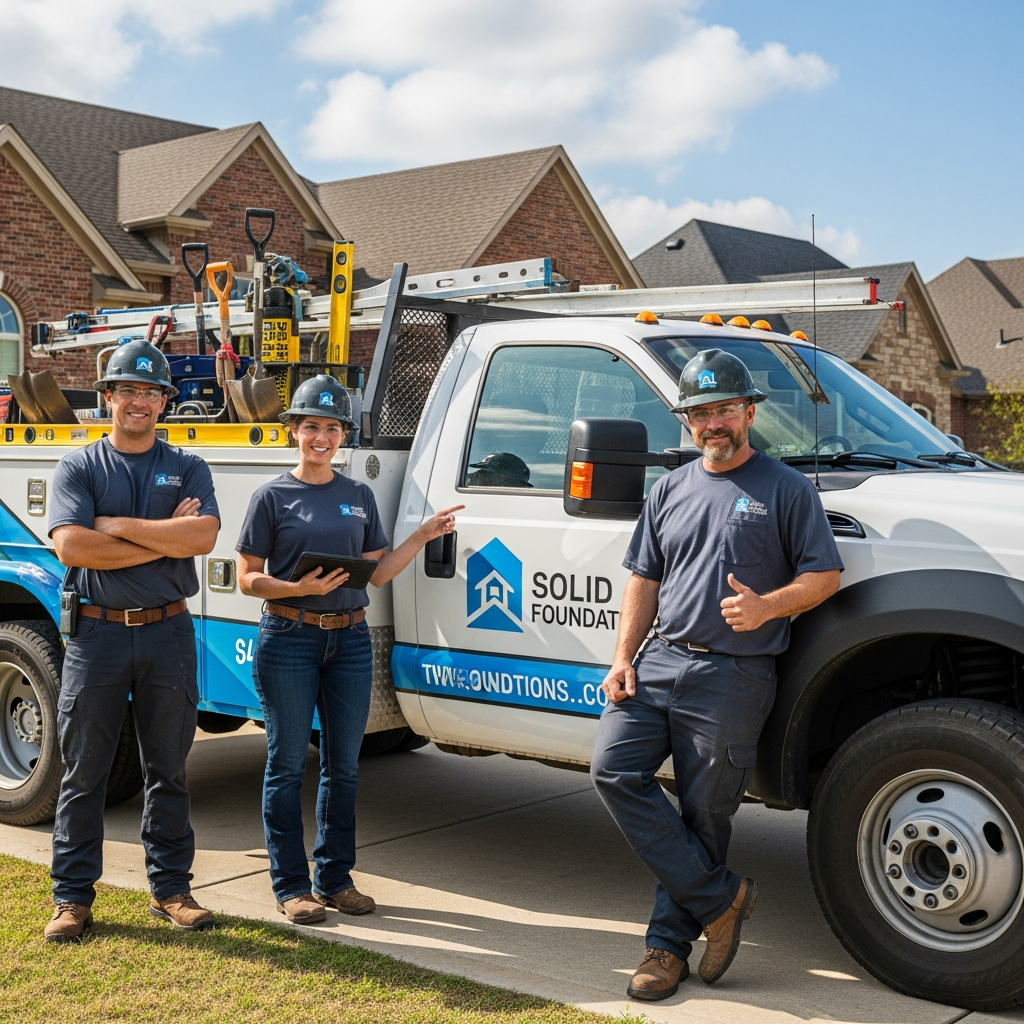
If you’re tired of wondering and worrying, we’re here to help. Our team understands that foundation concerns are stressful enough without adding pushy sales tactics to the mix. We’ll take a look at what’s actually happening with your foundation, explain your options in plain English, and help you make decisions that make sense for your situation and budget.
You don’t have to keep losing sleep over this. Give us a call, and let’s figure out together what your foundation actually needs – and what it doesn’t. Sometimes the best news is learning that what seemed scary is actually pretty manageable. And if it does need attention? We’ll walk you through every step of the process.
Your home has been there for you – now let us be there for your home.