What Are the First Signs You Need Foundation Repair?
You’re lying in bed at 2 AM, and there it is again – that subtle *crack* sound coming from somewhere downstairs. It’s probably nothing, right? Just the house “settling,” like your neighbor casually mentioned when you brought it up over the fence last weekend.
But here’s the thing… that nagging feeling in your gut isn’t going away. You’ve started noticing other little things too. The way your front door sticks now – especially after it rains. How that hairline crack above the kitchen window seems to have gotten just a tiny bit longer since you first spotted it three months ago. And don’t even get me started on that one bedroom door that won’t stay closed anymore without a good shove.
Sound familiar? Yeah, I thought so.
Look, nobody wants to think about foundation problems. It’s like discovering you need a root canal or that weird noise your car’s been making actually *is* something serious. We’re all guilty of that magical thinking – you know, the “if I ignore it long enough, maybe it’ll just… fix itself” approach. Trust me, I get it. Foundation repair sounds expensive, disruptive, and honestly? Kind of terrifying.
But here’s what I’ve learned after talking to hundreds of homeowners who’ve been exactly where you are right now: catching foundation issues early isn’t just about saving money (though you definitely will). It’s about protecting the single biggest investment most of us will ever make – our homes.
Think about it this way – your foundation is like the roots of a tree. When those roots start having problems, everything above ground eventually feels it. That sticking door? Could be your house shifting. Those new cracks appearing seemingly out of nowhere? Your walls might be telling you a story you need to hear.
And the crazy part is, most people have no idea what to actually look for. We notice the obvious stuff – major cracks, doors that won’t close – but we miss the subtle early warning signs that could save us thousands of dollars and months of headaches down the road.
I remember talking to Sarah, a client who called us last spring. She’d been living with what she called “quirky house behavior” for almost two years. A door here, a crack there, some minor settling in the basement. “Old house charm,” she called it. When she finally had someone take a look, what started as a $3,000 repair had turned into a $15,000 project because – well, because foundations don’t get better with time.
Here’s what nobody tells you about foundation problems: they’re sneaky. Really sneaky. They start small and quiet, whispering instead of shouting. By the time they’re obvious enough that you can’t ignore them anymore, you’re often looking at major repair work instead of minor adjustments.
But – and this is important – they’re also incredibly predictable once you know what to watch for. Your house has been trying to communicate with you all along… you just need to learn its language.
That’s exactly what we’re going to do together. I’m going to walk you through the early warning signs that most homeowners miss completely. Not the dramatic, Hollywood-movie cracks that make you call someone immediately, but the subtle clues that show up months or even years before things get serious.
We’ll cover everything from the obvious red flags – like why that crack in your basement wall is different from the hairline ones you can ignore – to the sneaky signs hiding in plain sight. Things like why your floors might feel slightly uneven in the morning, or what it really means when your windows start getting harder to open.
You’ll learn when to worry (and when not to), what questions to ask if you do need to call someone, and most importantly – how to catch problems while they’re still manageable, affordable fixes instead of major renovations.
Because honestly? Peace of mind is worth a lot. And knowing whether that 2 AM house noise is just your home doing its thing or actually trying to tell you something important… well, that’s priceless.
Why Your Foundation Matters More Than You Think
Think of your foundation like the legs of a table – when everything’s working properly, you don’t give them a second thought. You’re focused on what’s happening up top: the beautiful dinner setting, the conversation, the wine. But when one leg starts wobbling? Suddenly, that’s all you can think about.
Your home’s foundation works the same way. It’s literally holding up everything you care about – your family, your memories, your biggest investment. And just like that wobbly table leg, foundation problems don’t announce themselves with fanfare. They whisper first.
The Silent Worker Beneath Your Feet
Here’s something that might surprise you: your foundation is actually designed to move. Not a lot, mind you, but concrete naturally expands and contracts with temperature changes. It’s like how your favorite jeans fit differently in winter versus summer – materials respond to their environment.
The problem starts when your foundation moves too much, or moves in ways it wasn’t designed to handle. That’s when those whispers turn into shouts… but by then, you’re looking at much bigger repair bills.
What’s Really Going On Down There
Most foundation issues boil down to water and soil – two things that seem innocent enough until they team up against you. Think of soil like a sponge. When it gets saturated, it expands and pushes against your foundation walls. When it dries out completely, it shrinks away, leaving your foundation hanging without proper support.
Clay soil is particularly notorious for this expand-and-contract dance. If you’ve ever worked with clay pottery, you know how dramatically it can change. Now imagine that happening all around your foundation, season after season. It’s exhausting just thinking about it.
Then there’s the water issue. Water always wins – that’s not pessimism, that’s physics. It finds the tiniest cracks and widens them through freeze-thaw cycles. It changes soil composition. It creates hydrostatic pressure (fancy term for water pushing against things where it shouldn’t be).
The Domino Effect You Can’t Ignore
Here’s where things get interesting – and by interesting, I mean expensive if you’re not paying attention. Foundation problems don’t stay in the basement. They travel up through your house like gossip through a small town.
A foundation that’s settling unevenly puts stress on your framing. The framing responds by shifting, which affects your drywall. Your drywall cracks, your doors start sticking, your windows won’t open properly. Before you know it, you’re dealing with what feels like a dozen different problems, when really it’s all coming from one source.
It’s like when you ignore a small cavity – eventually, you’re not just dealing with a cavity anymore. You’re dealing with root canals, crowns, maybe even tooth loss. The earlier you catch it, the simpler (and cheaper) the fix.
Age Isn’t Just a Number
Now, newer homes aren’t automatically in the clear, but older foundations do face some unique challenges. Concrete from 50+ years ago was mixed differently. Building codes were… let’s call them more relaxed. Many older homes were built without proper drainage systems or moisture barriers.
But here’s the counterintuitive part: sometimes older foundations are built like tanks. They used more concrete, deeper footings, different materials that have actually stood the test of time better than some modern shortcuts. I’ve seen 1920s foundations that are rock solid while 1980s foundations are crumbling.
The Mystery of Seasonal Changes
This part confuses a lot of homeowners – why do foundation problems seem worse at certain times of year? Spring is particularly notorious because that’s when winter’s freeze-thaw damage becomes apparent, plus you’ve got snowmelt and spring rains changing soil conditions rapidly.
Fall can reveal issues too, as soil contracts after summer heat and before winter freeze. It’s like your foundation is constantly adjusting to a changing wardrobe of soil conditions.
The key thing to remember is that foundation problems are rarely sudden disasters (though those can happen). They’re usually slow-developing issues that give you plenty of warning signs… if you know what to look for. And that’s exactly what we’re going to cover next – those early whispers before they become expensive shouts.
When to Stop Watching and Start Acting
Look, I get it – you’ve been staring at that crack for months, hoping it’ll just… stay put. Maybe you’ve even taken photos to compare (we all do this, don’t worry). But here’s the thing: foundation problems don’t pause for your budget or your busy schedule.
If you’re seeing multiple signs at once – say, a sticking door plus some new cracks plus a slight slope in your floor – that’s your house basically waving a red flag at you. Don’t wait for the foundation to send you an engraved invitation.
The sweet spot for calling in professionals? When you notice changes happening over weeks, not years. Seasonal settling is normal… but that crack that grew three inches since spring? That’s not seasonal anything.
The Dollar Store Level Test (Yes, Really)
Here’s a trick contractors don’t want you to know because it’s almost embarrassingly simple. Grab a cheap bubble level from any dollar store – doesn’t need to be fancy.
Place it against your interior walls in different rooms. If you’re seeing consistent tilting in the same direction throughout your house, especially if it’s getting worse over time, you’ve got yourself a foundation issue that needs attention.
Pro tip: Take photos of the level against the wall with your phone (the camera shows the date). Check again in a month. If there’s change, you’ve got documentation that’ll help when talking to contractors.
The Marble Test for Floors
This one sounds silly until you try it. Drop a marble on your floor in different rooms – but do it systematically. Start from the same spot each time and watch where it rolls.
If marbles consistently roll toward the same corner or wall across multiple rooms, your foundation is telling you something important. And if this changes over time (that marble that used to stop halfway across the room now rolls all the way to the wall), you’re watching your foundation settle in real-time.
Documentation That Actually Matters
Forget those generic “take pictures” suggestions. Here’s what really helps when you’re talking to foundation repair specialists
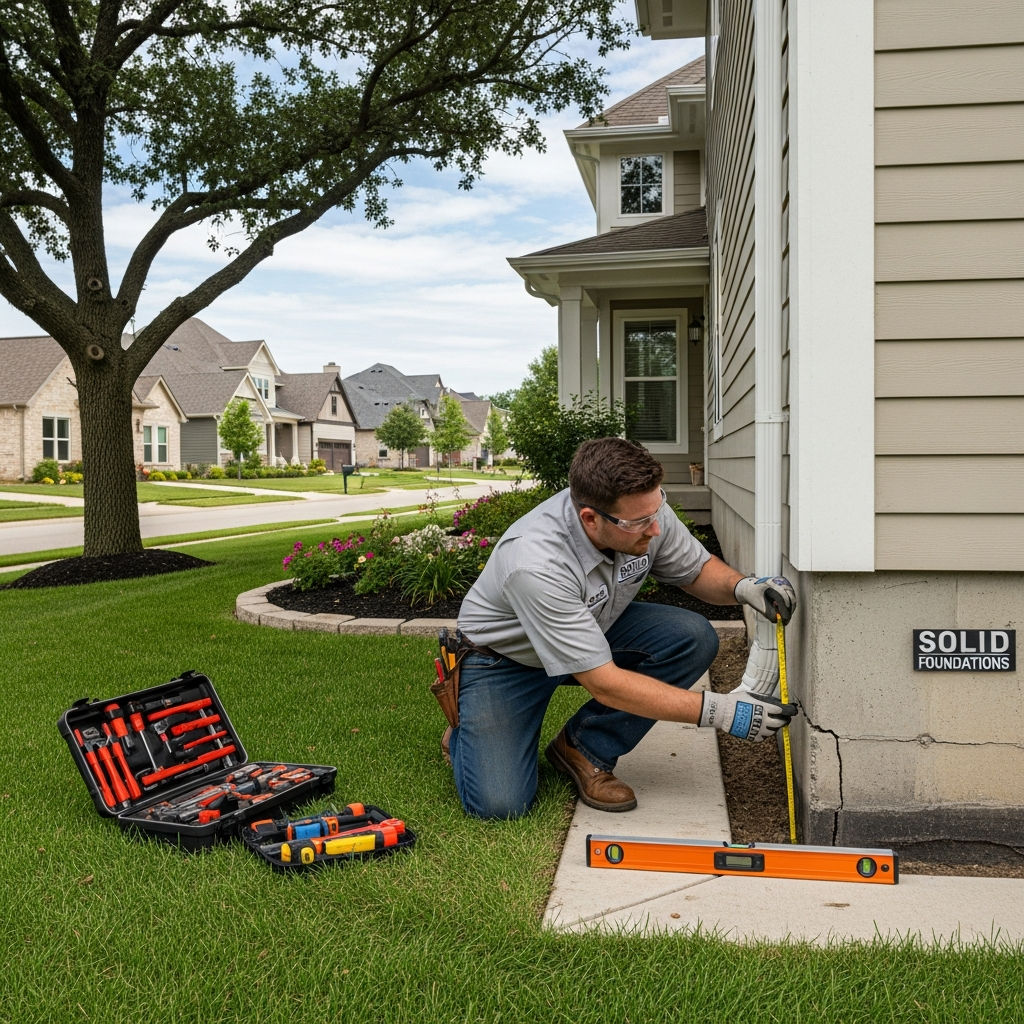
Crack mapping: Use a permanent marker to mark the ends of cracks, then date them. Seriously. It looks weird, but it gives contractors (and your insurance company) concrete proof of progression. Take photos with a coin next to cracks for size reference – quarters work best because everyone knows how big they are.
The door and window log: Keep a simple note on your phone about which doors or windows are sticking, when you first noticed it, and if it’s getting worse. Note things like “master bedroom door – started sticking in humid weather, now sticks every day” or “kitchen window – won’t close completely as of last Tuesday.”
Red Alert: When to Move Fast
Some foundation issues can wait a few weeks for estimates. Others? Not so much.
Call someone immediately if you see
– Horizontal cracks in basement walls (these suggest serious pressure issues) – Doors or windows that suddenly won’t close at all (not just sticky – completely jammed) – Water appearing where it never was before after foundation cracks develop – Gaps appearing between walls and ceiling or floor that you can stick your finger into
Actually, that reminds me – if you can stick a pen into a gap between your wall and floor, that’s not “settling.” That’s structural movement that needs professional eyes on it right away.
The Neighbor Network Advantage
Here’s something most people don’t think about: check with your neighbors. Foundation problems often affect houses built around the same time in the same area – similar soil conditions, similar construction methods, similar age.
If your neighbor just had foundation work done, or if several houses on your street have had issues, it’s worth mentioning to contractors. They might already be familiar with your area’s specific challenges, which can speed up diagnosis and potentially save you money.
Getting Ready for Professional Assessment
Before calling contractors, walk through your house with intention. Make a mental (or actual) map of everything you’ve noticed – not just the dramatic stuff, but the little things too. That slight gap at the baseboard, the way the bathroom door doesn’t quite line up anymore, how the kitchen counter seems slightly off level now…
These details help foundation specialists understand the whole picture, not just individual symptoms. And honestly? It shows you’re a homeowner who pays attention, which often translates to better service and more thorough explanations of what’s actually happening under your house.
Why Most Homeowners Miss the Obvious Warning Signs
Here’s the thing that drives foundation experts absolutely crazy – people live with problems for months, sometimes years, before calling for help. It’s not because they’re oblivious. It’s because foundation issues are sneaky little troublemakers that disguise themselves as “normal house stuff.”
You know that door that’s been sticking? The one where you have to give it that special hip-bump to get it closed? Most people just… adapt. They develop this little routine, maybe even joke about it with guests. “Oh, that’s just our quirky old house!” Meanwhile, their foundation is literally shifting underneath them.
The same goes for those hairline cracks in the wall. They start small – barely noticeable, really. Then one day you’re hanging a picture and you think, “Huh, when did that crack get so long?” But by then, you’ve been looking at it for so long it feels normal.
The “It’s Probably Nothing” Trap
This is where things get expensive, fast. That little voice in your head that whispers “it’s probably nothing” when you notice the basement feels damper than usual? That voice is not your friend when it comes to foundation issues.
I get it – calling a foundation specialist feels… big. Scary. Like you’re opening Pandora’s box of home repairs. What if they find something terrible? What if it costs thousands? So you wait, hoping it’ll somehow get better on its own.
Here’s what actually happens when you wait: small problems become medium problems. Medium problems become “holy cow, how did we let it get this bad?” problems. That minor settling that could’ve been addressed with some strategic pier placement? Now you’re looking at major structural work because the shifting caused a chain reaction of damage throughout your home.
When DIY Goes Wrong (And Why It Usually Does)
Oh, the stories foundation repair companies could tell about well-meaning homeowners and their YouTube University degrees. Someone notices their basement walls are bowing inward – clearly a serious issue – and decides they can fix it with some steel beams from the hardware store.
Or they see water seeping through foundation cracks and think, “I’ll just seal those up with some caulk.” Problem solved, right? Wrong. So very wrong.
Foundation repair isn’t like fixing a leaky faucet or painting a room. These are structural issues that affect your entire home’s stability. When you try to DIY foundation problems, you’re often just masking symptoms while the root cause continues wreaking havoc behind the scenes.
That crack you sealed? The pressure that caused it is still there, so it’ll just pop up somewhere else – probably somewhere worse. Those steel beams you installed? If they’re not properly engineered for your specific soil conditions and load requirements, they might actually make things worse.
The Seasonal Confusion Factor
This one trips up even the savviest homeowners. Foundation problems often seem to come and go with the seasons, which makes them incredibly confusing to diagnose.
Your doors stick worse in summer when the humidity’s high. Those cracks seem more pronounced in winter when the air is dry. The basement only floods during spring rains. So you think, “Well, it’s not always a problem…”
But here’s the thing – foundations don’t take breaks. If you’re seeing seasonal symptoms, that usually means your foundation is responding to environmental changes in ways it shouldn’t. A properly functioning foundation should remain stable regardless of whether it’s July or January.
Getting Past the Analysis Paralysis
The solution isn’t to panic every time you see a tiny crack or notice a slightly sticky door. It’s about developing a realistic sense of what warrants professional attention versus what’s just normal house behavior.
Start with documentation. Take photos of any cracks, note when doors start sticking, measure gaps between walls and trim. This isn’t because you’re going to diagnose the problem yourself – it’s because patterns matter, and professionals can learn a lot from how issues develop over time.
Set a threshold for action. If a crack is longer than a credit card or wider than a nickel, call someone. If multiple doors start sticking simultaneously, that’s not coincidence. If you’re seeing new symptoms every few months, your foundation is trying to tell you something.
The hardest part? Accepting that foundation repair is an investment in your home’s future, not just an unexpected expense. Yes, it costs money upfront – but it costs a lot more money if you wait until your “minor settling” becomes “major structural damage.”
What Happens After You Make That Call
So you’ve spotted the warning signs, done your detective work, and decided it’s time to bring in the professionals. Good for you – that’s honestly the hardest part. Now what?
First things first: don’t expect someone to show up tomorrow with a magic wand. Most reputable foundation contractors are booked out anywhere from two to six weeks, sometimes longer during busy seasons (hello, spring and summer). And honestly? That’s probably a good sign. The guy who can start “right now” might be the one you want to avoid.
When they do arrive for that initial assessment, plan on them being there for at least an hour – maybe two if your home has some quirks. They’re not just looking at that crack you called about. They’re examining your entire foundation, checking drainage, measuring things you didn’t even know could be measured. It’s like a full physical for your house.
The Assessment Reality Check
Here’s something nobody tells you: the initial assessment might reveal more issues than you bargained for. That hairline crack you noticed? It could be the tip of the iceberg. Or – and this happens more often than you’d think – it might be completely cosmetic and nothing to worry about.
I’ve seen homeowners work themselves into a panic over settling cracks that are totally normal, and I’ve seen others dismiss serious structural issues as “just old house stuff.” That’s exactly why professional eyes matter. They can tell the difference between “keep an eye on it” and “we need to act now.”
Most contractors will give you a written estimate within a few days of their visit. Don’t be surprised if the numbers feel overwhelming at first. Foundation work isn’t cheap – we’re talking anywhere from a few thousand for minor repairs to $15,000 or more for major structural work. But before you panic, remember: this is your home’s literal foundation we’re talking about. It’s not the place to cut corners.
Timeline Expectations (The Real Deal)
If you do need repairs, here’s what you’re looking at timeline-wise
Minor crack repairs or waterproofing might take just a day or two. These are your quick fixes – sealing cracks, applying waterproof coatings, maybe installing better drainage around problem areas.
But if we’re talking about underpinning, pier installation, or major structural work? You’re looking at one to three weeks, possibly longer depending on your home’s size and the extent of the damage. Weather plays a role too – foundation work and heavy rain don’t mix well.
And here’s the thing about timing that contractors don’t always explain upfront: there might be waiting periods. If they need to excavate around your foundation, they’ll want the soil to dry out first. If they’re installing piers, concrete needs time to cure before they can transfer the weight of your house. Mother Nature doesn’t work on your schedule.
What’s Actually Normal vs. What’s Not
Let me give you some perspective here, because I’ve seen too many homeowners lose sleep over perfectly normal house behavior.
Small hairline cracks in basement walls? Usually normal, especially in homes over ten years old. Houses settle – it’s what they do. Slight gaps where your molding meets the wall? Also often normal, particularly with seasonal changes.
But doors that won’t close, windows that stick, or cracks you can fit a coin into? That’s when normal crosses into “time to take action” territory. New cracks that appear suddenly, especially after heavy rains or ground changes? Those need attention.
Moving Forward with Confidence
The key is not to let foundation concerns consume your life while you’re waiting for repairs. Yes, monitor any cracks or issues, but don’t measure them daily with a ruler (though I know someone who did exactly that). Take photos every few weeks if you want documentation, but then try to focus on other things.
Most foundation problems develop slowly over years, not days. If your contractor says you need work but can’t start for a month, that’s usually fine. They’ll tell you if it’s an emergency situation that needs immediate temporary measures.
Remember – catching foundation issues early is always better than waiting. You’ve already done the smart thing by recognizing the signs and taking action. The rest is just logistics, and while it might feel overwhelming right now, you’re actually in good hands once you’ve found the right professional to guide you through it.
You know what? Your home has been quietly communicating with you all along – through those hairline cracks that appeared seemingly overnight, the doors that suddenly stick, or that one spot in the kitchen where the floor feels just a little… off. These aren’t random quirks your house developed to keep things interesting. They’re genuine signals, and honestly? You’re pretty smart for noticing them.
Here’s the thing about foundation issues – and I can’t stress this enough – they’re rarely as catastrophic as your 2 a.m. anxiety brain wants to convince you they are. But (and this is important) they’re also not something to brush off with a “maybe it’ll sort itself out” approach. Think of it like that weird noise your car started making last month. You could ignore it, sure… but we both know how that story usually ends.
The beautiful thing about catching these signs early is that you’ve given yourself options. Real, practical options that don’t involve dramatic renovations or second mortgages. Most foundation problems, when addressed promptly, are surprisingly manageable. It’s like treating a small cavity versus waiting until you need a root canal – same tooth, completely different experience.
I get it, though. The word “foundation” probably makes your wallet nervous and your stress levels spike. There’s something particularly unsettling about problems literally underneath your feet, isn’t there? But here’s what I’ve learned from talking to countless homeowners who’ve been exactly where you are right now: the anticipation is almost always worse than the reality.
You’re not being dramatic by paying attention to these changes. You’re not overreacting by feeling concerned. Actually, you’re being exactly the kind of homeowner who saves themselves headaches down the road. Those friends who tell you “oh, all houses settle” – well, they’re not wrong, but they’re not entirely right either. Yes, houses settle. But they shouldn’t keep settling indefinitely, and they definitely shouldn’t settle in ways that create ongoing problems.
The real peace of mind comes from knowing. Not wondering, not worrying, not googling “foundation crack normal” at midnight (we’ve all been there). Just… knowing. Having a professional look at your specific situation, in your specific house, with your specific soil conditions and climate factors.
And here’s something that might surprise you – most foundation specialists offer free inspections. They’re not trying to sell you something you don’t need; they’re trying to give you accurate information so you can make informed decisions. There’s a huge difference between those two approaches, and it shows in how they communicate with you.
If you’re reading this and thinking “okay, maybe I should have someone take a look” – trust that instinct. You don’t need to have all the answers or know exactly what’s wrong. You just need to be willing to ask for help from people who do this every day.
Your home is your sanctuary, your investment, your safe place. It deserves attention when it’s asking for it. And honestly? So do you. Reach out to a foundation specialist in your area. Get that inspection. Ask your questions. You’ll sleep better knowing exactly what you’re dealing with – and more often than not, it’s going to be much more manageable than you feared.