Fort Worth Foundation Repair: When to Fix Foundation Problems Early

You’re lying in bed at 2 AM when you hear it – that subtle *crack* sound from somewhere in the house. Your heart skips a beat. Was that the foundation? Or maybe just the house settling? You tell yourself it’s nothing, roll over, and try to get back to sleep. But deep down, you know you’ve been ignoring those hairline cracks in your living room wall for months now.
Sound familiar? Yeah, we’ve all been there.
Here in Fort Worth, our homes face some pretty unique challenges. The clay soil that our beautiful city sits on… well, let’s just say it has a personality of its own. It swells when it rains (and boy, do we get some Texas-sized storms), then shrinks when we hit those brutal summer dry spells. Your foundation? It’s basically riding an underground roller coaster all year long.
But here’s the thing – and this might surprise you – most foundation problems start small. Really small. That tiny crack you’ve been walking past every day? The door that’s suddenly sticking? The way your kitchen counter seems just a *little* off-level when you’re chopping vegetables? These aren’t just minor annoyances you can ignore until next spring.
They’re your house trying to tell you something important.
I get it, though. Foundation repair sounds expensive, scary, and like one of those things you’d rather not think about. Kind of like going to the dentist or checking your retirement account balance. But – and this is where it gets interesting – catching foundation issues early isn’t just about preventing disaster. It’s about saving yourself a massive headache (and a massive bill) down the road.
Think of it like this: you know how a small oil leak in your car can turn into a completely seized engine if you ignore it long enough? Foundation problems work the same way. That hairline crack that would cost a few hundred dollars to seal today? Left alone, it could become a major structural issue that costs tens of thousands to fix. We’re talking about the difference between a bandage and major surgery.
And here’s what’s really wild – Fort Worth sits in what foundation experts call a “high-risk zone.” Our expansive clay soil, combined with our weather patterns (hello, drought followed by flooding), creates the perfect storm for foundation movement. It’s not a matter of *if* your foundation will experience some settling or shifting… it’s *when*.
But don’t panic. Seriously, take a breath.
The good news is that most foundation issues are totally manageable when you catch them early. I’m talking about simple fixes that can extend your home’s life by decades. We’re going to walk through exactly what to look for, when to worry (and when not to), and – most importantly – how to tell the difference between normal settling and something that needs attention.
You’ll learn the warning signs that actually matter… because honestly, not every crack is a crisis. Some are just cosmetic. But you’ll also discover the red flags that mean it’s time to make a phone call – like yesterday.
We’ll talk about timing, too. When’s the best season to tackle foundation repairs in Fort Worth? (Hint: it’s probably not when you think.) What should you expect from a foundation inspection? And how do you find a contractor who won’t try to sell you repairs you don’t actually need?
Most importantly, we’ll cover the real costs – both of fixing problems early and of waiting too long. Because while nobody wants to spend money on foundation repair, the truth is that a small investment now can save you from watching your home’s value plummet… or worse, dealing with doors that won’t close and floors that slope like a funhouse.
Your foundation is literally what everything else in your home depends on. When it’s solid, everything else can be solid too. When it’s not… well, let’s just say everything else starts to suffer.
Ready to become your home’s foundation detective? Let’s figure out what your house is trying to tell you.
The Foundation Reality Check (It’s Not What You Think)
Here’s the thing about foundations – they’re kind of like that one friend who never complains until they’re absolutely falling apart. Your foundation sits there quietly doing its job for years, decades even, holding up literally everything you care about in your home. Then one day… well, that’s when things get interesting.
Most people think foundations are just concrete slabs that sit there being strong and concrete-y. But honestly? They’re more like a carefully orchestrated balancing act between your house and the earth beneath it. And in Fort Worth, that earth has some serious opinions about what it wants to do.
Why Fort Worth Soil is Basically Foundation Kryptonite
You’ve probably heard about our clay soil – it’s practically legendary around here. But here’s what’s wild about it: clay soil acts like a giant sponge that’s also having an identity crisis. When it rains, the clay soaks up water and expands like a balloon at a birthday party. When it’s dry? It shrinks faster than your favorite jeans in a hot dryer.
This constant expanding and contracting creates what engineers call “soil movement,” but I like to think of it as the earth doing yoga poses under your house. Downward dog, cobra pose, child’s pose – except instead of being relaxing, it’s slowly but surely affecting your foundation’s stability.
The really tricky part? This movement doesn’t happen evenly. One side of your house might be sitting on clay that’s having a growth spurt while the other side is dealing with soil that’s decided to go on a diet. It’s like trying to balance on a seesaw where both sides keep changing weight.
Foundation Types and Their Personalities
Not all foundations are created equal – they’re more like different personalities dealing with the same stressful situation.
Slab foundations are the minimalists of the foundation world. They’re literally a concrete slab poured directly on the ground. Simple, straightforward, and common in Fort Worth because they’re cost-effective. But here’s the catch – they’re also sitting right there in the action zone with our moody clay soil.
Pier and beam foundations are the old-school approach – think of them as the foundation equivalent of stilts. Your house sits on a series of concrete piers with wooden beams spanning between them. There’s actually space underneath (hello, crawl space). These can be more forgiving when soil decides to throw a tantrum, but they come with their own set of quirks.
The Sneaky Nature of Foundation Problems
Foundation issues are master manipulators. They don’t announce themselves with a dramatic crash or obvious signs. Instead, they’re subtle… insidious, really. You might notice a door that’s suddenly harder to close, or maybe that one window that used to slide smoothly now fights you every time.
Sometimes it starts with tiny cracks – hairline fractures that you convince yourself are just cosmetic. “Oh, that’s just the house settling,” you tell yourself. And sometimes that’s true! Houses do settle. But other times… well, that’s your foundation trying to tell you something important.
The confusing part is that some foundation movement is completely normal. Houses aren’t supposed to be perfectly rigid – they need to flex a little with temperature changes and minor soil shifts. It’s like the difference between a healthy stretch and pulling a muscle. Both involve movement, but only one requires attention.
When Physics Meets Reality
Here’s where it gets a bit technical, but stick with me because this actually matters for your wallet. Foundations work on the principle of load distribution – basically, they’re taking all the weight of your house and spreading it out so the soil can handle it.
But when that soil starts its expanding and contracting dance, the load distribution gets wonky. Instead of weight being evenly spread, you suddenly have pressure points – like trying to balance a heavy box on your finger instead of carrying it properly with both hands.
This uneven pressure is what creates most foundation problems. One area might be supporting more weight than it was designed for, while another area might not be pulling its fair share. Over time, this imbalance shows up as cracks, settling, or that slightly tilted feeling when you walk across certain rooms.
What’s really fascinating (and frustrating) is that foundation problems can snowball. A small issue in one area puts extra stress on other areas, which then develop their own problems. It’s like a domino effect, except the dominoes are expensive to fix and hold up your entire house.
The key thing to understand? Early foundation problems are often fixable without breaking the bank. But when you wait… that’s when things get complicated and costly.
Spotting the Sneaky Early Warning Signs
You know that feeling when something’s just… off? Your body’s pretty good at sending those subtle signals before things get serious. Same goes for your foundation – it’s constantly whispering warnings if you know how to listen.
Walk around your house on a quiet weekend morning (seriously, put down the coffee for five minutes). Look for hairline cracks in your exterior walls – they’re usually the foundation’s first cry for help. Inside, check where your walls meet the ceiling. See any tiny cracks forming? That’s not just “settling.” And here’s something most people miss: stick a marble on your floor in different rooms. If it rolls consistently toward one corner… well, that’s not exactly level, is it?
Pay attention to your doors and windows too. When they start sticking or won’t close properly, your foundation might be shifting underneath. It’s like your house is slowly doing yoga poses you didn’t sign up for.
The “Wait and See” Trap (Spoiler Alert: Don’t)
Here’s the thing about foundation problems – they’re not like that check engine light you can ignore for six months. Every day you wait, the problem literally gets heavier. Your foundation is supporting thousands of pounds, and when it’s compromised, all that weight keeps working against you 24/7.
I’ve seen homeowners spend $2,000 on early intervention turn into $15,000+ disasters because they thought it might “stabilize on its own.” Foundations don’t heal themselves – they’re concrete and steel, not your scraped knee from childhood.
The sweet spot for repairs? When you notice the first signs but can still open all your doors normally. Once you’re forcing windows shut or your floors develop that funhouse feel… you’ve probably missed the early intervention window.
Finding Your Foundation Hero (Not the Guy From Craigslist)
Look, I get it – foundation repair sounds expensive and scary. But choosing the wrong contractor is like performing surgery with a butter knife. You want someone who treats your foundation problems like the serious structural issues they are.
Start with contractors who offer free inspections – legitimate foundation companies do this because they know most problems need professional assessment. During that inspection, a good contractor will crawl around your crawl space (if you have one), check your basement walls, and actually measure things with real tools. If they give you a quote after just walking around your living room for ten minutes? Keep looking.
Ask about their warranty too. Quality foundation work should come with substantial warranties – we’re talking 10+ years, not just until they cash your check. And here’s a insider tip: ask to see photos of recent similar repairs. If they can’t show you examples of their work… red flag city.
DIY Damage Control While You Wait
Once you’ve called the professionals, you’re not completely helpless. Think of these as first aid – not cures, but ways to prevent things from getting worse.
Control water flow around your foundation like your house depends on it (because it does). Clear those gutters, extend downspouts at least six feet from your foundation, and make sure water flows away from your house. Foundation problems and water issues go together like… well, like water and foundation problems.
If you’ve got cracks letting moisture in, you can temporarily seal small ones with hydraulic cement – it’s available at any hardware store and actually expands as it cures. This isn’t a permanent fix, but it’ll buy you time.
Here’s something most people don’t think about: keep your foundation moisture levels consistent. In Fort Worth’s crazy weather swings, that means watering around your foundation during dry spells and ensuring good drainage during our infamous spring storms. Foundations hate dramatic moisture changes more than teenagers hate being told what to do.
The Money Talk (Let’s Be Real)
Early foundation repairs typically run $3,000-$8,000 for most residential issues – yeah, it’s not pocket change. But waiting until you need full foundation replacement? You’re looking at $20,000-$40,000+.
Some contractors offer financing, and honestly, it’s worth exploring if it means addressing problems now instead of later. Your future self (and your wallet) will thank you when you’re not dealing with structural damage throughout your entire house.
The bottom line? Trust your gut, act quickly, and remember – your foundation literally holds everything else up. It deserves the same attention you’d give any other major system in your home.
The “Just a Little Crack” Trap
You know that moment when you notice a hairline crack in your foundation wall and think, “Eh, I’ll keep an eye on it”? Yeah, we’ve all been there. The problem is… that crack doesn’t stay hairline for long.
Here’s what actually happens: you get used to seeing it. It becomes part of the scenery. Meanwhile, Fort Worth’s clay soil is doing its seasonal dance – expanding when it rains, shrinking when it’s dry – and that innocent little crack is quietly growing. By the time you really *notice* it again, you’re looking at a repair bill that’s three times what it would’ve been six months ago.
The fix? Take photos. I’m serious. Snap a picture of that crack with a coin next to it for scale, then check it every few months. If a dime used to fit in the gap and now a quarter does… well, time to make some calls.
The Money Panic (And Why It Freezes You)
Let’s be honest about the elephant in the room – foundation repair is expensive. When a contractor throws around numbers like $8,000 or $15,000, your brain kind of… shuts down. You might find yourself avoiding the problem entirely because the cost feels overwhelming.
But here’s the thing that trips up so many Fort Worth homeowners: foundation problems are like medical issues. Ignoring them doesn’t make them cheaper – it makes them catastrophically more expensive.
I’ve seen families put off a $3,000 pier installation only to face a $25,000 full foundation stabilization two years later. That’s not fear-mongering, that’s just… math. And gravity. And clay soil that doesn’t care about your budget.
Real solutions that work: – Get multiple estimates, but don’t just chase the lowest number – Ask contractors about payment plans – many offer them – Check if the issue qualifies for insurance coverage (sometimes it does) – Consider it an investment that protects your home’s value, not just an expense
The Contractor Confusion Maze
Oh, this one’s a doozy. You’ve got foundation guys, structural engineers, general contractors, and specialists all telling you different things. One says you need piers, another recommends mudjacking, a third suggests drainage work first.
It’s like having five doctors give you five different diagnoses. Frustrating doesn’t even begin to cover it.
The reality? Many foundation problems in Fort Worth have multiple contributing factors – poor drainage, expansive clay soil, plumbing leaks, inadequate moisture control. Sometimes you do need to address several issues, but not necessarily all at once.
Here’s your roadmap through the confusion: – Start with a structural engineer’s assessment (yes, it costs money upfront, but it’s worth it) – Ask each contractor to explain *why* they’re recommending their solution – Be wary of anyone who tries to sell you everything at once – Get timeline recommendations – what needs to happen now vs. what can wait
The Weather Waiting Game
This one drives me crazy because it’s so common. Homeowners notice foundation settling during Fort Worth’s dry spells, then convince themselves it’ll “fix itself” when the rains come back.
Sometimes minor settling does stabilize when the soil moisture evens out, but actual foundation damage? That doesn’t heal itself. Concrete doesn’t regenerate like a broken bone.
The tricky part is that seasonal soil movement can mask ongoing foundation problems. Your doors might close properly again after a good rain, making you think the issue resolved itself. Meanwhile, the underlying structural problem is still there, just temporarily disguised.
The smarter approach: Track symptoms across seasons. Keep notes about when doors stick, when cracks appear, when floors feel uneven. Patterns will emerge, and you’ll get a clearer picture of what’s actually happening.
The DIY Temptation
Look, I get it. YouTube makes everything look doable, and foundation repair companies aren’t cheap. But foundation work isn’t like installing a ceiling fan or retiling a bathroom.
The issue isn’t just the complexity – it’s the stakes. Mess up a DIY bathroom project and you’ve got an ugly tile job. Mess up foundation work and you could destabilize your entire house.
That said, there are things you can and should handle yourself: keeping gutters clean, maintaining proper drainage around your foundation, monitoring soil moisture levels, sealing minor cracks before they become major ones.
Just… know where to draw the line. When in doubt, call someone who does this for a living.
What to Expect During the Repair Process
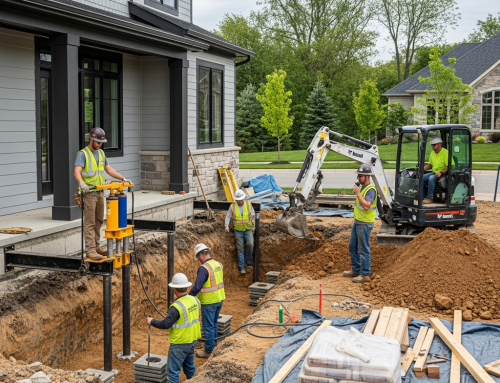
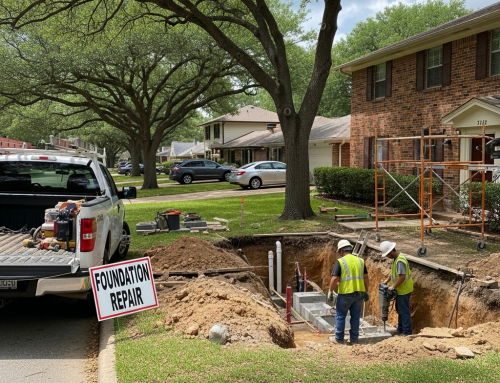
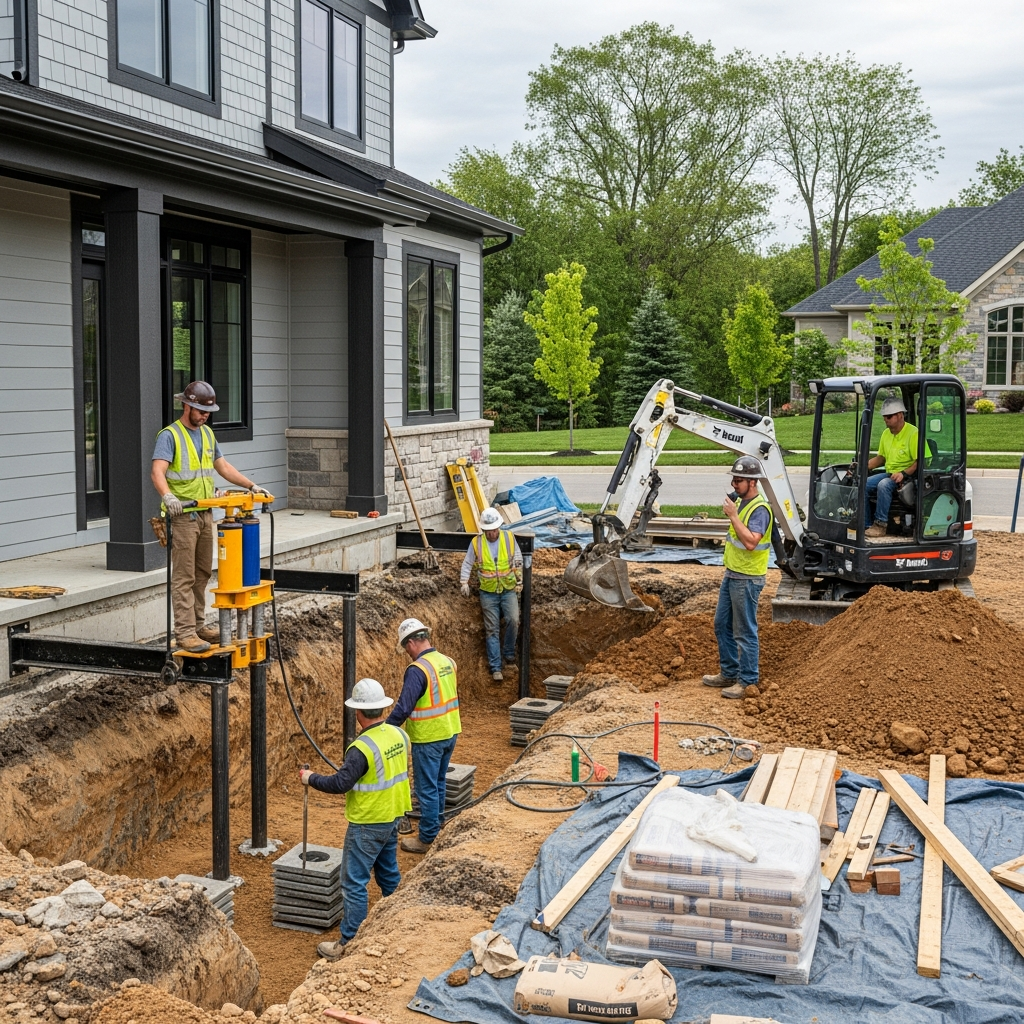
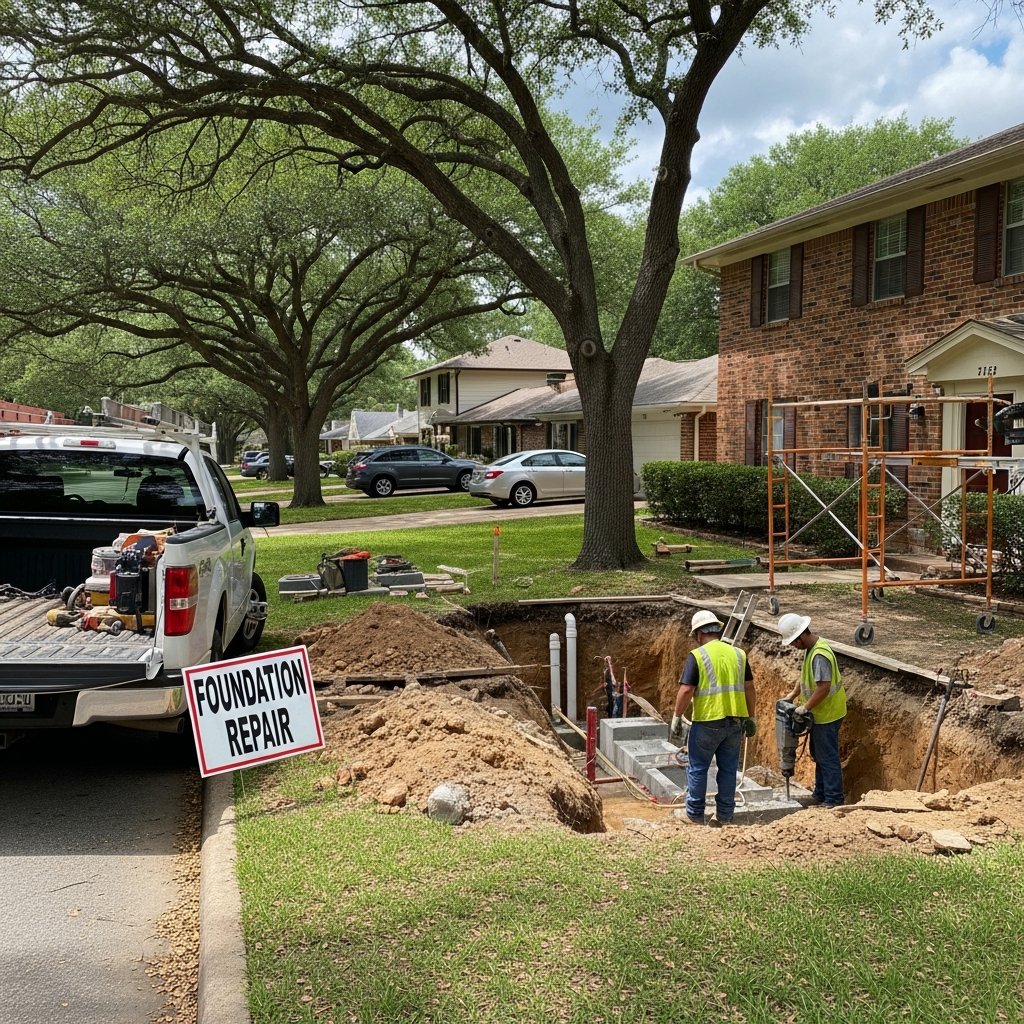
Let’s be honest – foundation repair isn’t exactly a weekend project. Most repairs take anywhere from one to five days, depending on what you’re dealing with. A simple pier installation might wrap up in a day or two, while extensive underpinning or drainage work… well, that’s going to take longer.
You’ll probably hear some noise. Not necessarily earth-shattering construction sounds, but there will be drilling, maybe some excavation equipment if they need to access your foundation from the outside. Most reputable contractors start early (around 7 AM) and wrap up by late afternoon, so you won’t have crews working into the evening.
The dust situation? Yeah, there’s going to be some. If they’re drilling piers through your basement or crawl space, expect a bit of concrete dust. Good contractors will lay down plastic sheeting and use dust barriers, but you might want to move any valuable items away from the work area.
Here’s something people don’t always think about – your yard’s going to look a little rough for a while. If they need to excavate around your foundation or install exterior drainage, you’re looking at some torn-up landscaping. The good news? Most contractors will do basic cleanup and re-grade the soil, but replanting those prize roses… that’s usually on you.
The First Few Weeks After Repair
Don’t panic if you notice small cracks appearing in your drywall during the first month after repair. I know, I know – you just spent thousands fixing your foundation, and now there are new cracks? This is actually completely normal.
Think of it like this: your house has been settling into a compromised position for months or years. When you lift and stabilize the foundation, everything has to readjust. It’s like straightening a crooked picture frame – sometimes the matting shifts a little.
Most of these cosmetic issues are minor. We’re talking hairline cracks in drywall, maybe a door that sticks slightly where it didn’t before, or a window that’s a bit tighter. These typically settle out within 30-60 days as your house finds its new normal.
Your foundation contractor should explain this beforehand (if they don’t, ask). Many offer a brief follow-up visit after a month or two to check how everything’s settling and address any concerns.
Long-Term Monitoring and Maintenance
Here’s the thing about foundation repair – it’s not a “set it and forget it” situation. You’ll want to keep an eye on things, but don’t become obsessive about it. Checking your foundation every few months is plenty.
Look for the same warning signs you learned about before: new cracks, doors that suddenly start sticking, windows that won’t close properly. Take some photos right after your repair is complete – they’ll serve as your baseline for comparison later.
Drainage maintenance is crucial. Clean your gutters regularly, make sure water flows away from your foundation, and keep an eye on any drainage systems that were installed. A clogged French drain or blocked downspout can undo good foundation work faster than you’d think.
Consider having your foundation inspected annually for the first couple of years, then every few years after that. Think of it like a dental cleaning – preventive maintenance that catches small issues before they become expensive problems.
When to Call Your Contractor Back
Most reputable foundation repair companies offer warranties – typically 10 to 25 years for structural work. But warranties don’t cover normal settling or issues caused by new moisture problems.
You should definitely call if you notice
– Significant new cracks in your foundation walls – Doors or windows that become dramatically harder to open – New signs of water intrusion – Cracks that are getting noticeably wider
But here’s what you shouldn’t worry about: tiny hairline cracks in drywall, minor shifts in how doors close, or small cosmetic issues. These are part of the settling process.
Planning Your Next Steps
If you’re still on the fence about repairs, don’t wait until next spring “when the weather’s better.” Foundation problems don’t pause for your convenience, and Fort Worth’s clay soil can shift dramatically with seasonal moisture changes.
Get a few estimates – most foundation contractors offer free inspections. Ask about financing options if cost is a concern. Many companies work with financing partners, and some repairs might be covered by insurance (though that’s pretty rare).
The bottom line? Foundation problems are like that weird noise your car makes – ignoring it doesn’t make it go away, and waiting usually just makes everything more expensive. But with the right contractor and realistic expectations, you can get your home back on solid ground… literally.
Look, here’s the thing about foundations – whether we’re talking about your house or your health – ignoring the warning signs never makes them go away. It just makes them more expensive to deal with later.
You’ve probably been walking past that crack in your wall for months now, telling yourself it’s “just settling” or “not that bad yet.” And honestly? I get it. Foundation repair feels overwhelming, kind of like when you know you need to see a doctor but keep putting it off because… well, what if it’s worse than you thought?
But here’s what I’ve learned from watching folks deal with foundation issues (and yes, this applies to pretty much every scary adult responsibility): the anticipation is almost always worse than the reality. That crack you’ve been stressing about? It might be a simple fix. Those doors that won’t close properly? Could be addressed before it becomes a major structural headache.
The thing is, your home is probably your biggest investment – and definitely your safe haven. When the foundation starts shifting, it’s not just about property values or repair costs. It’s about that uneasy feeling you get every time you walk through your front door, wondering if things are getting worse.
Early intervention isn’t just smart financially (though it absolutely is). It’s about peace of mind. It’s about being able to invite friends over without secretly hoping they don’t notice that the floor slopes slightly in the kitchen. It’s about sleeping soundly instead of lying awake wondering if that new crack appeared overnight.
The foundation experts here in Fort Worth – they’ve seen it all. Clay soil that expands and contracts like a moody teenager. Plumbing leaks that show up as foundation problems months later. Drainage issues that seem minor until they’re… not. They know this area, understand these soils, and honestly, they’re probably less worried about your situation than you are.
I know it’s tempting to wait and see, to hope the problem resolves itself somehow. But foundations don’t heal like scraped knees – they need actual attention from people who know what they’re doing.
If you’re reading this and thinking about that spot in your home that’s been nagging at you… you know, that door that sticks, those cracks that seem to be growing, the way your floors don’t feel quite level anymore – maybe it’s time to stop wondering and start getting answers.
A foundation inspection isn’t a commitment to major construction. It’s information. It’s knowing instead of guessing. And sometimes? It’s the relief of hearing “this is totally manageable” instead of catastrophizing in your head for another six months.
Your home should feel like your sanctuary, not a source of stress. If something’s been bothering you about your foundation, don’t carry that worry alone. Reach out to a local foundation specialist – most offer free consultations because they understand that knowledge shouldn’t cost you anything.
You deserve to feel confident in your home’s stability. And honestly? Future you will thank present you for taking action now rather than waiting until small problems become big ones.