Grand Prairie Foundation Repair: Slab vs Pier and Beam
You’re standing in your kitchen, making your morning coffee, when you notice it – that tiny crack running along the wall where it meets the counter. Maybe it wasn’t there yesterday… or was it? You run your finger along it, wondering if you’re being paranoid or if your house is literally falling apart beneath your feet.
If you’re a homeowner in Grand Prairie, this scenario probably feels uncomfortably familiar. Between our infamous clay soil that swells and shrinks like a moody teenager and the weather that can’t decide if it wants to be a desert or a swamp, foundation issues aren’t just possible here – they’re practically inevitable.
But here’s the thing that nobody talks about at neighborhood barbecues: not all foundation problems are created equal. And more importantly? The solution that saves your neighbor’s house might be completely wrong for yours.
See, Grand Prairie sits in what foundation experts lovingly call “challenging soil conditions.” (That’s contractor speak for “your dirt is basically quicksand with commitment issues.”) Our expansive clay soil moves more than a toddler during naptime – expanding when it’s wet, contracting when it’s dry, and generally making life interesting for anyone trying to keep their house level.
You’ve probably driven through older neighborhoods and noticed how some houses seem to be holding up beautifully while others… well, let’s just say they’re developing character. The difference often comes down to one crucial factor: what type of foundation they’re sitting on and whether the repair approach matches the problem.
That’s where things get tricky – and expensive if you get it wrong.
Most homeowners think foundation repair is foundation repair. You call someone, they jack up your house, pour some concrete, and boom – problem solved. But choosing between slab repair and pier and beam solutions without understanding your specific situation is like picking heart surgery over physical therapy without knowing what’s actually wrong with you.
The stakes? We’re talking about the literal foundation of your biggest investment. Get it right, and you’ve got decades of stability ahead. Get it wrong, and you’re looking at recurring problems, escalating costs, and that sinking feeling (sometimes literally) that you’ve made a very expensive mistake.
Here’s what makes this decision even more complicated: Grand Prairie’s building boom means we’ve got neighborhoods where 1950s pier and beam homes sit right next to 1990s slab foundations. Your next-door neighbor’s success story with helical piers might be completely irrelevant to your slab foundation issues. It’s like comparing apples to… well, concrete slabs.
The truth is, most homeowners are flying blind when it comes to foundation decisions. They know something’s wrong – doors stick, floors slope, cracks appear – but they don’t know whether they need targeted slab repair or a complete pier and beam overhaul. And unfortunately, not every contractor is going to take the time to explain why one approach makes sense for your specific situation while another could be overkill… or worse, inadequate.
That’s exactly why we’re breaking this down for you – no contractor jargon, no sales pressure, just the real story about what works, when, and why.
We’re going to walk through the fundamental differences between these two approaches, help you understand what’s actually happening under your house (spoiler alert: it’s probably not as catastrophic as you think), and give you the knowledge you need to have confident conversations with contractors.
You’ll learn how to spot the signs that point toward one solution over another, what questions to ask that separate the pros from the door-to-door salespeople, and most importantly – how to avoid the costly mistakes that turn a manageable foundation issue into a financial nightmare.
Because here’s the thing about foundation problems in Grand Prairie: they’re not going away on their own. That crack you noticed this morning? It’s your house’s way of starting a conversation. Let’s make sure you know how to respond.
Why Your Foundation Type Actually Matters More Than You Think
You know how some people can sleep on any mattress – firm, soft, whatever – and wake up feeling great? Well, houses aren’t quite that adaptable. The foundation your Grand Prairie home sits on is basically its mattress, and trust me, it’s got some very specific preferences about how it likes to be supported.
Most folks don’t give their foundation a second thought until something goes wrong. Then suddenly you’re googling “why is my door sticking” at 2 AM and falling down a rabbit hole of foundation repair costs that make your mortgage payment look reasonable.
Here’s the thing though – Grand Prairie sits in what I like to call the “moody soil zone.” Our clay soil expands and contracts like a teenager’s emotions, which means your foundation is constantly dealing with changes. Some foundations handle this drama better than others.
The Tale of Two Foundations: A Quick Overview
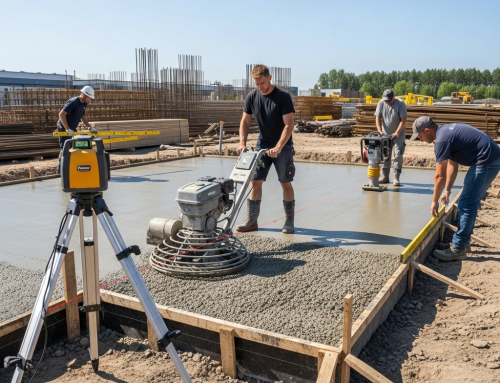
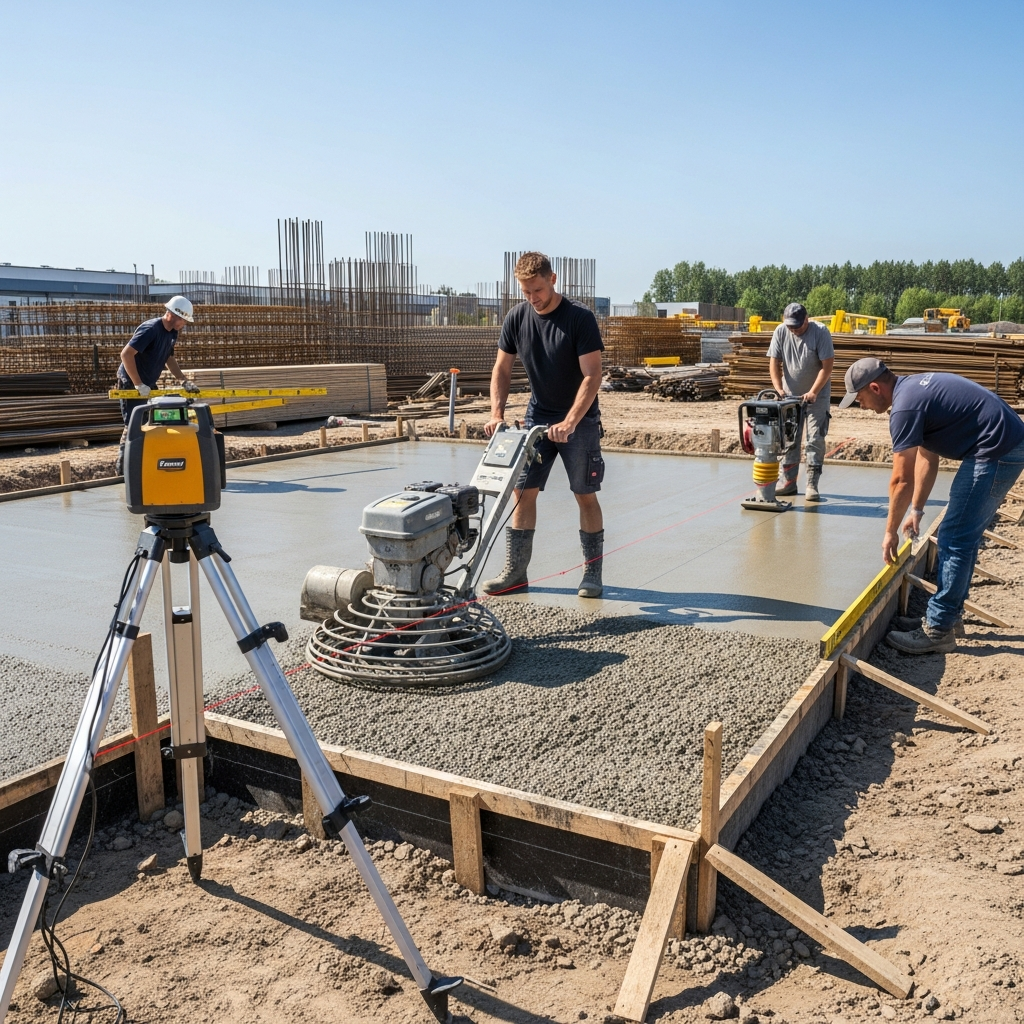
Think of slab foundations as the sturdy, no-nonsense friend who plants their feet firmly and doesn’t budge. It’s literally a thick concrete pad poured directly on the ground – your entire house sits on what’s essentially a giant concrete cookie. Simple, straightforward, but… well, we’ll get to the “but” part.
Pier and beam foundations, on the other hand, are more like that friend who’s always prepared for anything. Your house sits on wooden beams that are supported by concrete piers (or posts, if you will). There’s actually space – a crawl space – between your house and the ground. It’s like your home is wearing platform shoes.
The Slab Story: When Simple Gets Complicated
Slab foundations became super popular in the post-war housing boom because they were fast and relatively cheap to install. Makes sense, right? Pour concrete, wait for it to cure, start building. Done.
But here’s where it gets interesting – and by interesting, I mean potentially expensive. Remember that moody Grand Prairie clay I mentioned? When it gets wet, it swells up like a sponge. When it dries out (hello, Texas summer), it shrinks. Now imagine your house is sitting directly on this emotional soil…
The concrete slab moves with the soil because, well, it doesn’t have much choice. Sometimes this creates what we call “differential settling” – basically, different parts of your foundation decide to go on different elevations. Your living room might stay put while your kitchen decides to take a little dip. Doors start sticking, cracks appear in walls, and suddenly you’re wondering if your house is trying to tell you something.
Pier and Beam: The Foundation That Thinks Ahead
Now, pier and beam foundations – these were designed by people who clearly understood that soil has commitment issues. By lifting your house off the ground and supporting it with strategically placed piers, this system creates some breathing room between your home and the temperamental earth below.
Think of it like this: if slab foundations are like sitting directly on a waterbed, pier and beam foundations are like having a really good mattress frame that keeps you stable even when the waterbed is doing its wavy thing underneath.
The crawl space also gives you access to plumbing, electrical, and HVAC systems. Ever tried to fix a water leak under a slab? It’s about as fun as it sounds – which is to say, not at all. With pier and beam, you can actually crawl under there and see what’s going on. (Though I should mention, most people aren’t exactly excited about crawling around in tight, dark spaces… but hey, at least it’s possible.)
The Plot Twist: Neither is Perfect
Here’s what nobody tells you upfront – both foundation types have their quirks. Slab foundations can crack and shift, but they’re also incredibly durable and don’t have issues with sagging floors or moisture problems in crawl spaces. Pier and beam foundations give you flexibility and access, but those wooden beams? They can sag over time, especially if moisture gets involved.
It’s kind of like choosing between a sports car and an SUV – both will get you where you need to go, but they handle differently and have their own maintenance personalities. The key is understanding what you’re working with so you can spot problems early and deal with them before they become wallet-draining disasters.
And that’s exactly what we need to talk about next…
When to Call in the Pros (And When You Can Wait)
Here’s something most contractors won’t tell you upfront – not every crack in your foundation needs immediate attention. I’ve seen homeowners panic over hairline cracks that are just normal settling, while others ignore obvious red flags until their doors won’t close properly.
For slab foundations, you’re looking at serious trouble when cracks are wider than a quarter-inch, especially if they’re growing. If you can stick a coin in there and it disappears… that’s your cue to start making phone calls. Same goes for any horizontal cracks – those are structural nightmares waiting to happen.
With pier and beam, your warning signs are different. Sagging floors, bouncy spots when you walk, or visible gaps between your walls and floors? Don’t wait. The wooden elements can deteriorate fast in our Texas humidity, and what starts as a small repair can snowball into a complete re-do if you drag your feet.
Getting Multiple Quotes (The Smart Way)
Most people think getting three quotes means calling three companies and picking the cheapest. Wrong move – especially in Grand Prairie where fly-by-night operators love to prey on desperate homeowners after heavy rains.
Instead, ask each contractor these specific questions: What’s causing the problem? (Not just what needs fixing, but why it happened.) How long will the repair last? What’s your warranty structure? And here’s the kicker – ask them what they’d do if this were their own home.
The best contractors will walk your entire foundation, not just look at the obvious problem spots. They’ll explain why your northeast corner is sinking (probably that old oak tree’s roots) and show you drainage issues you didn’t even notice. If someone gives you a quote after a ten-minute walkthrough… keep looking.
Timing Your Repairs for Maximum Savings
Want to save thousands? Don’t wait until spring when every foundation company in North Texas is slammed with storm damage calls. Late fall and winter are your sweet spots – contractors are hungry for work, and you’ll get better prices plus faster scheduling.
But here’s the thing about timing repairs… if you’ve got active foundation movement, waiting for the “perfect” season could cost you more in the long run. I’ve seen homeowners save $2,000 by waiting until winter, only to spend an extra $8,000 because the problem got worse.
For slab repairs, dry conditions are actually better for most methods. The concrete cures properly, and contractors can work more efficiently. Pier and beam work? Weather matters less, since most of the action happens in your crawl space anyway.
DIY vs Professional: Where to Draw the Line
Look, I’m all for DIY spirit, but foundation work isn’t the place to learn on the job. However – and this is important – there are some prep steps you can handle that’ll save money and help your repairs last longer.
Before any contractor arrives, clear vegetation from around your foundation. Not just trimming – I’m talking about removing plants whose roots could be contributing to the problem. That mature crepe myrtle right against your house? It might be beautiful, but it’s probably part of the issue.
You can also improve drainage yourself. French drains, better guttering, extending downspouts… these aren’t glamorous fixes, but they prevent future problems. Think of it as insurance for your repair investment.
The Real Cost Breakdown (Beyond the Estimate)
Here’s what nobody mentions in those initial quotes – the hidden costs that pop up during foundation work. Plumbing lines that need rerouting (especially common with slab work), electrical adjustments, and my personal favorite… the flooring repairs afterward.
Budget an extra 20% beyond your highest estimate. Seriously. Foundation work is like opening Pandora’s box – you never know what you’ll find once they start digging.
Also, factor in temporary living arrangements if you’re dealing with major pier and beam work. Some repairs require you to be out of the house for a few days, especially if they’re replacing multiple support beams.
Protecting Your Investment Long-Term
Once your foundation is solid again, your job isn’t done. The best repair in the world won’t last if you don’t address what caused the problem in the first place.
Install a sprinkler system that maintains consistent soil moisture – not for your lawn, but for your foundation. Expansive clay soil (which we have plenty of in Grand Prairie) shrinks and swells with moisture changes. Consistent watering prevents those dramatic soil movements that crack foundations.
And please… maintain your gutters. I can’t stress this enough. More foundation problems start with poor drainage than any other single factor.
When Your Foundation Inspector Delivers Bad News
You know that sinking feeling when the foundation guy walks out from under your house shaking his head? Yeah, we’ve all been there. The thing is, foundation problems don’t announce themselves with a polite knock on the door. They sneak up on you through hairline cracks, doors that won’t close right, or – my personal favorite – that one spot in the hallway where you always trip because the floor’s just a tiny bit higher than it should be.
The real challenge isn’t just the repair itself… it’s figuring out what the heck you’re actually dealing with in the first place.
The “Everything Looks Fine to Me” Problem
Here’s what trips up most homeowners in Grand Prairie – foundation issues are masters of disguise. That gap between your baseboards and the wall? Could be normal settling. Could be your slab shifting. The sticky door in the guest room that you’ve been meaning to sand down for three years? Maybe it just needs sanding. Or maybe your pier and beam structure is playing musical chairs underneath your feet.
The solution isn’t to ignore the signs (though Lord knows we all try that first). Start keeping a simple photo log on your phone. Take pictures of cracks, gaps, doors that won’t shut properly. Date them. Foundation movement happens slowly, and having a visual timeline helps you – and your repair specialist – understand whether things are getting worse or just staying annoying.
Actually, that reminds me… one client showed me photos spanning two years of what she thought was just a “quirky old house.” Turns out her pier and beam foundation had been doing a slow-motion dance for months. The photos told the whole story.
Slab Repairs: The Hidden Cost Nightmare
Nobody – and I mean *nobody* – expects the full scope of slab foundation repair until they’re knee-deep in it. You think you’re just fixing some cracks, then suddenly you’re talking about interior disruption, possible plumbing issues, and costs that make your eyes water.
The biggest challenge with slab repairs? You can’t see what you’re dealing with until you start digging. It’s like surgery – you go in thinking it’s appendicitis and find out the patient also needs their gallbladder removed.
Here’s your game plan: Always – *always* – get multiple detailed estimates. Not just the bottom-line number, but what each contractor expects to find and how they’ll handle surprises. Ask specifically about plumbing complications (Grand Prairie’s shifting clay soil loves to mess with pipes), interior flooring damage, and timeline flexibility.
And budget for surprises. I know, I know… nobody wants to hear that. But setting aside an extra 20-30% for “oh crud, we found something else” moments will save your sanity and your marriage.
Pier and Beam: The Access Anxiety
With pier and beam foundations, the main challenge isn’t usually cost – it’s the creepy crawl space factor. Half the homeowners I talk to haven’t been under their house since they bought it, and the thought of contractors spending weeks down there makes them nervous.
The solution is being proactive about communication. Before work starts, ask your contractor to walk you through what they’ll be doing under there. Most good foundation repair companies will actually *want* to show you the problem areas – it helps justify the work and builds trust.
Also, this might sound weird, but… consider going under there yourself before the work starts. Bring a flashlight, wear old clothes, and just look around. You’ll feel more in control of the process, and you’ll better understand what your repair team is talking about.
The Clay Soil Wild Card
Here’s the thing nobody mentions in those glossy foundation brochures – Grand Prairie’s expansive clay soil has a mind of its own. It swells when wet, shrinks when dry, and basically treats your foundation like a chew toy year-round.
This creates a challenge that goes beyond just fixing what’s broken. You need repairs that can *adapt* to ongoing soil movement, not just address current damage.
Ask potential contractors how they account for ongoing soil issues. Do they install drainage solutions? Do they use flexible repair methods? Are they planning for future movement or just fixing today’s problems?
The best foundation repair isn’t necessarily the cheapest or fastest – it’s the one that acknowledges your soil isn’t going to suddenly start behaving itself just because you fixed the immediate issue.
What to Expect During the Repair Process
Let’s be honest – foundation repair isn’t exactly a weekend DIY project. Whether you’re dealing with slab or pier and beam issues, you’re looking at a process that’ll stretch over several days to potentially a few weeks, depending on what Mother Nature throws at you (and trust me, she’s got opinions about construction schedules).
For slab repairs, you’re typically looking at 2-5 days for most jobs. Pier and beam work? That can stretch anywhere from 3-7 days, sometimes longer if we discover… well, let’s call them “surprises” once we start digging. And there are always surprises – it’s like opening a really expensive present you didn’t want.
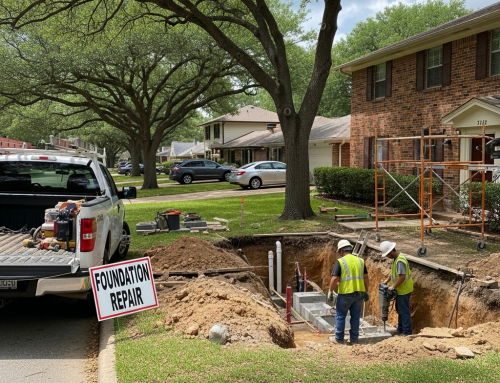
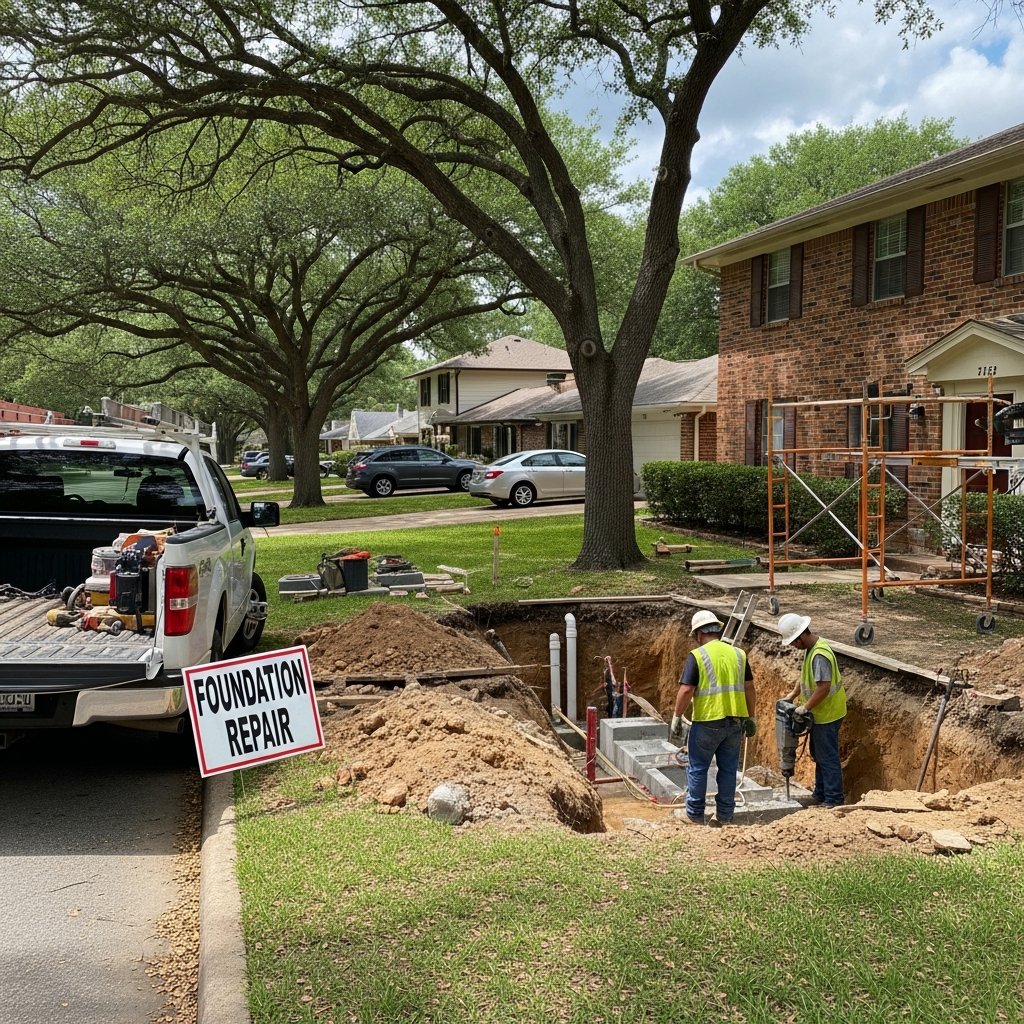
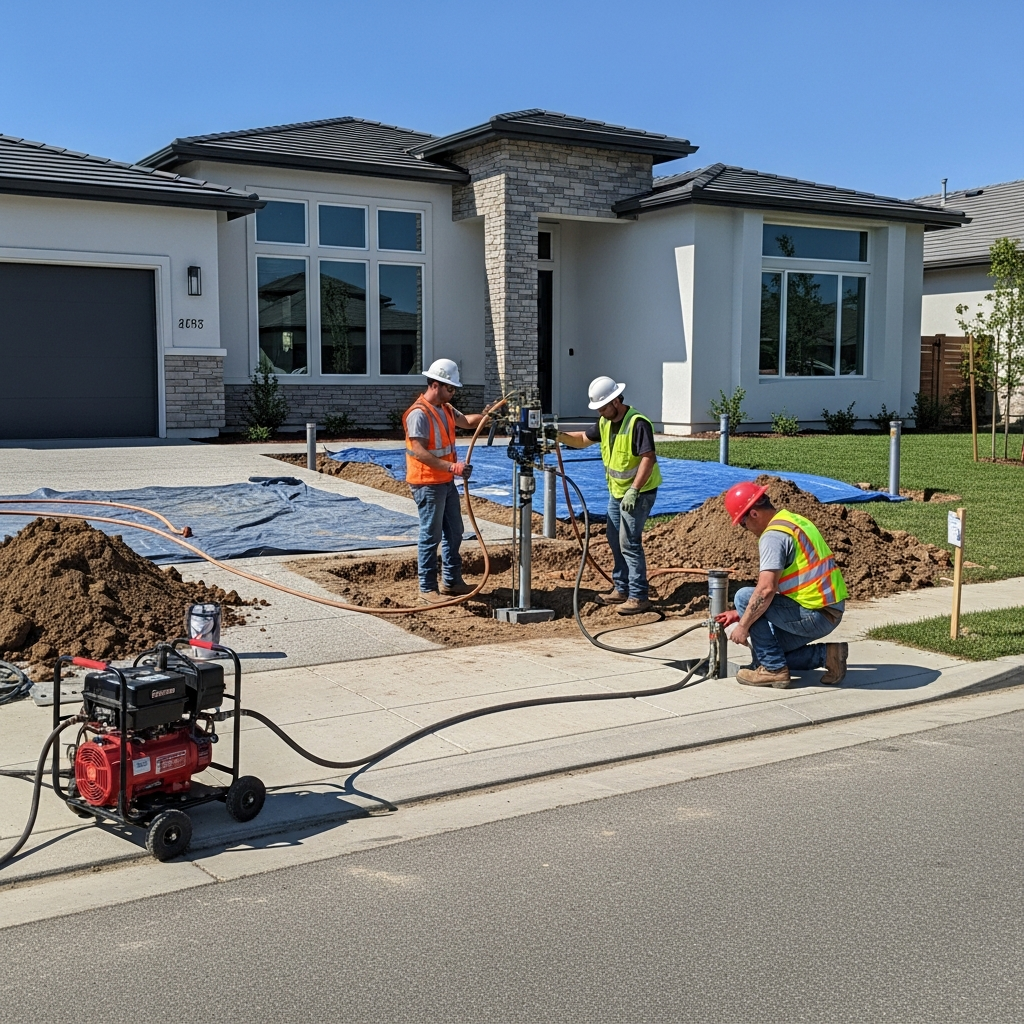
Here’s what actually happens: Day one usually involves the crew showing up bright and early (sorry, but foundation work starts when it’s cool). They’ll mark utilities, set up equipment, and begin the excavation process. Don’t panic when your yard starts looking like an archaeological dig site – that’s completely normal. Your landscaping might take a temporary hit, but a solid foundation is worth a few trampled flowerbeds.
The Noise, The Mess, and The Reality Check
Nobody’s going to sugarcoat this – foundation repair is loud. Really loud. We’re talking jackhammers, hydraulic equipment, and the occasional colorful language when something doesn’t go as planned. If you work from home, you might want to find a coffee shop for a few days. Your neighbors… well, hopefully you’re on good terms with them.
The mess is real too. Dirt gets everywhere – and I mean everywhere. It’ll find its way into places you didn’t even know existed. We do our best to contain it, but foundation repair involves moving a lot of earth around. Think of it as temporary chaos for long-term peace of mind.
Weather delays are part of the game here in Grand Prairie. Heavy rain can shut down work for days, especially with pier and beam repairs where we need dry conditions for proper concrete curing. It’s frustrating, but trying to rush foundation work in bad weather is like trying to ice a cake while it’s still hot – messy and ultimately counterproductive.
Communication Throughout the Process
A good contractor will keep you in the loop, but don’t expect hourly updates. Most crews will check in at the end of each day, let you know what was accomplished, and give you a realistic timeline for the next phase. If you haven’t heard anything by mid-afternoon, it’s totally fine to ask for a quick update.
Some contractors use apps or send photos of progress – which is great – but others prefer the old-school approach of actually talking to you face-to-face. Either way works, as long as you’re not left wondering what’s happening in your own backyard.
After the Heavy Lifting Is Done
Once the major repair work is complete, there’s usually a settling period. Your house needs time to… well, settle into its new reality. You might notice minor cosmetic issues – small cracks in drywall, doors that need slight adjustments, or windows that operate differently. This is normal, not a sign that something went wrong.
Most reputable contractors will do a walkthrough with you, explaining what to watch for and when to be concerned. They’ll also schedule a follow-up visit – usually 30 to 60 days out – to check how everything’s adjusting.
Planning for Disruption (Because There Will Be Some)
Let’s talk logistics. You’ll probably want to move anything valuable or fragile away from exterior walls. The vibrations from equipment can knock pictures askew or rattle dishes. It’s also smart to have backup plans for daily routines – maybe that’s working elsewhere for a few days or staying with family if the work is particularly extensive.
Pet owners, listen up – dogs and foundation repair equipment don’t mix well. Most dogs either hide under the bed all day or spend their time barking at every sound. Consider doggy daycare or ask a friend to babysit for the noisiest days.
The good news? Once it’s done, it’s done. You’ll have peace of mind knowing your foundation is solid for decades to come. And honestly, after living through the repair process, you’ll appreciate the quiet normalcy of a stable house even more.
You know what? After all this talk about slabs and pier and beam foundations, I bet you’re feeling a bit overwhelmed. That’s completely normal – foundation issues aren’t exactly dinner table conversation for most of us, and suddenly you’re supposed to become an expert overnight just because your doors won’t close properly or there’s a crack running down your hallway wall.
Here’s the thing though… you don’t have to figure this all out on your own. Sure, understanding the basics helps – and knowing whether you’ve got a concrete slab or a raised foundation definitely matters when it comes to repair options and costs. But at the end of the day, what really matters is getting your home back to feeling safe and solid under your feet.
Trust Your Instincts (And Get a Professional Opinion)
If something feels off about your house – maybe the floors seem bouncy, or you’ve noticed new cracks appearing – don’t brush it off as “settling.” Your home is probably trying to tell you something important. Grand Prairie’s clay soil doesn’t mess around, and neither should you when it comes to foundation problems.
The good news? Most foundation issues are totally fixable. Whether you’re dealing with a slab that’s shifted or pier and beam problems, experienced contractors have seen it all before. They’ve worked with Grand Prairie’s unique soil conditions for years, and they know exactly how to address whatever your foundation is dealing with.
You’re Not Alone in This
I get it – foundation repair feels like this massive, scary expense that comes out of nowhere. One day you’re living your life, and the next day someone’s telling you that you need thousands of dollars worth of work done under your house. It’s enough to make anyone lose sleep.
But here’s what I’ve learned from talking to countless homeowners who’ve been exactly where you are right now: the anticipation is almost always worse than the reality. Once you know what you’re dealing with and have a solid plan in place, that knot in your stomach starts to loosen. You realize this isn’t the end of the world – it’s just another home maintenance issue that needs attention.
Ready to Move Forward?
If you’re sitting there wondering whether those cracks are serious or if that sticky door is really a foundation problem, why not get some answers? A thorough inspection by a qualified foundation repair specialist can give you the peace of mind you’re looking for – and if there is work needed, you’ll know exactly what you’re facing.
Don’t let foundation concerns keep you up at night or make you second-guess every little thing about your house. The experts who do this work every day in Grand Prairie understand both slab and pier and beam foundations inside and out. They can explain what’s happening with your specific situation, walk you through your options, and help you make the best decision for your home and your budget.
Your house has been taking care of you – now it’s time to take care of it. Reach out to a local foundation repair professional today. You’ll be amazed how much better you’ll feel just knowing where you stand.