How to Choose the Right Foundation Repair Company
You’re lying in bed at 2 AM when you hear it again – that subtle creaking sound that wasn’t there six months ago. Or maybe you’ve been ignoring the hairline crack above your kitchen window that seems to grow a little wider each week. Perhaps it’s that door that suddenly won’t close properly, or the way your hardwood floors feel slightly… off when you walk across them.
Here’s the thing about foundation problems – they’re like that friend who drops subtle hints instead of just saying what’s wrong. The signs start small, almost innocent. A tiny gap here, a minor settling sound there. But your gut? Your gut knows something’s not right.
I get it. The moment you even *think* the word “foundation,” your mind probably jumps straight to dollar signs. Big, scary dollar signs. You’re imagining contractors in hard hats shaking their heads gravely, talking about excavation and structural integrity while your bank account weeps in the corner.
But here’s what I’ve learned after talking with countless homeowners who’ve been exactly where you are right now – the biggest mistake isn’t waiting too long to fix the problem (though that’s definitely up there). It’s choosing the wrong company to fix it.
Think about it this way: your foundation is literally what everything else sits on. It’s not like picking someone to paint your fence or install new gutters. This is the bones of your home we’re talking about. Get it wrong, and you could end up with a repair that fails in two years… or worse, additional damage that costs you twice what the original fix would have been.
I’ve seen homeowners who went with the lowest bid only to discover their “repair” was basically a very expensive Band-Aid. Others who chose the company with the flashiest website and the smoothest sales pitch, then watched in horror as crews showed up unprepared and unqualified. And don’t even get me started on the folks who trusted their neighbor’s cousin’s friend who “does concrete work” – that rarely ends well.
The frustrating part? Foundation repair isn’t like buying a car where you can easily compare features and prices. Every house is different. Every problem is unique. And the technical jargon? It might as well be ancient Greek. How are you supposed to know if someone’s proposal for “underpinning with helical piers” is brilliant or complete overkill?
That’s exactly why you’re here, and honestly? You’re already ahead of the game just by doing your research first. Most people start Googling foundation repair companies *after* they’ve convinced themselves their house is basically sliding into a sinkhole. You’re being proactive, which tells me you’re the kind of person who makes smart decisions.
What you’re going to learn in this guide isn’t just a list of questions to ask potential contractors (though we’ll definitely cover that). You’re going to understand how to spot the red flags that scream “run away” – and more importantly, the green flags that indicate you’ve found someone worth trusting with your home’s most critical system.
We’ll walk through what different types of foundation problems actually mean, because knowing whether you’re dealing with minor settling or major structural movement completely changes your approach. You’ll discover the crucial questions that separate the pros from the pretenders… the ones that make experienced contractors light up with enthusiasm and send the sketchy ones scrambling for the door.
And because I know you’re thinking about it – yes, we’ll talk about money. Not just how much foundation repair typically costs (spoiler alert: it varies wildly), but how to evaluate quotes that seem too good to be true versus ones that make you wonder if they’re planning to rebuild your entire house from scratch.
Look, your home is probably your biggest investment. It’s where your kids take their first steps, where you host holiday dinners, where you collapse after long days feeling grateful for your own space. You deserve to feel confident that it’s sitting on solid ground – literally and figuratively.
So let’s figure out how to find the right people to make sure it stays that way.
What Actually Causes Foundation Problems (And Why It Matters for Your Choice)
You know how some people blame everything on “settling” when their house starts acting up? Well, that’s like saying your car won’t start because of “car problems.” Sure, it’s technically true, but it doesn’t tell you much about what’s actually going wrong – or how to fix it.
The thing is, different foundation issues need totally different solutions. And here’s where it gets tricky: a company that specializes in one type of repair might see every problem through that lens. It’s like the old saying about hammers and nails, except we’re talking about your house’s literal foundation.
Soil movement is usually the real culprit behind most foundation drama. Clay soil expands when it gets wet (think of those little sponge animals you drop in water), then shrinks when it dries out. Do this enough times, and even the sturdiest foundation starts to shift. Sandy soil has its own personality – it tends to wash away or compress under weight, leaving gaps where support used to be.
Then there’s water damage, which… honestly, water finds a way to cause trouble everywhere, doesn’t it? Poor drainage around your house can saturate the soil on one side while the other side stays dry. Guess what happens? Uneven pressure. And foundations hate uneven anything.
The Warning Signs That Actually Mean Something
Most homeowners notice the obvious stuff first – doors that suddenly need a good shoulder-check to close, or cracks appearing in walls like unwelcome artwork. But here’s what’s counterintuitive: those visible problems are usually the last things to show up, not the first.
Your foundation might be struggling long before you see interior damage. Exterior cracks in the foundation itself, gaps between the foundation and the ground, or water pooling around your house after rain – these are the early warning whispers before the loud alarm bells start ringing.
Actually, that reminds me of something important: not all cracks are created equal. Hairline cracks that run horizontally? Usually not a big deal – they’re often just concrete doing what concrete does as it cures and ages. But stair-step cracks in brick or block walls, or vertical cracks that are wider at the top than the bottom? Those are your foundation’s way of saying “Houston, we have a problem.”
Understanding the Main Types of Foundation Repairs
This is where things get… well, let’s just say the repair industry has more methods than there are flavors at an ice cream shop. And like ice cream shops, some companies only serve vanilla while others have 47 exotic options.
Underpinning is probably the most common approach – think of it as giving your foundation new legs to stand on. Steel piers, concrete piers, helical piers… they all essentially do the same job but work differently depending on your soil conditions. It’s like choosing between hiking boots, running shoes, or snow boots – they’re all footwear, but you wouldn’t wear flip-flops to climb a mountain.
Slabjacking (also called mudjacking) is more like foundation physical therapy. Instead of adding support, it lifts and levels concrete slabs by pumping material underneath. Newer variations use polyurethane foam instead of the traditional concrete mixture – it’s lighter, sets faster, and honestly sounds a bit like something from a science fiction movie.
Drainage solutions often get overlooked, but they’re crucial. You can repair foundation damage all day long, but if you don’t fix the water problem that caused it… well, you’ll be having this conversation again in a few years.
Why the “Cheapest Bid” Strategy Usually Backfires
Here’s something that might surprise you: foundation repair is one of those fields where the lowest bid often signals the biggest problems down the road. Not because expensive automatically means better – that’s not it at all. But because proper diagnosis takes time, and time costs money.
A company that gives you an estimate after a 10-minute walkthrough? They’re either incredibly experienced (possible) or they’re not looking very hard at the actual problem (more likely). The foundation world is full of stories about homeowners who got a “great deal” only to discover the repair didn’t address the root cause.
Think of it like going to a doctor who prescribes medication without examining you first. Sure, you might get lucky and the treatment works, but wouldn’t you rather have someone who takes the time to figure out what’s actually wrong?
Get Multiple Quotes – But Do It Smart
Here’s the thing about getting estimates… most people just call three companies and pick the middle price. That’s like choosing a restaurant based on how much they charge for coffee – you’re missing the whole picture.
When you contact companies, don’t just ask “How much to fix my foundation?” Instead, describe the specific problems you’re seeing. Are there cracks in your basement walls? Is your kitchen floor starting to slope? The more details you give upfront, the better quality quotes you’ll receive.
And here’s a little secret – schedule all your estimates within the same week if possible. Foundation problems don’t usually change dramatically in a few days, so you’ll get apples-to-apples comparisons. Plus, when the third contractor mentions something the first two didn’t… that’s when you know to ask more questions.
Red Flags That Should Send You Running
Look, I’ve seen too many homeowners get burned by smooth-talking contractors who show up with clipboards and urgent warnings about “immediate structural collapse.”
Door-to-door foundation companies? Just no. Legitimate foundation repair companies are busy enough with referrals – they don’t need to cruise neighborhoods looking for work. Same goes for anyone who “happened to be working in your area” and noticed your foundation issues from the street.
The high-pressure tactics are another dead giveaway. If someone’s pushing you to sign today with threats about your house falling down tomorrow, they’re probably more interested in your wallet than your foundation. Real foundation problems develop over months or years – not overnight.
The Questions That Separate Pros from Pretenders
When you’re talking to potential contractors, ask them to explain *why* your foundation problem happened in the first place. A good contractor will walk around your property, look at drainage, soil conditions, maybe even check your gutters. They’re playing detective, not just measuring cracks.
Here’s a question that’ll really tell you what you’re dealing with: “What’s your warranty, and what exactly does it cover?” Fly-by-night operators get squirmy here. Established companies will hand you a written warranty that covers both materials and labor, usually for 10-25 years.
Also ask about their typical timeline. Foundation repair isn’t usually a same-day job (despite what some might claim). If they can start tomorrow and finish by lunch… that’s probably not the thorough approach your foundation needs.
Actually Check Those References – Here’s How
Don’t just collect reference phone numbers and stuff them in a drawer. Call them. But instead of asking “Were you happy with the work?” – which only gets you surface-level answers – try these questions
“Did they finish on schedule?” “How was the cleanup afterward?” “If you had foundation problems again, would you call them back?” That last one’s gold – it tells you if the customer truly trusts the company.
Better yet, ask if you can see the completed work. Most satisfied customers are happy to show off their fixed foundations. If the contractor hesitates to provide recent local references… well, that tells you something too.
The Money Talk – Beyond Just Price
Here’s something most articles won’t tell you – the cheapest quote is often hiding costs somewhere. Maybe they’re planning to use inferior materials, or they’re not including necessary permits, or they’ll hit you with “unexpected” charges once they start digging.
Ask each contractor to break down their estimate line by line. Materials, labor, permits, cleanup – everything. This isn’t being difficult; it’s being smart. And if anyone refuses to itemize their quote, that’s your cue to keep looking.
Some companies offer financing – which can be helpful for major foundation work that runs into five figures. But read that fine print carefully. Zero percent interest sounds great until you realize it jumps to 24% if you’re even one day late with a payment.
Trust Your Gut (It Knows More Than You Think)
After all the research and questioning and quote-comparing… sometimes it comes down to which contractor you’d feel comfortable having in your home for several days. Did they show up on time for the estimate? Did they respect your property, wiping their feet and not trampling your flower beds?
These details might seem small, but they’re actually huge indicators of how they’ll handle your project. Foundation repair can be messy, disruptive work – you want someone who cares about doing it right, not just getting it done.
When Everyone Sounds the Same (But Isn’t)
You’ve probably noticed this already – foundation repair companies all seem to say exactly the same things. “Licensed and insured!” “Family owned!” “Free estimates!” It’s like they’re all reading from the same script… which honestly, they might be.
The real challenge? Figuring out what actually matters when the sales pitches blur together. Here’s what trips up most homeowners: they focus on the wrong things. That “family owned since 1987” might sound reassuring, but if they’ve been doing shoddy work for 35 years, well… experience isn’t always a good thing.
Instead, dig into their recent projects. Ask to see photos from jobs completed in the last six months – not the greatest hits from 2015. A company that’s proud of their current work will have plenty to show you. Actually, they’ll probably show you more than you want to see.
The Pressure Cooker Problem
Let’s talk about something that makes everyone uncomfortable – the hard sell. You know the drill: “This price is only good if you sign today!” or “We just happened to have a cancellation, so we can start tomorrow!”
Look, foundation problems feel urgent (because they kind of are), but legitimate companies don’t operate like used car lots. If someone’s pushing you to decide immediately, that’s usually because they don’t want you talking to competitors or doing research.
Here’s your out: “I appreciate the offer, but I need to discuss this with my spouse/accountant/pet goldfish.” Any company worth working with will respect that. The ones that keep pushing? Yeah, they’ve just saved you from making a mistake.
Money Talks (And Sometimes Lies)
The biggest headache for most people? Understanding what they’re actually paying for. You’ll get estimates ranging from $3,000 to $15,000 for what seems like the same work. It’s enough to make you want to move to an apartment.
The truth is, these aren’t really comparable estimates. One company might be quoting a basic fix that’ll last five years. Another is proposing a comprehensive solution that addresses the root cause. It’s like comparing a band-aid to surgery – both might stop the bleeding, but only one actually fixes the problem.
Here’s what actually helps: ask every company to break down their estimate line by line. Materials, labor, permits, warranty coverage – everything. The companies that can’t (or won’t) explain what you’re paying for? That tells you something important.
The Reference Runaround
Getting meaningful references is harder than it should be. Most companies will happily provide a list of glowing testimonials, but those are about as useful as Yelp reviews for your dentist – heavily curated and potentially meaningless.
Instead, ask specific questions: “Can I speak to three customers whose work was completed in the last year?” Even better – ask to see a job site. Reputable companies often have current projects you can visit (with the homeowner’s permission, obviously).
And here’s something most people don’t think to ask: “What’s the biggest mistake you’ve made on a project, and how did you handle it?” Their answer tells you everything about how they deal with problems. Because trust me, problems will come up.
Permit Paralysis
Nobody wants to think about permits and inspections – it’s boring paperwork that delays everything. But here’s where a lot of homeowners get burned: they hire the company that says “Don’t worry about permits, we’ve got this covered” without actually checking if that’s true.
Foundation work almost always requires permits. If your contractor is being evasive about this, they’re either cutting corners or don’t know what they’re doing. Neither option ends well for you.
Solution? Call your local building department yourself. It takes ten minutes and could save you thousands in fines or remediation work down the road.
Trust Your Gut (It’s Usually Right)
After all the research and estimates and reference calls, sometimes it comes down to a feeling. That contractor who showed up late, seemed distracted, and couldn’t answer basic questions about your specific foundation type? Yeah, probably not your guy.
The best foundation repair experiences happen when you find that sweet spot – technical competence plus honest communication plus fair pricing. It exists, but it takes some digging to find it. The companies worth hiring make this process feel collaborative, not adversarial. They explain things clearly, respect your timeline, and treat your home like it matters.
Because it does.
What to Expect After You Sign the Contract
So you’ve done your homework, gotten multiple quotes, and finally picked a foundation repair company. Now what? Well, don’t expect them to show up tomorrow morning with jackhammers blazing – that’s just not how this works.
Most reputable companies are booked out anywhere from 2-8 weeks, sometimes longer during busy seasons. Spring and fall tend to be crazy busy (everyone’s thinking about home maintenance when the weather’s nice), while winter might open up faster slots. If someone can start “next week” without any scheduling conflicts… that might actually be a red flag. Good companies stay busy.
The permitting process – if your city requires it – can add another week or two to your timeline. Some companies handle this for you, others expect you to pull permits yourself. Make sure you’re crystal clear on who’s responsible for what.
The Pre-Work Phase (And Why It Matters)
Before anyone touches your foundation, there’s usually a flurry of behind-the-scenes activity. The company should arrange for utility marking – you know, those colorful spray-paint lines that suddenly appear in your yard. This isn’t optional; it’s required by law in most places.
Some companies will also do a final site inspection right before starting work. Don’t be surprised if they spot something that wasn’t obvious during the initial estimate. Sometimes digging reveals surprises (old utilities, different soil conditions, that random concrete slab from 1987 that nobody remembered). These discoveries can affect timelines and costs, which brings us to…
Budget Reality Check
Here’s the thing nobody wants to talk about upfront – foundation repair projects have a habit of revealing additional issues. It’s not that companies are trying to upsell you (well, the good ones aren’t). It’s more like opening a can of worms… literally, sometimes.
Plan for your project to cost about 10-20% more than the original estimate. Not because anyone’s being dishonest, but because foundations are underground, and underground is messy and unpredictable. Having a small buffer will save your sanity.
During the Work – What’s Normal (And What’s Not)
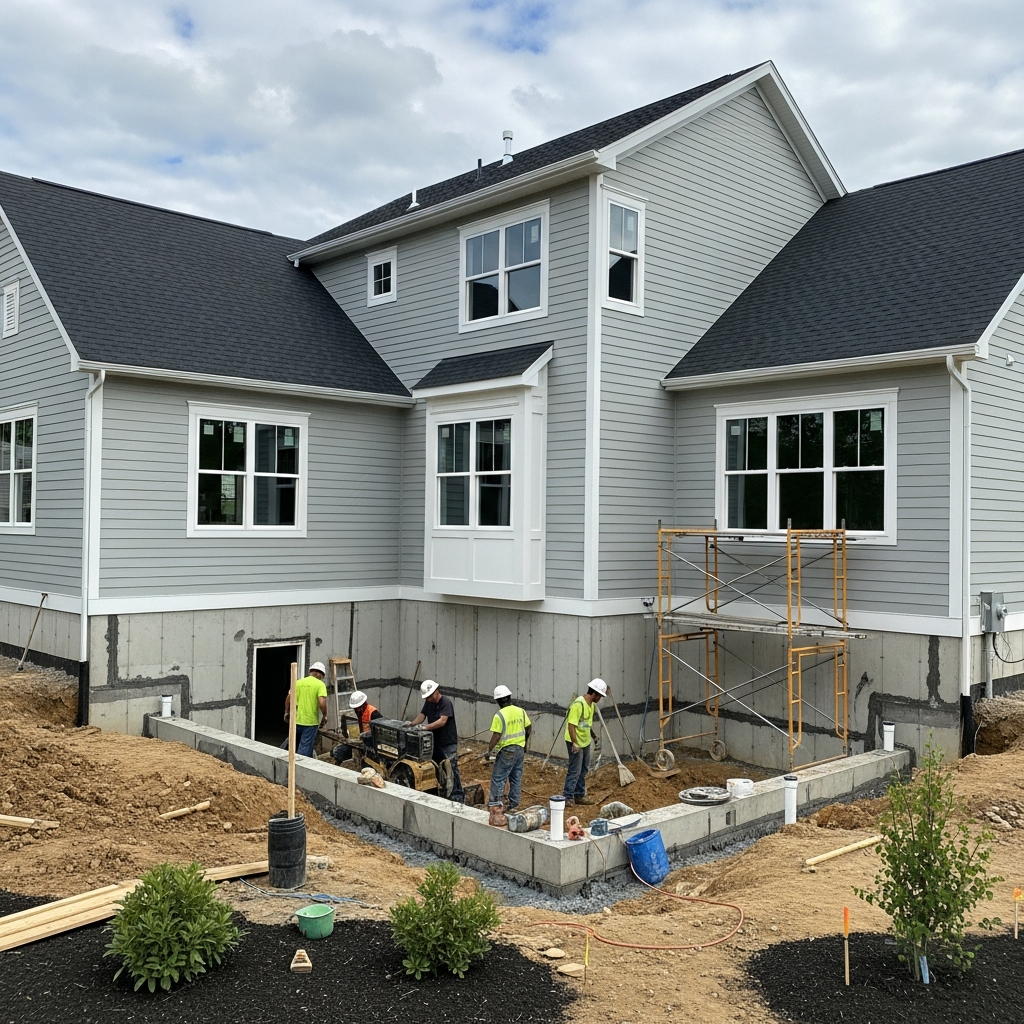
Foundation repair is loud, dusty, and disruptive. Your yard will look like a construction zone – because it is one. Expect noise from 8 AM to 5 PM (or whatever hours are allowed in your area), and yes, your house might shake a bit during drilling or excavation.
Good companies will lay plastic sheeting to protect your landscaping and use plywood to protect driveways where heavy equipment needs to cross. They should also clean up daily, not leave tools and debris scattered around.
What’s not normal? Workers showing up inconsistently, leaving the job site unsecured overnight, or refusing to answer your questions about the process. You’re not being a pest by asking what they’re doing – it’s your house.
Timeline Hiccups (Because They Happen)
Weather delays are just part of life, especially for exterior work. Rain can shut down excavation for days – you can’t pour concrete in a muddy hole, and trying to work in saturated soil is like trying to dig in pudding.
Equipment breakdowns happen too. That specialized pier-driving machine that’s crucial to your project? Sometimes it decides to have a bad day. Most companies have backup equipment or relationships with rental companies, but these things can add time.
The key is communication. A good contractor will call you when delays happen, not leave you wondering why your yard’s been half-dug for three days with no workers in sight.
Inspection and Final Walkthrough
Once the heavy work is done, there’s usually an inspection process – sometimes by the city, always by you. This is your chance to ask questions, point out concerns, and make sure everything matches what you agreed to.
Don’t rush this part. Bring your contract and walk through each item. Test any new drainage systems, look at the grading, check that cleanup is complete. Most issues are easier to address now than after the crew’s moved on to the next job.
The Not-So-Exciting Aftermath
Your foundation repair is done, but your house might need time to “settle” into its new normal. Minor cracks in drywall aren’t uncommon as everything adjusts. Most companies will tell you to wait 6-12 months before doing any major interior repairs – your house is still figuring out its new foundation situation.
Keep all your paperwork in one place. You’ll want those warranty documents handy, and if you sell the house someday, having detailed repair records is actually a selling point. It shows you took care of problems properly rather than ignoring them.
You know what? After everything we’ve talked about – from checking licenses to reading the fine print on contracts – I get that this whole process can feel pretty overwhelming. And honestly, it should feel important because it *is* important. We’re talking about the literal foundation of your home, the place where you make memories and feel safe.
Here’s the thing though… you don’t have to figure this all out alone.
I’ve seen too many homeowners get paralyzed by the decision-making process. They know something’s wrong – maybe there’s that crack in the basement wall that keeps getting longer, or doors that won’t close quite right anymore. But the fear of making the wrong choice, of getting taken advantage of, or of spending money they don’t have? It keeps them frozen in place while the problem gets worse.
That’s not going to be you, though. Because now you’ve got a roadmap. You know to ask about experience with your specific type of foundation. You understand why getting multiple estimates isn’t just smart – it’s essential. You’re not going to fall for high-pressure tactics or deals that seem too good to be true.
Most importantly, you trust your gut now. If something feels off during that initial consultation, if the contractor seems more interested in your wallet than your foundation… well, you know what to do.
Remember, the right company won’t rush you. They won’t show up at your door unannounced or pressure you to sign anything today. The good ones – the ones who’ve been doing this for years and have built their reputation on quality work – they want you to feel confident in your choice too.
And here’s something else I want you to remember: asking questions doesn’t make you difficult. It makes you smart. Any contractor worth their salt will appreciate working with an informed homeowner. They’ll take time to explain things, show you exactly what’s wrong, and walk you through their proposed solution step by step.
You’ve got this. Really, you do.
But if you’re still feeling uncertain, or if you just want someone to walk through your specific situation with you… that’s what we’re here for. We’ve helped countless homeowners navigate these exact decisions, and we’d be honored to help you too. No pressure, no sales pitch – just honest guidance from people who genuinely care about helping you protect your biggest investment.
Give us a call when you’re ready. Whether that’s tomorrow or next month, we’ll be here. Because foundation problems don’t get better on their own, but with the right team behind you? They absolutely can be fixed. And you deserve to have that peace of mind back – to walk through your home without wondering what’s happening underneath your feet, to sleep soundly knowing you made the right choice.
Your home has been taking care of you. Now let’s make sure you take care of it.