How Do Foundation Repair Companies Diagnose Structural Issues?

You’re lying in bed at 2 AM when you hear it again – that subtle *crack* from somewhere in the walls. It’s probably nothing, you tell yourself. Old houses make noises, right? But then you notice that hairline fracture above the doorway has gotten a little wider. And wasn’t that door sticking more than usual yesterday?
Here’s the thing about foundation problems… they’re like that friend who always says “we need to hang out soon” but never actually makes plans. They start small, whisper-quiet, almost polite in their arrival. But ignore them long enough? Well, let’s just say they stop being polite.
I’ve talked to hundreds of homeowners over the years, and the story’s always the same. It begins with something tiny – a door that won’t close quite right, a crack that wasn’t there last month, or (my personal favorite) that one corner where your coffee mug slides off the kitchen counter every single morning. You adapt. You learn to give the door an extra push, you tell yourself the crack adds character, you move the mug to a different spot.
But deep down… there’s this gnawing worry, isn’t there?
Because we all know someone – a neighbor, a cousin, that guy from work – who ignored the warning signs until their foundation repair bill looked like a mortgage payment. And suddenly you’re lying awake wondering: *How bad is this, really? What if it’s nothing? What if it’s everything?*
The problem is, most of us know about as much about foundation diagnosis as we do about brain surgery. When that foundation repair truck pulls up to your driveway, you’re completely at their mercy. They could tell you your house is about to slide into a sinkhole, and you’d have no way to know if they’re being straight with you or if they’re seeing dollar signs dancing over your roof.
That uncertainty? It’s brutal.
I remember talking to Sarah from Austin last year – she’d been getting wildly different opinions from three different companies. One said she needed $40,000 worth of pier underpinning. Another suggested $8,000 in crack injection. The third guy? He basically shrugged and said to call him in five years. Sarah felt like she was stuck in some bizarre version of *The Price is Right*, except instead of winning a new car, she might be looking at structural collapse.
Here’s what I’ve learned after years of watching this industry: the companies that really know their stuff? They have a process. A methodical, almost detective-like approach to figuring out what’s actually happening beneath your feet. They don’t just show up, take a quick look around, and start writing estimates. They investigate.
But here’s the catch – most homeowners have no idea what that investigation should look like. What tools should they be using? What questions should they be asking? How long should a proper assessment take? When you don’t know the difference between a legitimate diagnostic process and a sales pitch disguised as an inspection… well, that’s how people end up either overpaying for unnecessary work or, worse, getting a bandaid solution for a problem that needed surgery.
The good news? Foundation diagnosis isn’t actually mystical. These companies aren’t reading tea leaves or consulting crystal balls (though sometimes it feels that way). There’s a real methodology behind it – specific tools, proven techniques, measurable data. Once you understand what legitimate foundation professionals actually *do* during their assessment, you’ll never again feel helpless when they start throwing around terms like “differential settlement” and “hydrostatic pressure.”
You’ll know what questions to ask. You’ll recognize the red flags. Most importantly, you’ll be able to separate the companies who are genuinely trying to solve your problem from those who are just trying to solve their monthly sales quota.
So let’s pull back the curtain on this whole process, shall we? I’m going to walk you through exactly how reputable foundation repair companies diagnose structural issues – the tools they use, the data they collect, the signs they look for. By the time we’re done, you’ll know more about foundation diagnosis than most of your neighbors… and definitely more than that 2 AM version of yourself, lying there wondering if that crack means trouble.
What Makes a Foundation Actually “Fail”?
Here’s the thing about foundations – they’re not supposed to move. Like, at all. But here’s what’s confusing: they actually do move, just incredibly slowly and in ways we can’t see… until we can.
Think of your foundation like the roots of a massive tree. When everything’s working right, those roots grip the soil and stay put. But when soil conditions change – maybe it gets too wet, too dry, or starts shifting – those roots (your foundation) begin to move. And that’s when you start seeing cracks in your walls or doors that won’t close properly.
The tricky part? By the time you notice these symptoms, the foundation has usually been moving for months or even years. It’s like noticing your favorite jeans are getting tight – the weight gain didn’t happen overnight, even though it feels sudden when you finally admit it.
The Usual Suspects Behind Foundation Problems
Soil is the real villain in most foundation stories. I know, I know – dirt seems pretty harmless. But different types of soil behave completely differently under your house.
Clay soil is probably the most dramatic troublemaker. When it gets wet, it expands like a sponge. When it dries out, it shrinks and pulls away from your foundation. This constant expanding and contracting? It’s like your house is doing yoga poses it was never designed for.
Sandy soil has the opposite problem – it doesn’t hold together well and can wash away during heavy rains. Imagine trying to build a sandcastle with dry beach sand versus wet sand. The foundation needs that soil to stay put and provide consistent support.
Then there’s poor drainage, which… actually, let me put it this way. Water always wins. Always. If water wants to go somewhere, it’s going to find a way. And if that somewhere happens to be around your foundation, you’re going to have problems.
Why Foundations Crack (And Why Some Cracks Are Worse Than Others)
Not all cracks are created equal – this might be the most important thing to understand. Some cracks are like laugh lines on your face… they’re just part of aging and settling. Others are like chest pains – they need immediate attention.
Hairline cracks that run horizontally along mortar joints? Usually not a big deal. Your house is just settling into its spot, kind of like how you sink into a comfortable couch over time.
But vertical cracks that are wider at the top than the bottom? Or horizontal cracks with bowing walls? Those are the chest pain variety. They typically mean the soil is moving in ways that are putting serious stress on your foundation structure.
Here’s what’s counterintuitive: sometimes the worst foundation problems don’t show obvious cracks at all. Instead, you might notice doors sticking, windows that won’t open, or floors that feel bouncy. The foundation might be sinking evenly – called settlement – which doesn’t always create dramatic cracks but can still compromise your home’s structural integrity.
The Hidden World Beneath Your Floors
Most homeowners think of their foundation as just concrete sitting on dirt. But there’s actually a whole ecosystem down there that affects how your foundation performs.
The soil composition changes from house to house, sometimes even from one side of your property to the other. You might have clay on one side and sand on the other – which means different parts of your foundation are dealing with completely different challenges.
Moisture levels in that soil are constantly changing too. Heavy rains, leaky pipes, changes in your landscaping, even new construction in your neighborhood can alter how water moves around your foundation. It’s like your house is sitting on a slowly shifting, breathing foundation that responds to weather, seasons, and time.
And here’s something most people don’t realize: the age of your home affects how these problems develop. Newer homes often have better drainage systems and are built to current codes. But older homes? They were built when people understood less about soil mechanics and water management. That doesn’t make them bad houses – just houses that might need more attention as they age.
The bottom line is this: foundation problems are rarely simple, and they’re almost never caused by just one thing. Usually, it’s a perfect storm of soil conditions, drainage issues, construction methods, and time that creates the problems repair companies have to diagnose.
What to Expect During Your Foundation Assessment
You know that feeling when you’re waiting for test results at the doctor’s office? That’s exactly what it’s like when a foundation expert shows up at your door. The good news is – unlike medical tests – you can actually watch the entire diagnostic process unfold.
Most reputable companies will spend 45-90 minutes on your property, and here’s the insider tip: the longer they take, the more thorough they’re being. If someone rushes through in 20 minutes and immediately starts talking about expensive solutions… well, that’s your red flag right there.
A proper assessment starts outside, usually at least 10 feet away from your house. They’re looking at how water flows around your property, checking for trees that might be too close (anything within 20 feet of your foundation can cause issues), and observing the overall grade of your land. Then they’ll walk the entire perimeter – and I mean the *entire* perimeter, even that awkward spot behind your AC unit where the spiders live.
The Interior Investigation You Should Insist On
Here’s something most homeowners don’t realize: the inside of your house tells a completely different story than the outside. Those hairline cracks above your doorframes? The slightly sticky door that never used to stick? The basement wall that looks perfectly fine but feels damp when you touch it? These are all clues a good diagnostician will piece together.
Watch how they document everything. Professional companies use tablets or detailed forms, not just scribbled notes on the back of a business card. They should be taking photos of problem areas – and honestly, you should take your own photos too. It’s your house, after all.
The laser level comes out during this phase, and it’s fascinating to watch. They’re measuring floor elevations, checking if your house has settled unevenly. A quarter-inch difference might not sound like much, but in foundation terms, that’s significant movement.
Questions That Separate the Pros from the Sales Teams
This is where things get interesting. A legitimate foundation expert won’t just tell you what’s wrong – they’ll explain *why* it happened. Ask these specific questions, and pay attention to how they respond
“What’s causing this particular type of damage?” If they can’t explain whether it’s soil movement, water issues, or structural load problems, keep looking. Actually, let me rephrase that – if they *won’t* explain it in terms you can understand, that’s even worse.
“How long has this been developing?” Foundation problems don’t happen overnight (despite what it feels like when you first notice them). Someone who really knows foundations can usually estimate the timeline based on crack patterns, settlement amounts, and other visual clues.
Here’s a question that makes some contractors squirm: “What would happen if I wait six months to address this?” A good diagnostician will give you an honest assessment of urgency. Not everything needs to be fixed immediately, despite what some companies might suggest.
Red Flags That Should Make You Pause
I’ve seen too many homeowners get taken advantage of during foundation assessments, so let’s talk about the warning signs. Door-to-door foundation companies after a storm – just no. Legitimate companies are usually booked weeks out; they don’t need to chase business in neighborhoods.
High-pressure tactics during the diagnostic visit are another huge red flag. Things like “I can only offer this price today” or “Your house is in immediate danger” – real foundation problems develop over years, so unless you have obvious structural collapse happening, you have time to get multiple opinions.
Be wary of anyone who refuses to put their assessment in writing or won’t explain their diagnostic methods. You’re not asking for trade secrets here – you just want to understand what they’re seeing and why they’re recommending specific solutions.
Making the Most of Multiple Opinions
Here’s something contractors hate that I’m going to tell you anyway: get at least three assessments. But don’t just collect quotes – compare their diagnostic approaches. Did they all identify the same problem areas? Are their explanations consistent?
Sometimes you’ll get wildly different recommendations, and that’s actually valuable information. It might mean your situation is more complex than it first appeared, or it could reveal which companies are actually paying attention to detail versus those just pushing their preferred solutions.
The best diagnosticians will even point out things that *aren’t* problems – those settlement cracks that look scary but are actually just cosmetic, or that slightly sloped floor that’s been that way since the house was built. Trust builds when someone talks you out of unnecessary work, not into it.
When the Red Flags Don’t Match Your Reality
You’ve done your homework. You know settling cracks run vertically, while foundation problems create horizontal ones. But then you’re standing in your basement staring at a zigzag crack that looks like it can’t make up its mind – and suddenly all that research feels pretty useless.
Here’s what nobody tells you: real foundation issues rarely look like the textbook examples. That “minor” crack you’ve been ignoring? It might be connected to three others you haven’t noticed yet. The door that sticks only when it’s humid could actually be your foundation shifting just enough to throw everything slightly out of whack.
The solution isn’t to become a foundation expert overnight – it’s to document everything, even the weird stuff. Take photos from multiple angles. Measure crack lengths with a ruler (not just “about three inches”). Note when problems happen: only after rain, during certain seasons, or all the time? This kind of detail helps professionals connect dots you can’t see.
The Trust Factor Minefield
Let’s be honest – the foundation repair industry has a reputation problem. You’ve heard the horror stories: contractors who find expensive problems that may or may not exist, estimates that vary wildly between companies, and that nagging feeling that someone’s trying to sell you more than you actually need.
This skepticism isn’t paranoia… it’s smart. But it can also paralyze you when you genuinely do need help.
Start with companies that offer free inspections but don’t pressure you to sign anything that day. Ask them to explain not just what they found, but how they found it. A legitimate contractor won’t mind showing you the moisture meter readings or explaining why that crack concerns them. They’ll also be upfront about what they’re not sure about – because foundation diagnosis sometimes involves educated guesses based on experience.
When Multiple Opinions Make Everything Worse
Getting three estimates is standard advice, but what do you do when one company says you need $15,000 in repairs, another suggests $3,000 of work, and the third claims everything’s fine for now?
This isn’t uncommon, and it’s incredibly frustrating. Different companies have different risk tolerances, different methods, and – let’s face it – different business models. The $15,000 estimate might include preventive measures for problems that could develop in five years. The $3,000 quote might address only immediate concerns.
Here’s what actually helps: ask each contractor to prioritize their recommendations. What needs to happen this year versus what could wait? What’s safety-critical versus cosmetic? Most importantly, ask them to explain the consequences of waiting – not just vague warnings about “structural integrity,” but specific scenarios about what might happen and when.
The Money vs. Peace of Mind Calculation
Foundation work is expensive, and there’s often no way around that reality. But the financial stress can cloud your judgment in both directions – you might either panic and approve unnecessary work, or postpone necessary repairs because the numbers feel overwhelming.
The truth is, some foundation problems get worse quickly, while others stay stable for years. Learning to distinguish between these categories isn’t about becoming an expert – it’s about asking the right questions. Will this problem affect my home’s safety or just its value? Is this something that gets more expensive the longer I wait, or does the cost stay relatively stable?
Many foundation issues fall into a middle category that nobody talks about: problems that should be addressed but don’t require emergency action. This gives you time to save money, get additional opinions, or research companies more thoroughly.
The DIY Diagnosis Trap
YouTube makes everything look manageable, and foundation assessment seems straightforward enough. Measure some cracks, check for level floors, look for water damage – how hard can it be?
The problem isn’t that these steps are wrong… it’s that they’re incomplete. Foundation problems often involve multiple systems working together: drainage, soil conditions, structural elements, and even things like tree roots or neighbor’s construction projects. What looks like a simple crack on your basement wall might be connected to problems with your gutters, grading, or even a water main leak three houses down.
This doesn’t mean you shouldn’t do preliminary checking – just remember that professional diagnosis involves tools and experience you don’t have. Think of your initial assessment as gathering information for the experts, not replacing their evaluation. You’re building a case file, not solving the case.
What Should You Expect During the Diagnostic Process?
Let’s be honest – waiting for someone to tell you what’s wrong with your home’s foundation feels a lot like sitting in a doctor’s waiting room. You’re anxious, your mind is racing through worst-case scenarios, and every minute feels like an hour.
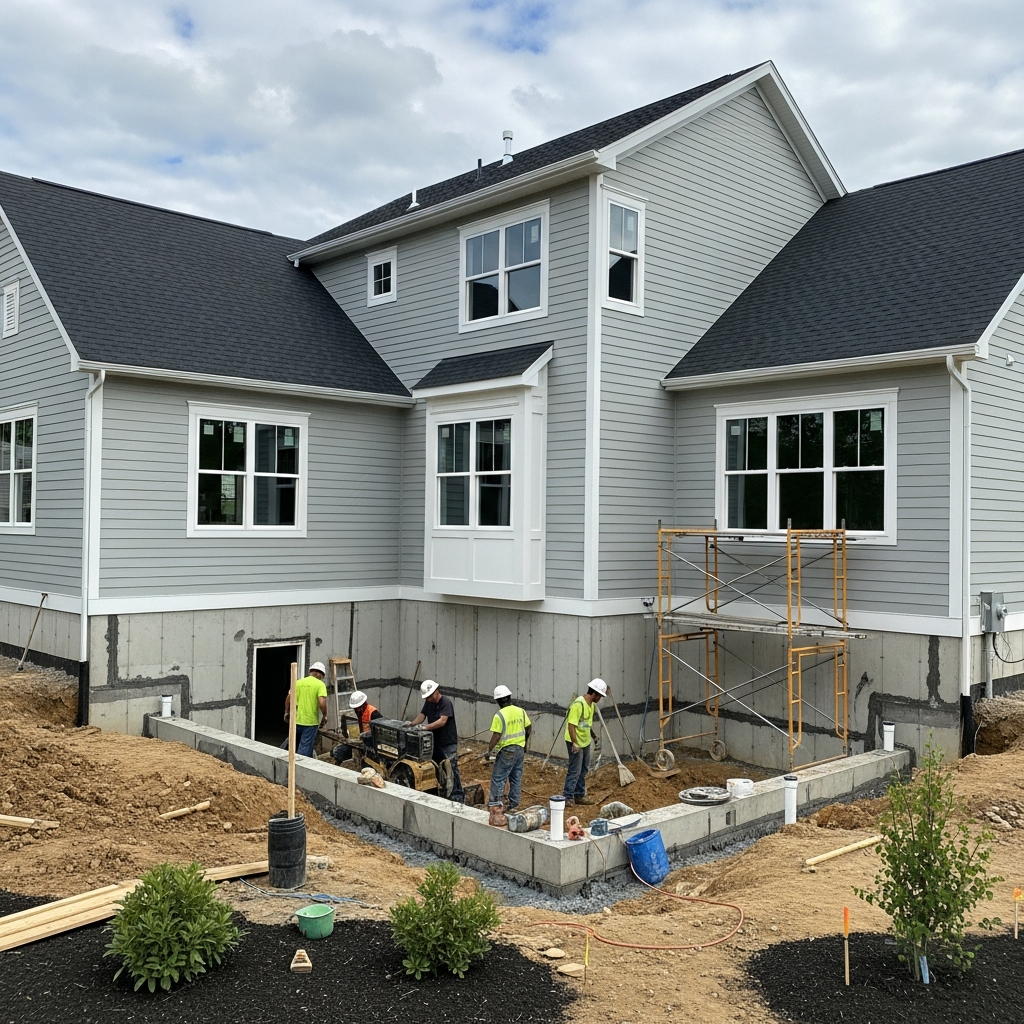
Here’s what typically happens: most reputable foundation companies will complete their initial assessment within 1-2 hours, depending on your home’s size and the complexity of the issues. Don’t expect a snap diagnosis, though. A thorough inspector will measure, photograph, probe, and sometimes even crawl under your house (yes, they really do that).
The detailed report usually takes 24-48 hours to prepare. I know that feels like forever when you’re worried about your biggest investment, but rushing this process helps nobody. A good diagnostic report is essentially a roadmap for your home’s future – it deserves time and attention.
You’ll want to ask about their diagnostic methods upfront. Do they use laser levels? How about moisture meters? Some companies still rely on basic visual inspections, which… well, let’s just say you wouldn’t want a doctor diagnosing you without proper equipment.
Understanding Your Diagnostic Report
When that report lands in your inbox (or gets handed to you in person), don’t panic if it looks like engineering homework. Most foundation issues sound scarier on paper than they actually are.
Your report should include photos – lots of them. Before and after measurements. A clear explanation of what they found and, crucially, what they didn’t find. If you’re getting a report that’s mostly jargon with no pictures, that’s a red flag.
Here’s what’s totally normal to see: minor settling (most homes do this), hairline cracks in concrete (again, pretty standard), or slight elevation changes (we’re talking fractions of an inch here). These don’t necessarily mean you need major work.
What’s not normal? Significant bowing walls, doors that won’t close properly, or cracks you can stick your finger into. But even then – take a breath. Foundation problems are fixable. Expensive sometimes? Yeah. End of the world? Definitely not.
Timeline Realities You Need to Know
This might sting a bit, but foundation work isn’t a weekend project. If you’re dealing with something serious, you’re looking at weeks or even months from diagnosis to completion.
Simple repairs – like sealing minor cracks or addressing drainage issues – might take just a few days. But if you need underpinning, piering, or major structural work… that’s a different story. We’re talking 2-6 weeks typically, sometimes longer if permits are involved (and they often are).
Weather plays a huge role too. Foundation work and heavy rain don’t mix well. Neither do foundation work and freezing temperatures. Your contractor should be upfront about seasonal delays – if they’re not, ask.
Don’t forget about permits. Most significant foundation work requires them, and permit approval can add 2-4 weeks to your timeline. I know, I know – more waiting. But proper permits protect you legally and ensure the work meets local codes.
Getting Ready for Multiple Opinions
Here’s something nobody talks about enough: foundation companies sometimes disagree. Wildly. What one company calls a major structural issue, another might dismiss as normal settling.
You’re not crazy for getting second (or third) opinions. In fact, for any repair estimate over $5,000, it’s smart to do exactly that. But don’t expect identical recommendations. Foundation work has some subjective elements, and different companies have different specialties and comfort levels.
Pay attention to how each company explains their findings. The best ones will show you exactly what they’re seeing, explain their reasoning, and answer your questions without making you feel stupid. If someone’s talking down to you or rushing through explanations… well, there are other companies out there.
Planning for the Financial Reality
Nobody wants to talk money, but foundation work isn’t cheap. Minor repairs might run $500-2,000. Moderate issues could be $3,000-8,000. Major structural work? You’re potentially looking at $10,000-30,000 or more.
Most reputable companies offer financing options – ask about them during the diagnostic phase, not after you’ve committed to work. And yes, this is exactly the kind of situation your emergency fund was meant for, even though it doesn’t feel like much of an “emergency” when the problem developed slowly over years.
The good news? Proper foundation work typically comes with solid warranties – often 10-25 years. That’s not just a repair; it’s an investment in your home’s long-term stability.
You know what? After walking through all these diagnostic methods – from those initial visual inspections to the high-tech laser measurements and soil tests – it’s pretty amazing how much detective work goes into understanding what’s happening beneath your home. It’s like having a whole team of structural Sherlock Holmes figures working to solve the mystery of why your doors won’t close properly or why that crack in your basement wall keeps growing.
The thing that strikes me most about this whole process is how methodical it really is. These aren’t just contractors showing up with a toolbox and making educated guesses. We’re talking about engineers who understand soil composition, moisture dynamics, and the physics of how buildings settle and shift over time. They’re using equipment that can measure movements down to fractions of an inch… which honestly makes me feel a bit better about the whole thing, doesn’t it?
But here’s what I think matters most – and this might sound obvious, but bear with me – early detection really is everything. Those hairline cracks you’ve been telling yourself are “just cosmetic”? That door that sticks a little more each month? Your foundation repair team can read these signs like a book. They know which symptoms point to normal settling (which happens to pretty much every house) and which ones are red flags that need immediate attention.
The Peace of Mind Factor
There’s something deeply reassuring about having professionals who can give you straight answers. Not the scary doom-and-gloom scenarios you might imagine late at night, and not the “everything’s fine” brush-offs either. Just honest assessments based on real data and years of experience.
And look, I get it – calling a foundation repair company can feel like opening Pandora’s box. What if they find something expensive? What if the problem is worse than you thought? But here’s the thing: ignoring foundation issues is like ignoring that weird noise your car’s been making. It doesn’t get better on its own, and waiting usually means more extensive (and expensive) repairs down the road.
Moving Forward with Confidence
The diagnostic process we’ve covered – from moisture readings to soil analysis to structural load assessments – gives you something invaluable: real information. No more wondering, no more worst-case-scenario spirals at 3 AM. Just facts about what’s happening and what needs to be done.
Most reputable companies will walk you through their findings step by step, explaining not just what they found, but why it matters and what your options are. Some problems might need immediate attention, others can be monitored over time. Some solutions are relatively simple, others more involved. But at least you’ll know.
If you’ve been noticing signs that something might be shifting or settling in your home, don’t let uncertainty keep you up at night. A professional diagnostic assessment can give you clarity – and often, peace of mind. Whether you’re dealing with minor settling or something more significant, having accurate information is the first step toward protecting your home and your family’s safety. Reach out to a local foundation specialist and get the answers you deserve. You’ll sleep better knowing exactly where you stand.