How Foundation Repair Companies Create Custom Solutions
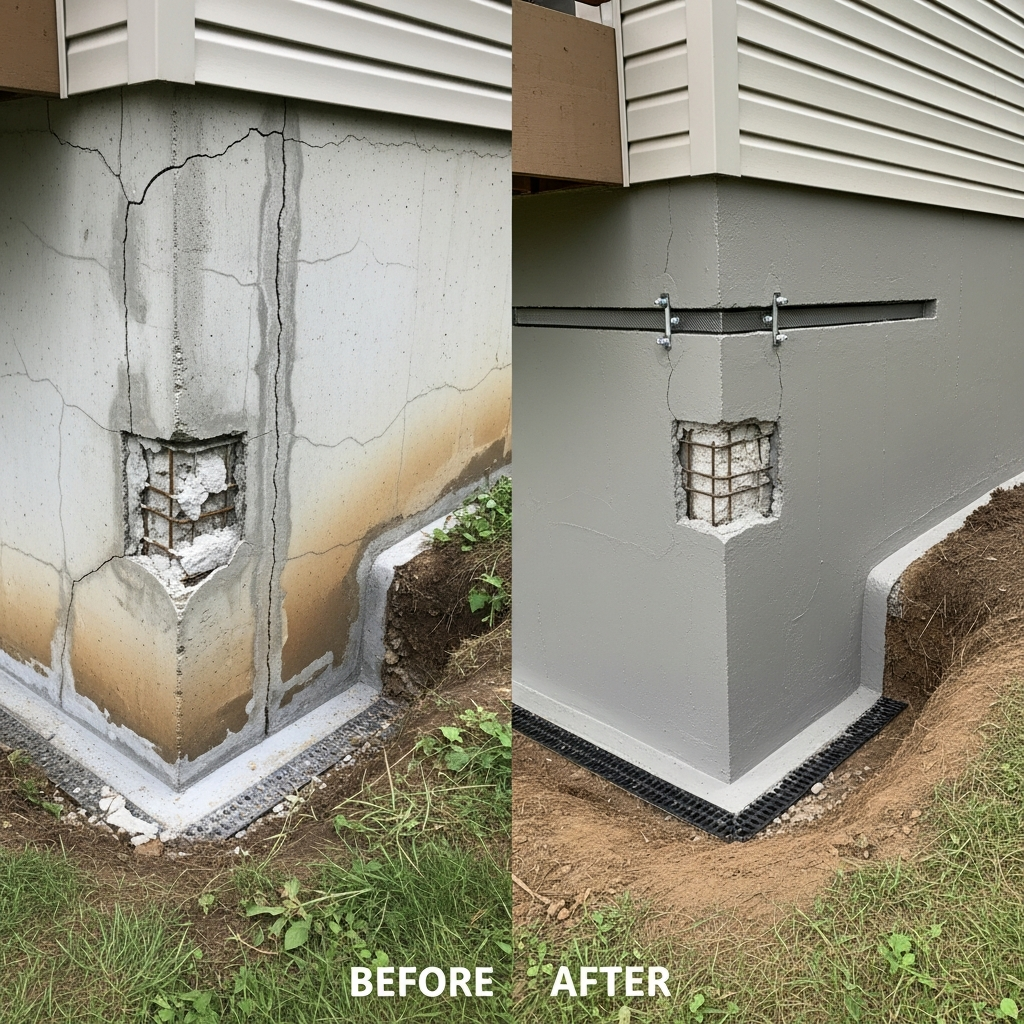
Picture this: you’re standing in your basement, coffee in hand, when you notice it. A crack. Not a hairline scratch you can convince yourself is “just settling” – a real crack, running diagonally from the corner of your window toward the floor. Your stomach drops. You set down your coffee. You pull out your phone and start Googling, and within about four minutes you’re convinced your entire house is sinking into the earth.
We’ve all been there. Maybe it wasn’t a basement crack for you – maybe it was a door that suddenly wouldn’t close right, or floors that developed a subtle but unmistakable slope, or those mysterious gaps appearing between your walls and ceiling that you kept meaning to ask someone about. Foundation problems have this unique ability to take a perfectly good Tuesday and turn it into a spiral of anxiety, contractor calls, and browser tabs full of terrifying worst-case scenarios.
Here’s what nobody tells you in those panicked early moments of Googling: foundation issues are almost never one-size-fits-all problems. And that means the solutions can’t be either.
This matters more than you might realize. A lot of homeowners – understandably – approach foundation repair the same way they’d approach getting a car fixed. You describe the symptom, someone diagnoses it, they apply the standard fix, you pay the bill and move on. But your foundation isn’t a carburetor. It’s a living, breathing system that’s in constant conversation with the soil around it, the water moving through your yard, the weight of your home above it, and decades of weather patterns specific to where you live. Two houses on the same street with what looks like the identical crack can have completely different root causes – and need completely different repairs.
That’s actually the thing that separates a good foundation repair company from a great one. Not the equipment. Not even the warranty (though that matters too). It’s whether they take the time to understand *your* situation before they start talking solutions.
So what does that actually look like in practice? How do reputable foundation companies go from “there’s a crack in your wall” to a repair plan that’s specifically designed for your home, your soil conditions, your drainage patterns, your budget? That’s exactly what this article is going to walk you through.
We’ll talk about the assessment process – which, honestly, is where everything either goes right or wrong – and why a thorough inspection looks nothing like a quick 20-minute walkthrough. We’ll get into how factors you’ve probably never thought about, things like the clay content in your soil or how water drains away from your foundation after a heavy rain, completely change what solutions make sense. And we’ll break down the actual repair methods themselves – the piers, the waterproofing systems, the drainage solutions – so you understand not just *what* companies typically recommend, but *why* one approach fits certain situations and not others.
Actually, that last part might be the most valuable thing you take away from this. Because when you understand the reasoning behind a recommendation, you become a much more informed homeowner. You can ask better questions. You can recognize when a company is genuinely tailoring their approach versus just defaulting to whatever they install most often. You can feel confident in your decision instead of just hoping you picked the right contractor.
Look, foundation repair is stressful. It’s expensive. It involves your biggest asset and your family’s safety, and it forces you to make significant decisions about something most of us never expected to become experts in. That’s a lot of pressure.
But here’s the thing – understanding how this process works, really works, takes a surprising amount of that pressure away. It transforms you from someone who’s just hoping for the best into someone who’s actively participating in protecting their home. And that shift? From anxious homeowner to informed decision-maker?
That’s worth a lot more than knowing which epoxy fills cracks fastest.
So set down your coffee – or pick it back up, you’ve earned it – and let’s talk about what custom foundation repair actually means, and why it makes all the difference.
Why “One Size Fits All” Doesn’t Work Underground
Here’s something most people don’t realize until they’re standing in their basement staring at a crack: the ground under your house is not uniform. It shifts, swells, shrinks, and moves differently depending on soil type, moisture levels, drainage patterns, and about a dozen other variables. Which means the problem two houses down from you – even if it looks identical to yours – might have a completely different cause. And therefore, a completely different fix.
Think of it like a doctor diagnosing chest pain. Could be muscle strain. Could be acid reflux. Could be something serious. You don’t just hand everyone the same prescription because the symptom looks similar. Foundation repair works the same way, and the companies that actually do this well spend a lot of time playing detective before they ever pick up a tool.
The Soil Situation (And Why It Gets Weird)
Soil is the silent variable that controls almost everything. Clay-heavy soil, for instance, expands dramatically when it absorbs water and then shrinks back as it dries out. That constant swell-and-shrink cycle – happening season after season, year after year – is like slowly bending a paperclip back and forth. Eventually, something gives.
Sandy or loamy soils behave differently. They drain quickly, which sounds like a good thing, but that means they can also wash away or compact unevenly over time. And then there’s fill soil – the stuff that was brought in when your home was originally built – which is often the sneakiest culprit of all, because it wasn’t naturally settled and it compresses in unpredictable ways.
Here’s the counterintuitive part that surprises a lot of homeowners: sometimes a foundation problem isn’t really a foundation problem. It’s a drainage problem, or a plumbing leak, or tree roots disrupting the soil moisture nearby. Fix the actual source, and the foundation stabilizes on its own. Miss it, and you can repair the foundation correctly and still watch it fail again within a few years.
What Engineers Are Actually Looking For
When a qualified foundation specialist walks through your home, they’re reading a kind of story written in cracks, gaps, and subtle shifts. Horizontal cracks in block walls tell a different story than vertical cracks in poured concrete. Stair-step cracking in brick? That’s typically settling. Wide cracks at the top of a wall that narrow at the bottom suggest something different than the reverse.
It’s honestly a bit like reading tree rings – each pattern reveals something about what the structure has experienced and where the stress is coming from. The direction, width, location, and even the texture of a crack all carry information. A hairline crack that’s been stable for twenty years is a different conversation than a crack that’s widened noticeably in six months.
Engineers also look at differential settlement – which just means that one part of your foundation has sunk more than another part. A house that sinks evenly, believe it or not, can sometimes be less problematic than one where one corner drops while the other stays put. That uneven movement is what creates the torquing forces that crack walls, jam doors, and make your floors feel like a funhouse.
The Assessment Tools That Actually Matter
Modern foundation companies aren’t just eyeballing things and making educated guesses – though experience and trained observation are still huge. Laser levels help detect floor slope variations that are invisible to the naked eye. Soil borings or test pits can reveal what’s actually happening several feet underground. In some cases, engineers review historical data about the site, or check whether nearby construction or drought conditions have changed the soil behavior recently.
Some companies use helical probe testing to actually measure soil load-bearing capacity at different depths. That information directly shapes what kind of repair system makes sense – because anchoring into strong, stable soil thirty feet down is a fundamentally different engineering decision than stabilizing soil that’s consistently weak throughout.
The whole assessment phase is, honestly, where the real work happens. The physical repair is almost the easy part once you truly understand what you’re dealing with. A company that rushes past this stage and jumps straight to a quote is… well, that’s a red flag worth paying attention to.
Get the Diagnosis Right Before You Talk Money
Here’s something most homeowners don’t realize: the inspection phase is where you either win or lose this whole process. Before any company mentions a single dollar figure, you want them to spend serious time in your crawl space, basement, or wherever the problem lives. We’re talking flashlights, moisture meters, actual hands on the foundation walls.
If a contractor walks your perimeter for ten minutes and hands you a quote? Walk away. A legitimate custom solution requires a legitimate diagnosis – and that takes time. Ask them specifically what they’re measuring and why. Good contractors *love* this question. It’s the ones who stumble over it you should worry about.
One thing worth doing before anyone shows up: take your own photos. Document every crack, every door that sticks, every floor that feels slightly off. Date them. This gives a good inspector a timeline to work with, and honestly, it protects you too.
Ask the Right Questions About Their Proposed Fix
Once you’ve got a recommendation in front of you, don’t just nod along. Push back a little – not aggressively, just curiously. Ask them to explain *why* this specific method for your specific problem. The answer should never feel copy-pasted.
For instance, helical piers work differently than push piers. Carbon fiber straps address different wall movement than steel I-beams. A company giving you a custom solution should be able to tell you, in plain language, why they’re recommending one over the other for your soil conditions, your home’s age, your particular crack patterns.
A few questions worth having in your back pocket
– “What happens if we don’t address the water first?” (Because if drainage isn’t part of the conversation, the structural fix might fail anyway.) – “Is this a stabilization or an actual lift?” These are genuinely different outcomes. – “What does failure look like here, and what’s your warranty response?”
That last one tells you a lot about how confident they actually are in their solution.
Understand What “Custom” Actually Means in Practice
Honestly, “custom solution” is one of those phrases that can mean everything or nothing. So here’s what to look for in the real world.
A truly tailored approach accounts for at least three things: the soil type under your home, the load distribution of your specific structure, and the root cause of the movement – not just the symptoms. If the company is also asking about your neighborhood’s drainage history, recent construction nearby, or even seasonal freeze-thaw patterns in your area… that’s a good sign. They’re thinking past the obvious.
The material choice matters too. Some homes need rigid, permanent solutions. Others – particularly older homes with some expected settling – might actually benefit from systems with a little give. There’s no universal answer, which is exactly the point.
Getting Multiple Bids (The Right Way)
You’ve probably heard “get three quotes.” Fine advice, but here’s the part nobody tells you – you’re not just comparing prices, you’re comparing diagnoses. If two companies identify completely different problems, that’s not confusing, that’s information. It means one of them might be wrong.
Lay the proposals side by side and look at what they’re attributing the problem to, not just what they’re proposing to do about it. If everyone agrees on the cause but suggests different methods, that’s a reasonable conversation to have. If they can’t even agree on what’s wrong… keep digging.
Don’t automatically go with the middle bid either. Sometimes the highest quote is highest because it actually addresses everything. Sometimes the lowest is low because they’re skipping the waterproofing component that makes the whole thing work long-term.
Before You Sign Anything
Read the warranty language carefully – specifically, what voids it. Some warranties are essentially useless if you don’t maintain a certain drainage situation around the home, and they won’t always volunteer that information upfront.
Also ask whether the permit is included. Foundation work typically requires one, and a company that tries to skip permits is cutting corners somewhere else too. It’s one of those small details that tells you who you’re actually dealing with.
And if your gut says something feels off – even if you can’t articulate why – trust that. You’re about to spend real money on something invisible that holds your home up. It’s okay to take an extra week and keep asking questions.
When the Problem Is Bigger Than Expected
Here’s the thing nobody really wants to hear: foundation issues almost never get smaller the longer you wait. You call a company because you noticed a crack in your basement wall, and then the inspector shows up and starts pointing at things you didn’t even know to look for. Suddenly the scope – and the estimate – has grown considerably.
This happens all the time, and it’s genuinely hard. It doesn’t necessarily mean the company is padding the bill. Foundations are underground. What shows on the surface is often just the visible symptom of something deeper happening in the soil, the drainage, or the structural load distribution. The honest solution here is to ask for a phased assessment – meaning the company shows you what’s critical right now versus what can be monitored over time. A good contractor will tier their findings. If they present everything as equally urgent, that’s worth questioning.
The Estimate That Changes Midway Through
Oh, this one. This is probably the thing that causes the most stress and erodes trust fastest. Work begins, someone pulls back a section of wall or digs down to a footing, and the price changes. Sometimes significantly.
The frustrating truth is that this can be completely legitimate. Soil conditions vary in ways that aren’t visible from a standard inspection. Hidden water damage, old repairs that were done incorrectly, unexpected root intrusion – these things genuinely can’t always be anticipated. But there’s a difference between honest discovery and a contractor using “unforeseen circumstances” as a catch-all excuse to inflate the job.
What actually protects you here is the contract language before work starts. Ask specifically: what triggers a change order? What requires your written approval before additional costs are incurred? A reputable company won’t flinch at those questions. They’ll have clear answers, because they deal with this reality regularly. Any vagueness about the change order process is a real red flag.
Matching Solutions to Your Actual Soil
This is one of the more underappreciated challenges. Foundation repair isn’t one-size-fits-all because soil conditions vary enormously – sometimes even within a single property. Expansive clay soils that swell and shrink with moisture behave completely differently than sandy or loamy soils. A helical pier system that works beautifully in one neighborhood might be the wrong call three streets over.
What you want from any company is evidence that they’ve actually assessed your specific site conditions – not just applied a standard protocol they use everywhere. Ask them: what did the soil report show? What factors specific to this property influenced their recommendation? If they look at you blankly… that’s information.
The “It’s Fixed” Feeling That Doesn’t Last
Some people invest significantly in foundation repair only to notice new cracks or movement within a year or two. This is demoralizing, and it usually comes down to one of two things: either the underlying cause wasn’t fully addressed, or the repair method wasn’t matched well to the problem.
Waterproofing a wall without fixing the drainage issue that caused the water pressure in the first place, for example. Or stabilizing a sinking corner without addressing the root cause – which might be a broken underground pipe that’s been slowly eroding the soil for years.
The solution is to push for root cause clarity before you agree to any repair plan. What is actually causing this, and is that cause being addressed – or just the symptom? It’s a direct question. Ask it directly.
When You’re Not Sure Who to Trust
Actually, this might be the hardest challenge of all – and it’s not really about foundations, it’s about people. The industry has its share of contractors who lead with fear, use high-pressure tactics, or recommend the most expensive solution regardless of whether it’s warranted.
Getting two or three independent assessments isn’t just smart, it’s almost necessary. Not because every contractor is untrustworthy – most aren’t – but because having multiple perspectives helps you understand the actual range of what might be needed. When two separate companies independently recommend similar approaches, that’s reassuring. When one company’s estimate is wildly different from the others, you’ve got a conversation starter.
Trust your discomfort. If something feels off in how a company communicates with you – if they seem more interested in closing a sale than answering your questions – that instinct is usually worth listening to.
What to Actually Expect (And When)
Let’s be honest with each other for a second. Foundation work isn’t like getting a haircut. You can’t schedule it for Saturday morning and expect everything to be wrapped up by lunch. Most homeowners go into this process with reasonable expectations and still end up surprised – not because anything went wrong, but because no one took the time to explain what “normal” actually looks like.
So here’s the real version.
The Assessment Phase Takes Longer Than You Think
Before a single piece of equipment shows up at your house, there’s a lot of groundwork happening (no pun intended). A thorough assessment – the kind that actually leads to a custom solution rather than a one-size-fits-all fix – typically takes anywhere from a few days to a couple of weeks. Engineers need to review soil reports, evaluate the extent of movement, sometimes pull permits, and occasionally consult with specialists.
If a company promises you a complete diagnosis and proposal within 24 hours? That’s worth a raised eyebrow. Good work takes time to plan properly.
The Timeline Varies Wildly Based on What You’re Dealing With
Here’s something the brochures don’t always make clear: no two foundation jobs move at the same pace. A relatively straightforward pier installation on a settled corner might be completed in one or two days. A more complex combination of waterproofing, wall stabilization, and structural support across a larger home? You could be looking at several weeks of staged work.
Some factors that genuinely affect timelines
– Weather. Concrete needs appropriate conditions to cure. Rain, freezing temps, extreme heat – all of it can cause legitimate delays. – Permitting. Depending on your municipality, permits can take days or weeks. This isn’t the contractor dragging their feet; it’s just… bureaucracy being bureaucracy. – Soil conditions. Sometimes crews discover unexpected surprises underground – old utility lines, unusual soil composition, previous repair attempts that weren’t disclosed. – Cure and settling time. Some solutions need time to work before the next phase can begin. You can’t rush concrete. It doesn’t care about your schedule.
Your Home Might Look a Little Rough Mid-Project
This is the part nobody loves to hear. Foundation repair often means temporary disruption – landscaping gets disturbed, sections of flooring or drywall might need to come out, and there’s usually a period where your home looks worse before it looks better. That’s completely normal. It doesn’t mean something went wrong.
Actually, that reminds me of something worth saying: good contractors will walk you through what the disruption will look like *before* they start. If that conversation never happened, ask for it. You deserve to know what your home will look like at day three, not just day ten.
The “Settling In” Period After Repair
Once the physical work is done, there’s still a phase that often surprises people. Foundation systems – especially things like helical piers or wall anchors – sometimes need time to fully stabilize. Small adjustments might be made at a follow-up visit. Cracks that were filled may need monitoring. Doors and windows that were sticking before the repair might take a few weeks to fully recalibrate as the structure adjusts.
This isn’t failure. It’s physics.
Most reputable companies will schedule at least one follow-up inspection after the initial work is complete – typically somewhere between 30 and 90 days out. If yours doesn’t offer this, it’s a completely reasonable thing to ask about.
Keeping Your Part of the Deal
Here’s something that sometimes gets glossed over: the long-term success of a custom foundation solution often depends on what *you* do afterward. Grading around your foundation, managing downspout drainage, maintaining consistent moisture levels around the perimeter – these aren’t optional extras. They’re part of the system.
Your contractor should give you a clear list of maintenance responsibilities when the job wraps up. Read it. Actually follow it. It’ll protect the investment you just made.
One Last Honest Note
Foundation repair is stressful. It’s expensive. It’s disruptive. And it’s also genuinely one of the most important things you can do to protect your home long-term. Going in with realistic expectations doesn’t mean going in with low ones – it means you’ll recognize real progress when you see it, and you won’t panic when the process gets a little messy in the middle.
Which it probably will. And that’s okay.
Every house has its own story – its own quirks, its own history, its own particular way of settling into the earth beneath it. And that’s exactly why there’s no such thing as a one-size-fits-all fix when the ground starts shifting or the walls start telling you something’s wrong. The whole point of what good foundation repair professionals do is listen to that story first, then figure out what your specific home actually needs.
Think about it like going to a doctor versus googling your symptoms. Sure, you could read a hundred articles about foundation cracks (and you probably have, which is why you’re here), but what you really need is someone to actually look at *your* cracks, in *your* soil, in *your* climate, and say – okay, here’s what’s actually happening and here’s what we’re going to do about it.
That’s what custom solutions are really about. Not upselling you on fancy equipment you don’t need. Not throwing the same pier-and-beam package at every house on the street. It’s about matching the repair to the reality.
The Peace of Mind Part
Here’s something nobody talks about enough – the relief. When you finally understand what’s going on beneath your home and you have a real plan in place, there’s this weight that lifts. Foundation problems have a way of living in the back of your mind, quietly stressing you out every time you notice a new crack or a door that suddenly sticks. Getting a professional assessment doesn’t just protect your investment… it genuinely lets you breathe again.
And honestly? Most homeowners find that the situation isn’t as catastrophic as their imagination had built it up to be. Sometimes it is serious, yes – but knowing that and addressing it is always better than wondering.
You Don’t Have to Figure This Out Alone
If you’ve made it through an article this long, you’re clearly someone who takes this seriously. That’s a good thing. But at some point, reading has to give way to doing – and the next step doesn’t have to feel overwhelming.
Reaching out to a foundation repair specialist for an evaluation is really just a conversation. A good company will come out, take a look at what you’re dealing with, explain their findings in plain language, and give you options. No pressure, no doom-and-gloom sales tactics. Just real information so you can make a real decision.
If you’ve been noticing cracks, sticking doors, uneven floors, or anything else that’s been nagging at you – we’d genuinely love to help you get some clarity. Our team specializes in building solutions around what your home actually needs, not what’s easiest or most profitable for us. We’re here to listen, assess, and walk you through everything at whatever pace feels right for you.
Your home has been taking care of you for years. Sometimes it just needs a little help back. Reach out whenever you’re ready – there’s no obligation, no rush, and no judgment if it turns out you’ve been worrying about something small. That’s what we’re here for.