7 Common Causes of Foundation Failure
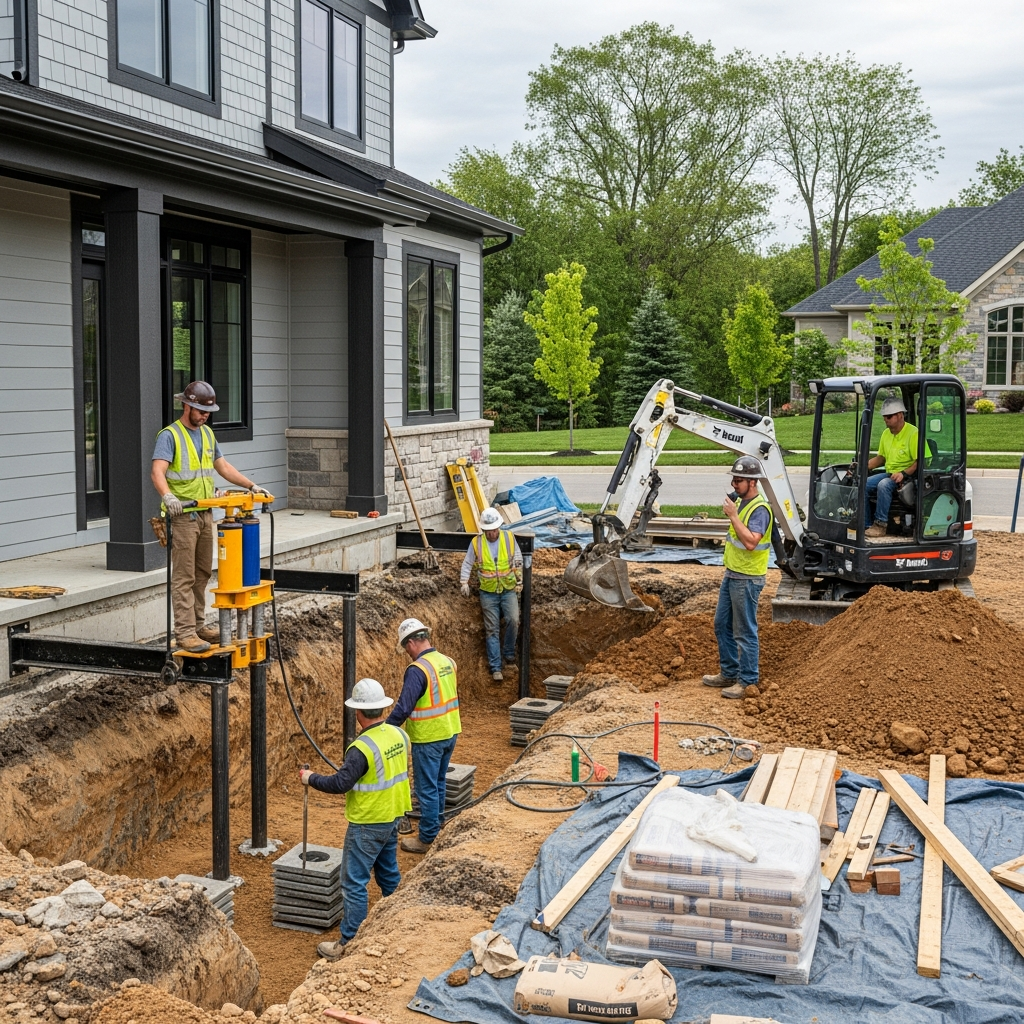
You know that sinking feeling when you notice a new crack snaking its way across your living room wall? Or maybe you’ve been fighting with a door that suddenly won’t close properly, no matter how many times you slam it in frustration. Here’s the thing – your house might be trying to tell you something important, and it’s not just complaining about your teenager’s music volume.
Last week, I was chatting with Sarah, one of our long-time patients, and she mentioned how she’d been ignoring these “little issues” around her house for months. A crack here, a sticky window there… nothing that seemed urgent enough to worry about. Until the day she walked into her kitchen and noticed the tile floor had developed what looked like a small canyon running right down the middle. Turns out, what started as minor annoyances were actually early warning signs of something much bigger happening beneath her feet.
Foundation problems – they’re like that persistent cough you keep putting off getting checked. You tell yourself it’s probably nothing serious, maybe just the house “settling” (whatever that really means). But here’s what I’ve learned from talking with countless homeowners over the years: ignoring foundation issues is a lot like ignoring your health symptoms and hoping they’ll magically disappear. Spoiler alert… they usually don’t.
The scary part? Most people have no idea what’s actually causing their foundation to fail. They see the cracks, feel the uneven floors, notice the doors that won’t quite fit right anymore, but they’re completely in the dark about the “why” behind it all. And that uncertainty? It’s expensive. Really expensive.
Think about it this way – if you knew your foundation was failing because of poor drainage (which, by the way, is incredibly common), you might be looking at a few thousand dollars to fix the water management around your home. But if you wait until that drainage problem turns into major structural damage… well, you’re suddenly talking about tens of thousands of dollars. Maybe more. The difference between catching it early and dealing with it later can literally be the difference between a manageable repair and remortgaging your house.
But here’s what really gets me fired up about this whole topic – most foundation failures are completely preventable. I’m serious. The vast majority of the horror stories you hear about houses literally sinking into the ground? They didn’t happen overnight, and they didn’t happen mysteriously. There were warning signs. There were causes. And in most cases, there were solutions available long before things got catastrophic.
It’s kind of like how we approach weight management at our clinic, actually. The patients who do best aren’t the ones who wait until they’re facing serious health complications – they’re the ones who recognize the patterns early and take action before small problems become big ones. Your foundation works the same way.
So what exactly causes a foundation to fail? That’s what we’re going to dig into today (and yes, I’m aware of the irony in that phrasing). We’re talking about the seven most common culprits behind foundation problems – the real reasons your house might be shifting, cracking, or settling in ways that make your wallet hurt just thinking about it.
Some of these causes might surprise you. Others will probably make you think, “Oh… that explains a lot.” And hopefully, by the time we’re done, you’ll have that confident feeling that comes from actually understanding what’s happening with your home instead of just crossing your fingers and hoping for the best.
Because let’s be honest – your house is probably your biggest investment. It’s where you’ve built your life, where your family feels safe, where you retreat at the end of long days. It deserves better than neglect, and you deserve better than the constant worry that comes with not knowing what’s going wrong or why.
Ready to become the kind of homeowner who actually knows what they’re dealing with? Let’s get started…
What Makes Foundations Fail (And Why It Matters More Than You Think)
You know that sinking feeling when you notice a crack in your basement wall? Well, your foundation is basically having that same feeling – literally. Foundation failure isn’t just about concrete giving up… it’s about the delicate dance between your house and the ground beneath it going completely off-script.
Think of your foundation like the relationship between a heavy sleeper and their mattress. When everything’s working, the weight distributes evenly, support flows where it’s needed, and everyone’s comfortable. But when things go wrong – maybe the mattress starts sagging, or develops a spring that’s given up – suddenly you’ve got problems that affect everything above.
Most homeowners assume their foundation is basically immortal. After all, it’s concrete and steel, right? Actually, that’s where things get tricky. Your foundation is more like a living system than a static block of stone. It expands, contracts, shifts, and responds to everything happening around it – from seasonal changes to that new drainage system your neighbor installed.
The Foundation Ecosystem (Yes, Really)
Here’s something that might surprise you: your foundation doesn’t exist in isolation. It’s part of what engineers call the “soil-structure interaction system” – though honestly, that makes it sound way more complicated than it needs to be.
Picture your house as sitting on top of a giant sponge. That sponge (the soil) changes its shape, moisture content, and density based on weather, water flow, temperature, and even what’s happening in the houses around you. Your foundation has to flex and adapt to these changes constantly.
When contractors pour a foundation, they’re essentially making a bet about what that soil is going to do for the next 50+ years. Sometimes they guess right. Sometimes… well, that’s when you start seeing those zigzag cracks that make your stomach drop.
Why Timing Makes Everything Worse
Most foundation problems don’t announce themselves with a dramatic collapse – though wouldn’t that be easier in some ways? Instead, they’re sneaky. A tiny bit of settling here, a small crack there, maybe a door that doesn’t quite close right anymore.
The frustrating part? These small signs often get dismissed as “normal settling” when they’re actually early warning signals. It’s like ignoring that weird noise your car makes because it only happens sometimes… until the day it doesn’t start at all.
Foundation failure typically follows what we call a “progressive pattern.” Think of it like a small tear in your favorite shirt – it starts tiny, but stress and time turn it into something that can’t be ignored. The key is catching these issues while they’re still in the “small tear” phase.
The Money Talk (Because We Have To)
Let’s be honest about something: foundation repairs aren’t exactly pocket change. Depending on what’s wrong, you might be looking at anywhere from a few thousand to… well, let’s just say it’s enough to make you consider taking up meditation.
But here’s the thing that drives foundation experts absolutely crazy – minor issues that could be fixed for a reasonable amount often get ignored until they become major issues that cost ten times more. It’s like having a small leak in your roof and deciding to wait until it rains through your ceiling to address it.
Early intervention isn’t just about saving money (though that’s nice). It’s about preventing the kind of structural damage that can make your house unsafe or unsellable. Because once foundation failure really gets going, it doesn’t just affect the basement – it works its way up through your entire house like a structural infection.
The Stress Test Your House Didn’t Ask For
Every foundation faces what engineers call “load conditions” – basically, all the forces trying to push, pull, and twist it in different directions. Your house weight, wind loads, soil pressure, water pressure, temperature changes… it’s actually pretty amazing that foundations work as well as they do.
But when multiple stress factors combine – say, expansive soil, poor drainage, and a particularly wet season – that’s when foundations start to wave the white flag. Understanding this helps explain why foundation problems often seem to come out of nowhere, when really they’ve been building pressure for months or years.
The good news? Most foundation failures are preventable if you know what to watch for. The patterns are predictable, the warning signs are recognizable, and the solutions… well, they’re usually more straightforward than you’d expect.
Start With What You Can See (And Actually Do Something About)
Look, you don’t need to be a structural engineer to spot the early warning signs. Walk around your house – yes, right now if you want – and check for cracks wider than a quarter-inch in your foundation walls. See any doors that suddenly stick or won’t close properly? Windows that used to glide but now fight you? These aren’t just “settling” issues your neighbor keeps talking about. They’re your house whispering (okay, maybe shouting) that something’s shifting down below.
Here’s what most people miss: check your foundation after heavy rains. Grab a flashlight and look for water stains, white chalky deposits, or that musty smell that means moisture’s been hanging around uninvited. Document everything with your phone – trust me, you’ll want these photos later when you’re talking to contractors.
Master Your Home’s Water Flow (This One’s Huge)
Water is your foundation’s biggest enemy, but here’s the thing – you’ve got more control over it than you think. Start with your gutters… and actually clean them. I know, I know, it’s not exactly fun, but clogged gutters dump thousands of gallons right next to your foundation during storms.
But here’s the secret most homeowners never consider: grade matters more than anything else. The soil around your house should slope away at least six inches over the first ten feet. Sounds technical? It’s not. Get a long board, a level, and spend a Saturday afternoon checking this. If water pools anywhere near your foundation after rain, you’ve found your problem.
And those downspout extensions? Don’t just aim them “somewhere away from the house.” Measure it – water should discharge at least four to six feet from your foundation. Better yet, consider a proper drainage system if you’re in a wet climate.
Decode Your Soil’s Personality
This might sound weird, but your soil has moods – and understanding them could save you thousands. Clay soil? It’s basically a sponge that swells when wet and shrinks when dry, putting your foundation through a constant push-pull cycle. Sandy soil drains fast but doesn’t support weight evenly.
Here’s a simple test you can do: grab a jar, fill it halfway with soil from around your foundation, add water until it’s three-quarters full, shake it up, and let it settle overnight. You’ll see distinct layers – sand at the bottom, clay at the top, silt in between. If clay dominates (especially that dark, sticky stuff), you need to be extra vigilant about consistent moisture levels.
The Watering Schedule Nobody Talks About
Sounds backwards, right? Watering your foundation? But if you live somewhere with expansive clay soil, this might be the most important maintenance you never knew about. During dry spells, clay soil pulls away from your foundation, creating gaps and uneven support.
The trick is consistency. A soaker hose placed about 12-18 inches from your foundation wall, running for 15-30 minutes a few times a week during dry periods, keeps that soil stable. Just don’t overdo it – you’re aiming for stable moisture, not a swamp.
Know When to Call for Backup
Here’s where pride can cost you big time. Some foundation issues you can monitor and manage, but others? They need professional eyes immediately. If you see
– Horizontal cracks (these are the scary ones) – Stair-step cracks in block foundations – Any crack you can stick a pencil into – Bowing or leaning walls – Multiple new cracks appearing quickly
…stop trying to DIY this and call a structural engineer. Not a general contractor, not your handy neighbor – an actual engineer who specializes in foundations.
Create Your Foundation Care Routine
Make this easy on yourself. Set phone reminders for quarterly walk-arounds. Take photos of any cracks you find – even tiny ones – so you can track whether they’re growing. Keep a simple log (even just notes in your phone) of what you see and when.
After major weather events – heavy rains, droughts, freezing – do an extra check. Your foundation tells a story about what’s happening underground, but you have to know how to listen.
The bottom line? Most foundation problems start small and grow expensive. Catching them early isn’t just about avoiding repair bills – it’s about protecting what’s probably your biggest investment. And honestly? A lot of prevention comes down to paying attention and being consistent with maintenance. Your future self will thank you.
When the Ground Literally Shifts Beneath You
Let’s be honest – foundation problems don’t announce themselves with a polite knock on your door. One day you’re living your life, and the next? You’re staring at a crack in your wall wondering if your house is trying to tell you something. And trust me, it usually is.
The thing that catches most homeowners off guard isn’t just that foundation issues happen – it’s how sneaky they can be. You might notice a door that suddenly doesn’t close quite right, or maybe there’s this tiny crack that wasn’t there last month. Your brain does what brains do best: it rationalizes. “Oh, the house is just settling.” “It’s probably nothing serious.”
But here’s what I’ve learned from talking to countless homeowners who’ve been through this… that little voice in your head? The one saying “maybe I should get this checked”? Listen to it.
The Money Talk Nobody Wants to Have
Actually, let me address the elephant in the room first – the cost. Foundation repairs aren’t exactly pocket change, and most of us don’t have a “foundation emergency fund” sitting around. The numbers can be genuinely scary, ranging from a few thousand for minor fixes to… well, let’s just say significantly more for major structural work.
Here’s the brutal truth: ignoring the problem doesn’t make it cheaper. It’s like that weird noise your car makes – you can turn up the radio, but eventually, you’re going to be stranded on the side of the road.
Start with a professional inspection – most reputable companies will give you a realistic assessment without the hard sell. Get multiple opinions if the first estimate makes you want to hide under a blanket. And before you panic about the cost, check if your homeowner’s insurance covers any of the damage (though honestly, don’t get your hopes up too high there).
The DIY Trap (And Why Your YouTube Skills Won’t Save You)
Look, I get it. We live in the age of DIY everything. You’ve probably fixed your garbage disposal, installed shelving, maybe even tackled some plumbing. But foundation work? This isn’t the time to channel your inner home improvement warrior.
The problem with foundation issues is that what you see on the surface – those cracks, the uneven floors, the sticking doors – they’re usually symptoms, not the actual problem. It’s like treating a fever without figuring out why you’re sick in the first place.
That doesn’t mean you’re completely helpless, though. You can absolutely handle some preventive measures: keeping gutters clean, maintaining proper drainage around your home, monitoring moisture levels. Think of it as the difference between changing your oil and rebuilding an engine.
Wrestling with Contractors (Without Losing Your Mind)
Finding the right contractor for foundation work can feel like dating – lots of awkward conversations, some disappointments, and hopefully, eventually, finding “the one.” The foundation repair industry, unfortunately, has its share of less-than-stellar players.
Here’s what actually works: Ask for references and actually call them. I know, I know – who has time for phone calls? But spending 15 minutes talking to someone who’s been through this process can save you months of headaches.
Look for contractors who explain things in plain English, not ones who try to baffle you with technical jargon. If someone’s pressuring you to sign today or offering a “special deal” that expires at midnight, run. Good foundation work takes time to plan and execute properly.
Living in Limbo (And Staying Sane)
Maybe the hardest part about foundation problems isn’t even the repair process – it’s the waiting. Waiting for inspections, waiting for estimates, waiting for work to begin, waiting to see if the repairs actually solve the problem.
During this time, you’re probably going to notice every little thing about your house. That creak in the hallway that’s been there for years? Suddenly it sounds ominous. It’s completely normal to feel a bit obsessive about checking and re-checking for new cracks or changes.
Document everything with photos – not just for insurance purposes, but for your own peace of mind. When you’re wondering if that crack is getting bigger, you’ll have actual evidence instead of relying on your increasingly anxious memory.
And here’s something nobody tells you: it’s okay to feel overwhelmed. Foundation problems can mess with your sense of security in ways that go beyond just the physical structure. Your home is supposed to be your safe place, and when that feels threatened… well, that’s a lot to process.
The good news? Most foundation issues, when caught reasonably early and handled by competent professionals, are absolutely fixable. Your house isn’t doomed, and neither are you.
Setting Realistic Expectations for Your Recovery
Here’s the thing about foundation work – it’s not like fixing a leaky faucet where you’re done in an afternoon and everything’s back to normal. Your body’s been dealing with whatever’s been undermining your weight loss efforts for months, maybe years. So yeah, it’s going to take some time to rebuild.
Most people start seeing some changes within the first 2-4 weeks, but we’re talking subtle stuff here. Maybe you’re not crashing at 3 PM anymore, or you’re actually waking up feeling rested. The scale? It might be stubborn for a while – and that’s completely normal. Your body’s busy doing repair work behind the scenes.
The real momentum usually kicks in around week 6-8. That’s when people tell me, “Oh wow, I actually *want* to go for a walk after dinner” or “I didn’t even think about that afternoon snack.” It’s like watching a garden grow – nothing, nothing, then suddenly everything starts blooming at once.
The Messy Middle (And Why It Matters)
Let me be straight with you about something most programs won’t mention: there’s going to be a messy middle phase. You know, those weeks where you’re doing everything right but your body seems to be having a completely different conversation.
Maybe your sleep gets wonky for a few days while your stress hormones recalibrate. Or you might feel more tired than usual as your metabolism starts shifting gears. Some people even experience temporary water weight fluctuations that make absolutely no sense. It’s like your body is cleaning house – and houses get messier before they get cleaner.
This phase usually hits around weeks 3-6, and honestly? It’s a good sign. It means things are actually changing. But it can feel discouraging if you don’t know it’s coming. I’ve had clients call me panicking because they gained two pounds in one day (spoiler alert: it was just their hormones doing their thing).
What Success Actually Looks Like
Forget what you see on those dramatic TV shows – real success is quieter than that. It’s waking up one morning and realizing you haven’t had heartburn in a week. It’s fitting into clothes that felt snug last month without even thinking about it. It’s not needing that third cup of coffee to function like a human being.
The scale will move, sure, but it’s probably going to be more like 1-2 pounds per week once things get rolling. And some weeks? It won’t budge at all. That’s not failure – that’s normal. Your body’s not a math equation; it’s a complex biological system that sometimes holds onto weight while it sorts other things out.
Actually, some of my most successful clients barely watched the scale at all. They tracked how they felt, how their clothes fit, their energy levels… and then one day they stepped on the scale and were shocked at the number.
Your Next Steps (The Practical Stuff)
So where do you go from here? First, take a deep breath. You don’t have to fix everything at once – in fact, trying to do that usually backfires spectacularly.
Start with one foundation issue that resonates most with you. Maybe it’s the sleep thing, or you know your stress levels are through the roof. Pick one and focus there for 2-3 weeks before adding anything else. I know it’s tempting to overhaul your entire life on Monday morning, but sustainable change happens in layers.
If you suspect hormonal issues or insulin resistance, getting proper testing is worth it. Your regular doctor can run basic panels, but sometimes you need someone who really knows what to look for. Don’t be afraid to advocate for yourself here.
And please, please be patient with the process. I’ve watched too many people give up right before things started clicking. It’s like they were three feet from gold but stopped digging because they couldn’t see it yet.
Building Your Support System
This isn’t something you have to figure out alone – and honestly, trying to go it solo often makes everything harder. Whether it’s working with a medical weight loss clinic (obviously, I’m biased here), finding a good therapist, or just having a friend who gets it… having support makes all the difference.
The foundation problems didn’t develop overnight, and they won’t disappear overnight either. But with the right approach and realistic expectations, you can absolutely rebuild stronger than before.
You Don’t Have to Face This Alone
Look, foundation problems can feel overwhelming. One day you’re living your life, and the next you’re staring at a crack in your basement wall wondering if your house is about to slide down the hill. It’s that pit-in-your-stomach feeling that keeps you awake at 2 AM, scrolling through worst-case scenarios on your phone.
But here’s what I want you to remember – and I really mean this – most foundation issues are fixable. Yes, even the ones that look scary. Even the ones that make you want to pack up and move to a nice, stable apartment somewhere.
Think of your foundation like your body’s core muscles. When something’s off, you feel it everywhere. Your doors stick, your floors feel wonky, maybe there’s that new crack that definitely wasn’t there last month. But just like a pulled muscle doesn’t mean you’re broken forever, foundation settlement or shifting doesn’t mean your home is doomed.
The soil under your house? It’s been doing its thing for decades, maybe centuries. Sometimes it gets tired. Sometimes it gets too wet, or too dry, or it just decides to compact a little more. Poor drainage might have been slowly undermining things for years without you knowing. Tree roots could be playing a very slow game of tug-of-war with your foundation walls.
What matters now isn’t how you got here – it’s what you do next.
I’ve talked to so many homeowners who kick themselves for not noticing signs earlier, or for that DIY attempt that maybe wasn’t the best idea. Please don’t do that to yourself. You’re not a foundation expert, and you shouldn’t have to be. You noticed something was wrong, and you’re looking for answers. That’s exactly what you should be doing.
The truth is, waiting rarely makes foundation problems better. I wish I could tell you otherwise, but that crack isn’t going to heal itself, and that settling isn’t going to magically stop. But – and this is important – getting help now almost always means simpler, less expensive solutions than waiting until things get worse.
Whether it’s poor drainage that needs addressing, soil issues that require stabilization, or structural repairs that sound scarier than they actually are… there are people who do this work every single day. They’ve seen it all, and they know how to fix it.
Your home has been your sanctuary, your investment, maybe the place where you’ve built your most important memories. It’s worth protecting, and more importantly, you deserve to feel secure in your own space again.
If you’re dealing with foundation concerns right now – whether it’s those hairline cracks that might be nothing, or settling that’s definitely something – don’t carry this worry alone. We work with homeowners every day who thought their situation was hopeless, only to find solutions that were more straightforward than they’d imagined.
Reach out when you’re ready. No pressure, no scary sales pitches – just honest answers from people who understand that your home isn’t just a structure, it’s your foundation for everything else in life.