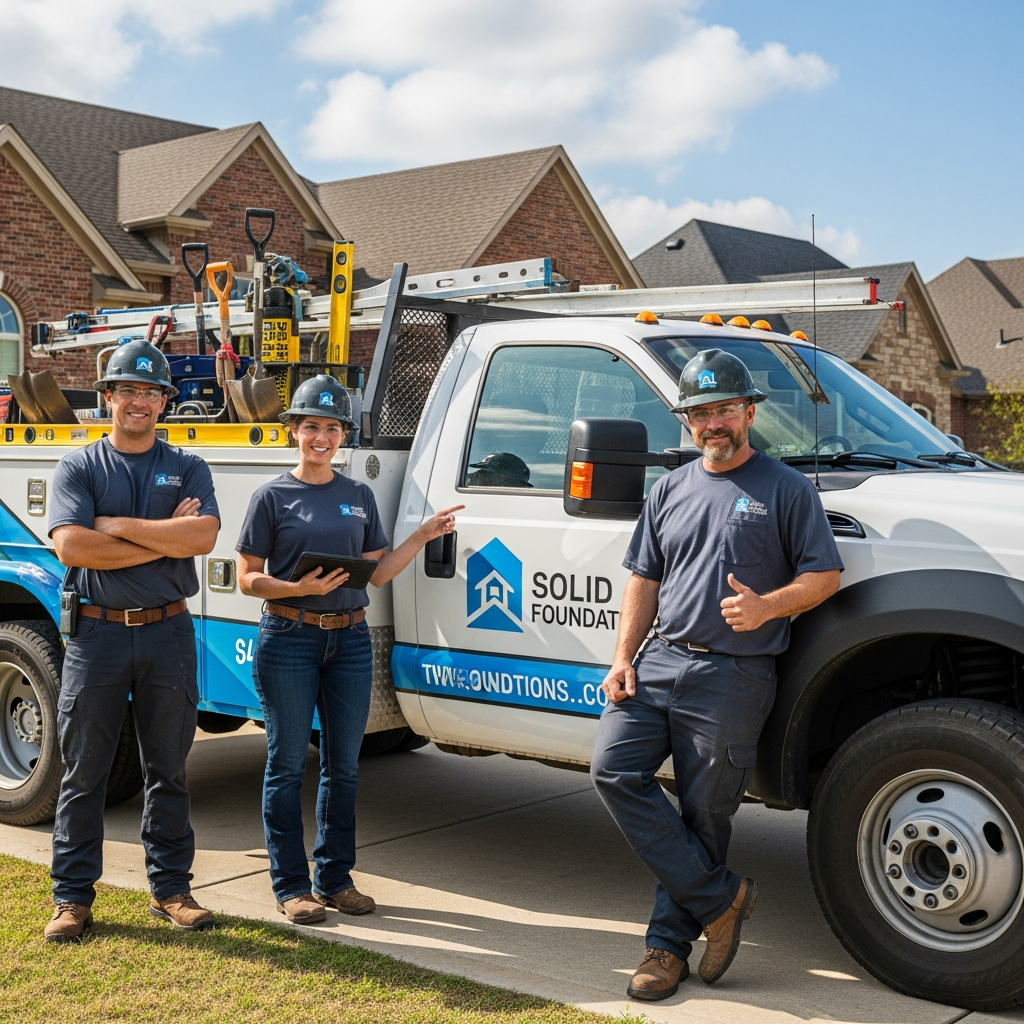
Dallas Pier and Beam Foundation Repair Explained
You’re standing in your Dallas kitchen, making your morning coffee, when you notice it again – that slight slope in the floor that makes your favorite mug slide toward the edge of the counter. At first, you convinced yourself it was just your imagination. Maybe you needed more sleep. But now? Now you can’t ignore the way doors stick in their frames or how that crack in the bedroom wall seems to grow a little wider each month.
Sound familiar? You’re not alone. Actually, you’re part of a pretty exclusive club – the “My House is Doing Weird Things and I’m Trying Not to Panic” club. Welcome. We meet for coffee… on unlevel floors.
Here’s the thing about living in Dallas – our clay soil has mood swings that would make a teenager jealous. One day it’s expanding like it’s trying to lift your house to the heavens, the next it’s shrinking and leaving gaps you could lose a small dog in. And if your home sits on a pier and beam foundation (which, let’s be honest, a lot of older Dallas homes do), you’re getting a front-row seat to this geological drama.
But here’s what I want you to know right up front – those little signs your house is giving you? They’re not necessarily cause for alarm. Think of them as your home’s way of tapping you on the shoulder and saying, “Hey, we need to talk.” Sometimes it’s just a minor adjustment. Sometimes… well, sometimes it’s more.
The tricky part is that most of us didn’t grow up learning about foundation repair the way we learned about changing oil or unclogging drains. It feels mysterious, expensive, and frankly a little intimidating. I mean, we’re talking about the literal foundation of your home – the thing everything else sits on. No pressure, right?
That’s exactly why I wanted to walk through this with you. Because once you understand what’s actually happening under your house – and more importantly, what your options are – those weird little quirks start making a lot more sense. That sticking door isn’t your house falling apart; it might just be your pier and beam foundation settling into the clay soil’s latest mood.
And let’s talk about timing for a second… because I know what you’re thinking. “If I ignore this long enough, maybe it’ll just sort itself out.” (We’ve all been there with various home issues, haven’t we?) But here’s the thing about foundation problems – they’re kind of like that check engine light in your car. Sure, you might drive around with it on for months without anything terrible happening. But address it early, and you’re looking at a relatively simple fix. Wait until your car won’t start? Well, that’s a different conversation entirely.
The good news – and there really is good news here – is that pier and beam foundations are actually pretty forgiving. Unlike slab foundations, they’re designed to be accessed and adjusted. It’s almost like your house was built with future repairs in mind. Smart, right?
Over the next few minutes, we’re going to break down everything you need to know about pier and beam foundation repair in Dallas. We’ll talk about why these foundations move in the first place (spoiler alert: it’s mostly about that moody clay soil), how to spot the signs that something needs attention, and what your repair options actually look like – both in terms of the work involved and what it might cost you.
More importantly, we’ll help you figure out when you need to act fast and when you can take your time to plan and budget. Because not every foundation issue is a five-alarm fire, despite what your anxiety might be telling you at 2 AM when you’re lying in bed thinking about that crack in the wall.
Ready to turn those mysterious house quirks into something you actually understand? Let’s get into it. Trust me – by the time we’re done, you’ll feel a lot more confident about what’s happening under your feet… literally.
What Exactly Is a Pier and Beam Foundation?
Think of your house like a really expensive table – you wouldn’t just plop it down on the dirt and call it good, right? A pier and beam foundation is basically your home’s legs, keeping everything elevated and stable above the ground.
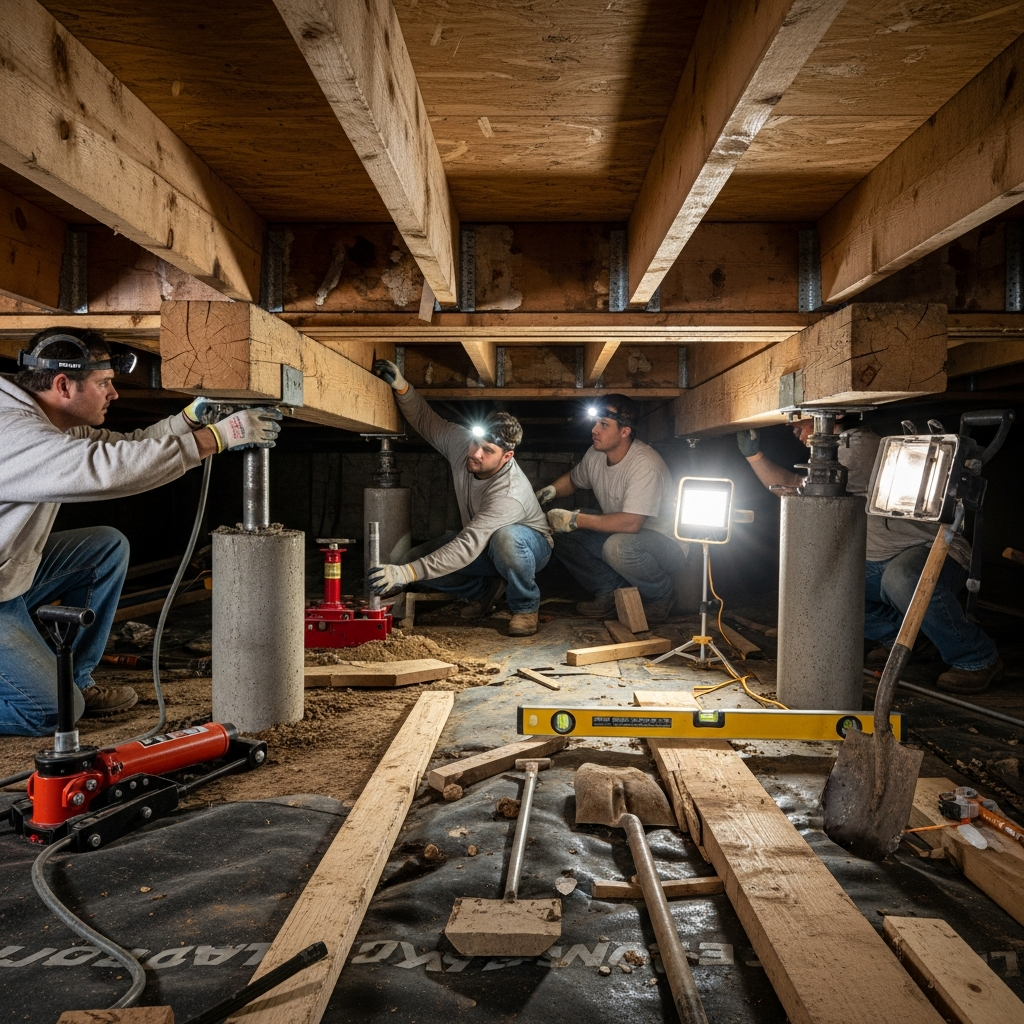
Here’s how it works: concrete piers (those are the “legs”) get driven deep into the soil, and wooden beams stretch between them like a giant grid. Your house sits on top of this framework, usually with a crawl space underneath that’s tall enough for… well, crawling around when something needs fixing.
It’s actually pretty ingenious when you think about it. Instead of a massive concrete slab covering your entire lot, you’ve got this skeletal system that works with the ground rather than fighting it.
Why Dallas Loves (and Hates) This Foundation Type
Dallas has a complicated relationship with pier and beam foundations – kind of like that friend who’s amazing but also drives you crazy sometimes.
The love part? These foundations were perfect for our area back in the day. They handle our shifty clay soil better than slabs because they can move and flex. When the ground swells and shrinks (and boy, does it ever here), pier and beam foundations can roll with the punches instead of cracking like an eggshell.
Plus, that crawl space underneath is like having a secret utility tunnel. Need to run new plumbing or electrical? No problem – just shimmy under there instead of jackhammering through concrete.
But here’s where it gets tricky… these foundations are showing their age. Most pier and beam homes in Dallas were built between the 1920s and 1960s, which means they’re dealing with decades of our extreme weather, settling soil, and – let’s be honest – sometimes questionable maintenance from previous owners.
The Clay Soil Situation (It’s Complicated)
Dallas sits on what geologists politely call “expansive clay soil.” I like to think of it as moody teenager soil – it dramatically expands when it gets water and shrinks when it dries out, with no middle ground whatsoever.
During our scorching summers, this clay can shrink so much it literally pulls away from your foundation. Then comes a good rain (or that one week in spring when it decides to pour), and suddenly the soil swells back up like a sponge. This constant expansion and contraction is rough on any foundation, but pier and beam systems handle it better than most… when they’re in good shape.
The problem is, after 50-80 years of this cycle, even the most robust pier and beam foundation starts to show wear. Piers can shift, beams can sag, and that’s when you start noticing doors that won’t close properly or floors that feel a bit bouncy.
Common Issues That Sneak Up on You
Here’s something that catches a lot of homeowners off guard – pier and beam problems often develop gradually. It’s not usually a dramatic “oh no, my house is falling down” situation. Instead, it’s more like… wait, when did this door start sticking? Why does the floor creak in this one spot?
Moisture issues are huge culprits. That crawl space that makes repairs so convenient? It can also trap humidity, especially if proper ventilation wasn’t maintained over the years. Too much moisture leads to wood rot, pest problems, and all sorts of expensive headaches.
Then there’s the settling factor. Those concrete piers might have been perfectly level when they were installed decades ago, but soil shifts, water finds its way around them, and gradually – so gradually you might not notice for years – they start to move.
Why “Wait and See” Usually Backfires
I get it – foundation repair sounds expensive and disruptive. Maybe you’re thinking that slightly sloped floor isn’t *that* bad, right?
But here’s the thing about pier and beam foundations… small problems tend to create bigger problems. When one pier starts settling, it puts extra stress on the beams and neighboring piers. It’s like a domino effect, except in slow motion and potentially costing you thousands more if you wait.
The good news? Pier and beam foundations are generally more repairable than slab foundations. You can actually get underneath there and see what’s going on, which makes diagnosis and repair more straightforward. When a foundation expert can physically examine the beams and piers instead of guessing what’s happening under a concrete slab, that’s usually good news for your wallet.
Reading the Warning Signs Before It’s Too Late
You know that feeling when something’s just… off? Your house might be trying to tell you something, and honestly, most folks miss these early whispers until they become expensive screams.
Walk around your home’s perimeter and look for gaps between the foundation and the sill plate – that’s the wooden beam sitting directly on your foundation. If you can slip a credit card through easily, you’ve got settling. And here’s something most people don’t know: check this during different seasons. Dallas clay shifts dramatically, so a gap that disappears in wet months but opens up during our scorching summers? That’s your red flag.
Inside, pay attention to doors and windows. But here’s the thing – don’t just notice if they stick. Notice if they stick *differently* than they used to. That bathroom door that always caught a little? Fine. The front door that suddenly needs a shoulder shove when it never did before? Not fine.
The DIY Detective Work That Actually Matters
Grab your phone and walk through your house taking photos of any cracks – walls, ceilings, even exterior brick. Date them. I know it sounds tedious, but three months from now when you’re wondering if that crack got bigger, you’ll thank yourself.
Here’s a trick contractors use: place a piece of clear tape across any crack that concerns you. If the tape breaks or buckles, your foundation is still moving. Just… don’t use this method on textured walls unless you want to explain to your spouse why there’s tape residue everywhere.
Check your floors with a marble or small ball. Drop it in the center of each room and see where it rolls. One room slopes slightly toward the kitchen? Probably normal settling. Multiple rooms all slope toward the same corner of your house? Time to make some phone calls.
Getting Quotes Without Getting Taken
This is where people mess up big time. Never – and I mean never – get just one quote for foundation work. But here’s what’s even more important: don’t just collect three random estimates and pick the middle number.
Ask each contractor to show you exactly what they found wrong. A legitimate contractor will crawl under your house with you (if you’re comfortable with that) or at minimum show you photos. If someone gives you a quote without going under your house, keep walking.
Watch out for the door-to-door guys, especially after storms. Real foundation companies don’t need to drum up business by knocking on doors – they’re usually booked solid. That said, storm damage can accelerate foundation problems, so don’t ignore issues just because someone sketchy pointed them out first.
The Questions That Separate Pros from Pretenders
When you’re talking to contractors, ask them about shimming versus repairing. Shimming is basically stacking stuff under your beams to level things out – it’s a band-aid. Proper repair involves addressing why things shifted in the first place.
Ask about their warranty. Not just how long it lasts, but what exactly it covers. Some companies warranty their work but not your house – meaning if something else breaks because of foundation movement, you’re on your own.
Here’s something most people never think to ask: “What happens if you find additional problems once you start?” Get that answer in writing. Foundation work is like surgery – sometimes you don’t know what you’re dealing with until you’re in there.
Timing Your Repair for Maximum Success
Dallas weather is weird, and that actually matters for foundation work. Late fall through early spring is typically the sweet spot – the clay has had time to stabilize after summer’s heat but before spring’s wild weather swings kick in.
But honestly? If you need foundation work, don’t wait for perfect timing. Every day you wait, that small problem potentially becomes a bigger, more expensive problem. I’ve seen people “wait for a better time” and end up with repair bills that doubled.
The Money Talk Nobody Wants to Have
Foundation work isn’t cheap, but here’s the thing about financing – many companies offer it, but read the terms carefully. Some of those “no interest for 12 months” deals turn into 20%+ interest if you don’t pay it off exactly on time.
Also, call your insurance company before starting work. Most policies don’t cover gradual settling, but if a specific event (like a plumbing leak) caused the problem, you might have coverage you don’t know about.
The bottom line? Your foundation is like your health – ignoring problems doesn’t make them go away, it just makes them more expensive to fix later.
When the Ground Literally Shifts Beneath You
Here’s the thing about pier and beam foundation issues – they don’t announce themselves with a neat little letter in your mailbox. Instead, you’re brushing your teeth one morning and notice that bathroom door doesn’t quite close right anymore. Or maybe you’re rolling a marble across your hardwood floors with the kids and… well, it definitely doesn’t roll straight.
The tricky part? These signs can mean a dozen different things, and not all of them spell disaster for your wallet. That slight gap between your baseboards and the floor could be normal settling (Dallas clay, am I right?), or it could be your foundation saying “help me” in the only way it knows how.
Most homeowners I talk to get stuck right here – paralyzed between ignoring the problem (hoping it’ll magically fix itself) and panicking that their house is about to slide into the Trinity River. Neither approach helps much.
The Inspection Dilemma That Keeps Everyone Up at Night
Getting a foundation inspection feels a lot like going to the doctor when you’re not sure if that weird pain is serious or not. You want answers, but you’re also terrified of what you might find out.
Here’s what makes pier and beam inspections particularly tricky: unlike slab foundations where problems are often obvious, pier and beam issues hide in your crawl space. And let’s be honest – how many of us are regularly spelunking under our houses? Exactly.
The real challenge isn’t finding someone to inspect your foundation. It’s finding someone who won’t automatically push you toward the most expensive solution. Some contractors see dollar signs the moment they mention “foundation repair.” Others might downplay legitimate issues because they don’t want to deal with the complexity of pier and beam work.
Your best bet? Get at least three opinions, and don’t just focus on price. Ask detailed questions about what they found, why they recommend their specific approach, and what happens if you wait six months. A good contractor won’t pressure you into immediate action unless there’s genuine structural danger.
The Money Talk Nobody Wants to Have
Let’s just rip this band-aid off – foundation repair isn’t cheap, and pier and beam work can be especially unpredictable when it comes to costs. You might start with what seems like a straightforward beam replacement and discover that half your support structure needs attention.
This is where people get into real trouble. They get one estimate, gulp hard at the number, and then… do nothing. Or worse, they go with whoever gives them the lowest bid without asking why that price is so different from everyone else’s.
Here’s a better approach: treat this like the major home maintenance it is. If three contractors are quoting $8,000-12,000 and one comes in at $4,000, that’s not a deal – it’s a red flag. Ask what’s different about their approach. What materials are they using? What warranty do they offer?
Also, don’t forget about financing options. Many reputable foundation repair companies offer payment plans because they understand this isn’t exactly a purchase you planned for.
When DIY Dreams Meet Reality
I get it – YouTube makes everything look doable, and foundation work can seem straightforward when you’re watching someone else do it. Dig out the old pier, slide in a new one, level everything up. Easy, right?
Actually… no. Not even close.
Pier and beam foundations are essentially a balancing act involving physics, soil conditions, and precise measurements. Get one element wrong, and you can create problems that are exponentially more expensive to fix than what you started with. Plus, most cities require permits for foundation work, and DIY repairs rarely pass inspection.
That said, there are things you can absolutely handle yourself. Keep your crawl space properly ventilated. Make sure water drains away from your foundation. Monitor those minor cracks and gaps so you can spot changes early.
The key is knowing where your skills end and professional expertise begins. Think of it this way – you might change your own oil, but you probably don’t rebuild your engine. Same principle applies here.
Living With the Uncertainty
Maybe the hardest part of foundation issues isn’t the repair itself – it’s the waiting and wondering. Is it getting worse? Should you sell before dealing with it? Can you really trust that contractor who seemed so confident?
Here’s what I’ve learned from homeowners who’ve been through this: most foundation problems develop slowly, which means you usually have time to make good decisions rather than panicked ones. Use that time wisely.
What to Expect During the Repair Process
You’re probably wondering what you’ve gotten yourself into, right? I get it – foundation repair feels like this massive, mysterious undertaking. But here’s the thing: most pier and beam repairs follow a pretty predictable pattern, and knowing what’s coming can help you sleep better at night.
The actual repair timeline? Well, that depends on a few things. A straightforward job with maybe 6-8 piers typically takes 2-3 days. But if you’re dealing with extensive damage or your crawl space looks like an archaeological dig site (you know, 60 years of “stuff” piled up down there), we’re looking at closer to a week. Weather plays a role too – Dallas clay doesn’t cooperate when it’s soggy.
Your contractor should walk you through each day’s plan. Day one usually involves the heavy lifting – literally. They’ll be jacking up sections of your house, installing the new piers, and making sure everything’s level. It’s noisy. Your dishes might rattle a bit. That’s normal.
The second day? Fine-tuning. Adjustments. Making sure doors close properly and windows actually open. You might notice some minor cosmetic issues pop up – a hairline crack here, a gap in trim there. Don’t panic. It’s like your house is stretching after being stuck in one position for years.
The Settling-In Period (Yes, That’s a Real Thing)
Here’s what nobody really talks about: your house needs time to adjust. Think of it like getting new orthotics – everything feels weird at first, even though it’s actually better.
For the first few weeks, you might notice small shifts. A door that was sticking might suddenly swing too freely. A window that wouldn’t budge might now close with a gentle push. Sometimes you’ll hear small creaking sounds as the wood adjusts to its new, properly supported position.
This settling period typically lasts 30-60 days. Your foundation contractor should check back with you during this time – not because something’s wrong, but because minor adjustments are often needed. It’s part of the process, not a sign that the repair failed.
Immediate Next Steps After Completion
Once the crew packs up their equipment, you’ll want to do a walkthrough with your contractor. Don’t just nod and sign – actually test things. Open and close doors. Check windows. Look for any obvious cosmetic damage that might need addressing.
Most reputable contractors will handle minor drywall repairs or door adjustments that result from the foundation work. But you need to document these things during that final walkthrough. Take photos if something seems off.
Your contractor should also give you care instructions. Yes, foundation care instructions – it’s a thing. This usually includes guidance on drainage, moisture control, and what to watch for going forward.
Long-term Monitoring and Maintenance
The repair is done, but your relationship with your foundation isn’t over. You’ll want to keep an eye on things – not obsessively, just… aware.
Check your pier and beam foundation annually. Look for new signs of settling, moisture issues, or pest activity. Most contractors offer some kind of warranty (typically 10-25 years for the piers themselves), but staying proactive helps catch small issues before they become big problems.
Keep your drainage working properly. I know, I know – we’ve talked about this already, but it bears repeating. Those gutters, that grading around your house, proper irrigation… these things matter more now than ever.
When to Call Your Contractor Back
So when should you pick up the phone? New cracks appearing in walls within the first year? Definitely call. Doors that were fixed starting to stick again? Worth a conversation. Unusual sounds or movement? Don’t wait.
But also… don’t call for every tiny thing. Your house making normal settling sounds? That’s fine. A small seasonal crack appearing in drywall? Probably just normal building movement.
The key is knowing the difference, and honestly? That comes with time. Most contractors are pretty good about helping you understand what’s normal for your specific situation versus what needs attention.
Your foundation repair isn’t just about fixing a problem – it’s about giving you peace of mind. And that peace of mind grows stronger as you understand what to expect, both in the short term and down the road.
Finding Your Foundation’s Path Forward
You know what? After diving into all the technical details about pier and beam foundations – the warning signs, the repair methods, the costs – it can feel pretty overwhelming. And that’s completely normal. When you’re standing in your living room looking at that crack in the wall or feeling that slight sag in the floor, it’s easy to let your mind spiral into worst-case scenarios.
But here’s the thing I want you to remember: you’re not alone in this. Every homeowner in Dallas has either dealt with foundation issues or will at some point. It’s just part of living in our beautiful, challenging North Texas climate. The clay soil didn’t get the memo that it should play nice with our homes year-round.
The good news – and there really is good news here – is that pier and beam foundations are actually designed to be repaired. Unlike slab foundations where everything’s locked in concrete, your pier and beam system is more like… well, think of it as modular furniture. Components can be adjusted, replaced, and improved without tearing apart your entire house.
Most foundation problems start small. That tiny crack you noticed last month? It’s trying to tell you something before it becomes a bigger conversation. The slight bounce in your hallway? Your house is asking for a little attention. And honestly, catching these things early isn’t just about saving money (though you definitely will) – it’s about maintaining your peace of mind.
I’ve seen too many homeowners lose sleep over foundation worries, checking and rechecking every little sound their house makes. You don’t have to live like that. Professional foundation experts deal with these exact issues every single day. What feels overwhelming and mysterious to you is Tuesday afternoon for them.
When You’re Ready to Take the Next Step
Look, I get it. Calling a foundation repair company can feel like opening Pandora’s box. What if it’s worse than you thought? What if it costs more than your car? These fears are real, but they’re usually worse than reality.
Most reputable foundation companies in Dallas offer free inspections – and I mean truly free, not “free with strings attached.” They’ll walk through your home, explain what they’re seeing in terms you can actually understand, and give you options. No pressure, no scare tactics, just honest information about your specific situation.
You don’t need to become a foundation expert overnight. You just need to connect with professionals who can translate all those technical details into a plan that works for your home and your budget. Some repairs might be urgent; others can wait. Some might be simple adjustments; others might need more comprehensive work. The key is knowing which is which.
Your home is more than just a structure – it’s where your life happens. Those foundation issues you’re worried about? They’re solvable. And you deserve to feel confident and secure in your own space.
If you’re ready to stop wondering and start knowing exactly what’s going on with your foundation, reach out to a trusted Dallas foundation repair specialist. That conversation you’ve been putting off? It might just be the most relieving phone call you make this year.